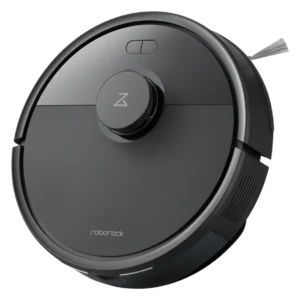
Eufy RoboVac 30C · Roborock Q7 L5
All robot vacuums. Every measure below is plotted against the full class, so a difference can be read against how much the class itself varies.
- Eufy RoboVac 30C
- Roborock Q7 L5
What each one does on its own.
The Autonomy Ladder is the same five rungs for every robot on the site. A rung describes the conditions a robot handles without you, not how good it is.
Where they actually differ.
The Robovations Score is nine inputs across three pillars, each weighted as shown and each scored so that more is better. A robot can lead on one and trail on another, which is the point of showing them apart. Cost of ownership and data handling are reported on each robot's own page and are never averaged into the score.
Capability
- Eufy RoboVac 30C55
- Roborock Q7 L558
- Eufy RoboVac 30C25
- Roborock Q7 L574
- Eufy RoboVac 30C28
- Roborock Q7 L550
- Eufy RoboVac 30C32
- Roborock Q7 L548
Dependability
- Eufy RoboVac 30C91
- Roborock Q7 L570
- Eufy RoboVac 30C65
- Roborock Q7 L565
- Eufy RoboVac 30C52
- Roborock Q7 L560
Ownership burden
- Eufy RoboVac 30C38
- Roborock Q7 L545
- Eufy RoboVac 30C47
- Roborock Q7 L568
How far apart is a long way?
A number only means something next to the spread it sits in. Each track below is the real range across every classified robot in the class, with the median marked.
- Eufy RoboVac 30C$299
- Roborock Q7 L5$249.99
- Eufy RoboVac 30C1,500 Pa
- Roborock Q7 L58,000 Pa
- Eufy RoboVac 30C4.6 lbs
- Roborock Q7 L57.3 lbs
- Eufy RoboVac 30C2.9 in
- Roborock Q7 L53.9 in
Not compared, because fewer than two of these robots carry a published figure: Runtime, Charge time, Noise.
What the numbers leave out.
The trade-off
What each design gives up to be good at what it is good at.
Boundary strips are the only containment method, no map, no virtual walls, no app-based room selection. Flexibility is the cost.
BoostIQ buys carpet performance with half the runtime: eufy publishes about 100 minutes on hard floors in standard mode, about 50 minutes in BoostIQ mode on carpet and about 40 minutes at maximum suction on medium-pile carpet.
Measured suction runs about twice Vacuum Wars’ category average, yet flattened pet hair pickup was the lowest it has recorded.
Three water-flow levels, one outcome in testing: floors left overly wet.
Who each one is wrong for
Stated by the record itself. A robot being wrong for a household is a fact about fit, not a fault.
- Homes larger than 2,000 sqft needing single-session coverage
- 100-minute runtime cannot cover sprawling layouts in one pass; return-to-dock requires manual restart.
- Multi-floor homes or frequent room reconfiguration
- No map persistence between locations; boundary strips must be repositioned for each new space.
- Owners wanting autonomous room-to-room transitions
- Lacks mapping; cannot select target rooms or avoid specific areas without physical boundary strips.
- Households with thick or high-pile carpet
- Standard suction is 1,500 Pa, and BoostIQ 2nd generation raises it automatically within 1.5 seconds when the robot needs more. The cost is endurance: eufy publishes about 100 minutes on hard floors in standard mode, about 50 minutes in BoostIQ mode on carpet and about 40 minutes at maximum suction on medium-pile carpet. Owner reports document reduced pickup on plush surfaces.
- Homes with heavy pet shedding on carpet
- eufy describes a 3-point cleaning system with a rolling brush and a squeegee blade, and notes it sweeps up trodden-down hair; BoostIQ lifts suction on rugs. Owner forums still report visible hair clumping on carpet in heavy-shedding homes.
- Homes with shedding pets
- Vacuum Wars measured 12.25% pickup in its flattened pet hair test, its lowest ever, and 56% of long hair tangled on the brush.
- Owners who mop wood or other water-sensitive floors
- Vacuum Wars found it used over three times the average water, leaving floors overly wet, for a combined mopping score of 6.3.
- Homes with rugs between mopped rooms
- The mop pad does not lift, so Vacuum Wars notes it must be removed before vacuum-only runs over rugs or carpet.
- Cluttered floors with cords and small objects
- Vacuum Wars confirms it has no dedicated obstacle avoidance system, relying on LiDAR mapping alone.
What stays your job
The upkeep ownership hands back to you, whatever the autonomy level says.
- Weekly: Empty dust bin; check the rolling brush for hair tangles.
- Monthly: Wipe sensors and brush contact points with a dry cloth.
- Every 3-6 months: Inspect dock for dust accumulation; wipe charging contacts.
- As needed: Replace a length of boundary strip when the adhesive stops holding; clear fiber wraps from the wheel undercarriage; replace the rolling brush or squeegee blade when worn. eufy publishes no replacement interval or price for either part.
- After every use: Empty the 400 ml combined dustbin; there is no auto-empty dock.
- After every use: Refill the 270 ml water tank and rinse the mop pad after mopping runs.
- As needed: Remove the mop pad before vacuuming rugs, since it does not lift.
- As needed: Cut wrapped long hair from the main brush; Vacuum Wars measured 56% tangling.
- As needed: Replace mop cloths, filters and brushes, which Roborock’s US store sells for the Q7 series.
How much each of these is standing on.
Classifications rest on different depths of evidence. A pre-release assessment and a verified one are not the same kind of claim.
| Robot | Evidence status | Sources reviewed | Last assessed |
|---|---|---|---|
| Eufy RoboVac 30C | Provisional | 3 | Aug 2026 |
| Roborock Q7 L5 | Pending | 2 | Sep 2026 |
Add a robot
Comparing across classes is allowed — the page will switch to per-class positioning and tell you it has.