Skip to content
Saved
Comparison · 2 robots

EMO · Vector 2.0

All specialty robots. Every measure below is plotted against the full class, so a difference can be read against how much the class itself varies.
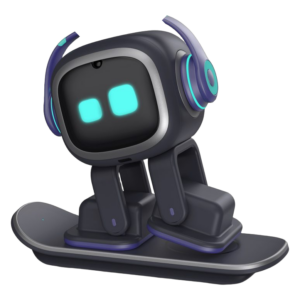
  1. EMO
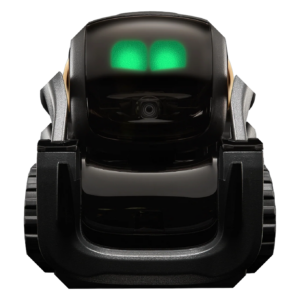
  2. Vector 2.0
Living.AI

EMO

Autonomy
II Assisted Autonomy
Score
Not scored
Readiness
Ready Now
Price
$279list
Digital Dream Labs (ANKI)

Vector 2.0

Autonomy
II Assisted Autonomy
Score
Not scored
Readiness
Promising Progress
Price
$199.99list

Up to three

01 Classification

What each one does on its own.

The Autonomy Ladder is the same five rungs for every robot on the site. A rung describes the conditions a robot handles without you, not how good it is.

V
Generalized
Any task, any setting
IV
Environmental
Handles new obstacles without help
III
Conditional
Finishes familiar jobs on its own
II
Assisted
Runs preset routines, needs rescue
EMOVector 2.0
I
Manual
One action, on command
02 Assessment

Where they actually differ.

The Robovations Score is nine inputs across three pillars, each weighted as shown and each scored so that more is better. A robot can lead on one and trail on another, which is the point of showing them apart. Cost of ownership and data handling are reported on each robot's own page and are never averaged into the score.

None of these robots carries a scored assessment yet, so there is nothing to plot here. The classification and evidence below still apply.

03 Measured against the class

How far apart is a long way?

A number only means something next to the spread it sits in. Each track below is the real range across every classified robot in the class, with the median marked.

Price24 with a published figure
  • EMO$279
  • Vector 2.0$199.99
$25.99median $849$100,000

Not compared, because fewer than two of these robots carry a published figure: Suction, Runtime, Charge time, Noise, Weight, Height.

04 Ownership

What the numbers leave out.

The trade-off

What each design gives up to be good at what it is good at.

EMO

Camera images are stated to stay on the robot by default, but voice-command interpretation still requires sending an audio clip to the manufacturer’s servers.

A small desktop footprint limits its physical reach, while also limiting the collision and fall risk that applies to full-room-roaming robots.

Vector 2.0

Local face recognition and idle-exploration behavior work without a subscription, but the manufacturer states voice commands and conversation do not work at all without one.

Digital Dream Labs revived a product line that had gone fully dark in 2019, but the same cloud-dependency structure that caused that failure is still how the current product’s primary features operate.

Who each one is wrong for

Stated by the record itself. A robot being wrong for a household is a fact about fit, not a fault.

EMO
Buyers wanting whole-room or multi-room navigation
EMO operates within a single bounded desktop area and does not navigate a full room.
Households wanting a fully offline device
Voice-command interpretation requires an internet connection and a round trip to Living.AI's servers after the wake word is detected.
Buyers wanting explicit, detailed data-handling disclosure
Living.AI's published privacy notice is general rather than EMO-specific and does not clearly enumerate camera or voice data practices.
Vector 2.0
Buyers wanting guaranteed long-term functionality without a subscription
The manufacturer's own site states voice commands get 'no response' without an active paid membership, and this product line has already gone fully non-functional once before, in 2019.
Households wanting an offline device
Its primary interactive features require an internet connection and cloud round trips to Digital Dream Labs' servers.
Buyers needing confirmed physical dimensions before purchase
No dimensions or weight are published on the manufacturer's current official product page.

What stays your job

The upkeep ownership hands back to you, whatever the autonomy level says.

EMO
  • Charging: Self-navigates to its magnetic Home Station when battery runs low; a human sets up and maintains the station’s power connection.
  • Cleaning: Owner wipes the optical drop sensors on its base and the LED face periodically to maintain edge-detection and display clarity.
  • App updates: Owner applies updates through the companion app.
  • Battery: Approximately 2 hours of active use per charge, per the manufacturer.
Vector 2.0
  • Charging: Vector self-navigates to its charging dock when battery runs low, per the manufacturer; owner places the dock in an open, well-lit area since reflections and poor lighting are stated to interfere with docking.
  • Membership: An active paid Digital Dream Labs membership ($11.99/month or $99.99/year) must be maintained for voice commands and ChatGPT-based conversation to function.
  • App/firmware updates: Owner applies software updates through the companion app.
  • Battery: User-replaceable battery, per the manufacturer.
05 Evidence

How much each of these is standing on.

Classifications rest on different depths of evidence. A pre-release assessment and a verified one are not the same kind of claim.

Evidence behind each classification
Robot Evidence status Sources reviewed Last assessed
EMO Verified 9 Aug 2026
Vector 2.0 Provisional 2 Aug 2026

Robovations classifies robots; it does not rank them. Nothing on this page is a recommendation, and no manufacturer influences a classification or its placement here.