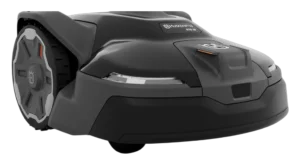
Ecovacs Goat G1 · Husqvarna Automower 410 iQ
All robot lawn mowers. Every measure below is plotted against the full class, so a difference can be read against how much the class itself varies.
- Ecovacs Goat G1
- Husqvarna Automower 410 iQ
What each one does on its own.
The Autonomy Ladder is the same five rungs for every robot on the site. A rung describes the conditions a robot handles without you, not how good it is.
Where they actually differ.
The Robovations Score is nine inputs across three pillars, each weighted as shown and each scored so that more is better. A robot can lead on one and trail on another, which is the point of showing them apart. Cost of ownership and data handling are reported on each robot's own page and are never averaged into the score.
Capability
- Ecovacs Goat G175
- Husqvarna Automower 410 iQ76
- Ecovacs Goat G170
- Husqvarna Automower 410 iQ80
- Ecovacs Goat G170
- Husqvarna Automower 410 iQ56
- Ecovacs Goat G160
- Husqvarna Automower 410 iQ64
Dependability
- Ecovacs Goat G180
- Husqvarna Automower 410 iQ70
- Ecovacs Goat G165
- Husqvarna Automower 410 iQ60
- Ecovacs Goat G167
- Husqvarna Automower 410 iQ70
Ownership burden
- Ecovacs Goat G153
- Husqvarna Automower 410 iQ72
- Ecovacs Goat G190
- Husqvarna Automower 410 iQ70
How far apart is a long way?
A number only means something next to the spread it sits in. Each track below is the real range across every classified robot in the class, with the median marked.
- Ecovacs Goat G1$2,199
- Husqvarna Automower 410 iQ$2,599.99
- Ecovacs Goat G1120 min
- Husqvarna Automower 410 iQ108 min
- Ecovacs Goat G159 dB
- Husqvarna Automower 410 iQ62 dB
- Ecovacs Goat G151.6 lbs
- Husqvarna Automower 410 iQ38 lbs
- Ecovacs Goat G116.5 in
- Husqvarna Automower 410 iQ11.1 in
Not compared, because fewer than two of these robots carry a published figure: Suction, Runtime.
What the numbers leave out.
The trade-off
What each design gives up to be good at what it is good at.
UWB beacon hardware requires strategic yard placement and tuning. Multipath interference from metal or structures can degrade positioning; owner may need to experiment with beacon location.
Satellite positioning draws straight, overlapping stripes; radar alone did little to keep it off a tester’s foot.
Boundaries are exact to the waypoint, which also means every curve is a string of waypoints to drop by hand.
Who each one is wrong for
Stated by the record itself. A robot being wrong for a household is a fact about fit, not a fault.
- Properties above the 1,600 m2 rating
- Ecovacs rates the G1 for 1,600 m2 of working area, about 0.4 acre, at 600 m2 per day. Past that the constraint is rated area rather than beacon count: two beacons and two navigation-assist poles ship in the box, so there is no single-beacon baseline to expand from.
- Yards with metal structures or electrical interference sources
- UWB signals degrade near metal fencing, gutters, large appliances, and high-voltage power lines. Multipath interference increases positioning jitter; navigation becomes unreliable in electromagnetically noisy yards.
- Owners prioritizing centimeter-precision stripe patterns
- UWB positioning maintains roughly 15-20 cm consistency between passes. Insufficient for decorative stripe patterns. Stripe-focused owners should choose RTK platforms like the Lymow One.
- Yards where children or pets play during mowing
- CNET's tester found the radar did little and the mower tried to run over his foot twice.
- Curved lawns with many beds and borders
- CNET found waypoint-by-waypoint boundary setup tedious on curves, and Popular Mechanics notes 90-degree corners should be crossed diagonally, leaving them for a trimmer.
- Gardens edged with low walls
- Without a camera, CNET's unit popped a wheelie on a low brick garden wall.
- Owners who want to reset it rarely
- CNET found hiccups needed start and stop button combinations with the PIN re-entered, including a recurring loop sensor error on the charger.
What stays your job
The upkeep ownership hands back to you, whatever the autonomy level says.
- Weekly: Charging dock contact inspection and cleaning to prevent corrosion-related charge failures.
- Blade changes: Replace the stamped blades as a set once edges are dull or chipped. A spare blade kit ships with the mower and replacements are sold in multi-packs. Replace rather than sharpen: grinding thins the steel and unbalances the disc on a machine that runs unattended.
- Monthly: Undercarriage inspection for grass clipping buildup; blow out with compressed air.
- Seasonally: Replace the beacon dry cells, six in total, when the app reports them low. Indoor storage in freezing climates with the mower’s pack left charged rather than run down; inspect mower and dock before winter storage.
- As needed: Clean the LiDAR and time-of-flight sensor windows when they collect dust or clippings. The system is IPX6 rated; no annual resealing or hardware replacement is called for.
- As needed: Replace the three pivoting blades, about every 6 to 8 weeks per Husqvarna; a year of blades is included.
- As needed: Re-enter the PIN after resets, which CNET found frequent.
- As needed: Adjust waypoints and zones in the app as beds change, per Popular Mechanics.
- As needed: Trim square corners the mower crosses diagonally.
- Seasonally: Update schedules and cutting heights as grass growth changes.
How much each of these is standing on.
Classifications rest on different depths of evidence. A pre-release assessment and a verified one are not the same kind of claim.
| Robot | Evidence status | Sources reviewed | Last assessed |
|---|---|---|---|
| Ecovacs Goat G1 | Verified | 9 | Aug 2026 |
| Husqvarna Automower 410 iQ | Verified | 7 | Sep 2026 |
Add a robot
Comparing across classes is allowed — the page will switch to per-class positioning and tell you it has.