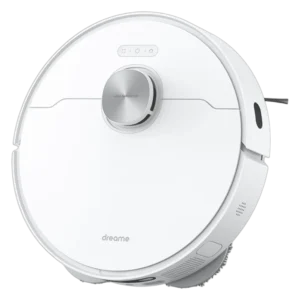
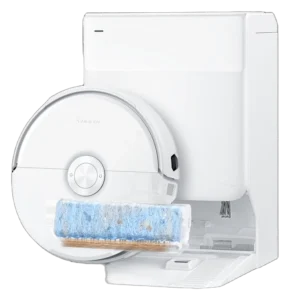
Dreame L10 Ultra · Narwal Freo 20 Edge
All robot vacuums. Every measure below is plotted against the full class, so a difference can be read against how much the class itself varies.
- Dreame L10 Ultra
- Narwal Freo 20 Edge


Narwal Freo 20 Edge
- Autonomy
- IIIConditional Autonomy
- Score
- Not scored
- Readiness
- New to Market
- Price
- $799.99list
Up to three
What each one does on its own.
The Autonomy Ladder is the same five rungs for every robot on the site. A rung describes the conditions a robot handles without you, not how good it is.
Where they actually differ.
The Robovations Score is nine inputs across three pillars, each weighted as shown and each scored so that more is better. A robot can lead on one and trail on another, which is the point of showing them apart. Cost of ownership and data handling are reported on each robot's own page and are never averaged into the score.
Capability
- Dreame L10 Ultra84
Not scored: Narwal Freo 20 Edge
- Dreame L10 Ultra75
Not scored: Narwal Freo 20 Edge
- Dreame L10 Ultra40
Not scored: Narwal Freo 20 Edge
- Dreame L10 Ultra80
Not scored: Narwal Freo 20 Edge
Dependability
- Dreame L10 Ultra80
Not scored: Narwal Freo 20 Edge
- Dreame L10 Ultra77
Not scored: Narwal Freo 20 Edge
- Dreame L10 Ultra75
Not scored: Narwal Freo 20 Edge
Ownership burden
- Dreame L10 Ultra91
Not scored: Narwal Freo 20 Edge
- Dreame L10 Ultra76
Not scored: Narwal Freo 20 Edge
How far apart is a long way?
A number only means something next to the spread it sits in. Each track below is the real range across every classified robot in the class, with the median marked.
- Dreame L10 Ultra$899.99
- Narwal Freo 20 Edge$799.99
- Dreame L10 Ultra5,300 Pa
- Narwal Freo 20 Edge31,000 Pa
- Dreame L10 Ultra3.8 in
- Narwal Freo 20 Edge3.7 in
Not compared, because fewer than two of these robots carry a published figure: Runtime, Charge time, Noise, Weight.
What the numbers leave out.
The trade-off
What each design gives up to be good at what it is good at.
The dock is more capable than the robot; setup time and space requirements exceed most competitor bases.
Dropping the dual-camera system removes any front-facing lens, which privacy-conscious buyers may welcome, and caps built-in recognition at 150+ object types instead of the standard Freo 20’s 300+.
Owners who mop most days get the most out of the continuous in-run rinse cycle; someone mopping once a week will rarely notice the four-step FlowWash sequence running at all.
The Freo 20 Edge has been on US sale for exactly one week, too brief a window for any independent failure or update record to exist yet.
Who each one is wrong for
Stated by the record itself. A robot being wrong for a household is a fact about fit, not a fault.
- High-pile or shag carpet owners
- Mop lifting does not prevent pad saturation on deep pile. Carpet detection raises the pads automatically, but the lift is a matter of millimeters, so deep pile can still reach them.
- Apartment dwellers without dock space
- The base station measures 403 x 403 x 483 mm, about 15.9 in square and 19 in tall, plus clearance for the robot to dock. Rental homes often lack suitable placement; dock noise at startup is notable.
- Buyers wanting the widest obstacle-recognition coverage
- The Edge omits the dual-camera system the standard Freo 20 uses, recognizing 150+ object types versus 300+; households with varied clutter may see more missed or mishandled objects.
- Owners needing a confirmed long-term reliability record
- US sales began 14 Sep 2026; no independent owner reports or failure data exist yet, so buyers wanting a proven multi-year track record should wait or look elsewhere.
- High-pile or deep carpet homes prioritizing mop performance
- Suction and downforce specs target hard floors and lower-pile carpet; Narwal has not independently published performance figures for thick or high-pile carpet with this specific model.
- Buyers wanting documented runtime or battery specs before purchase
- Battery capacity, runtime, and charge time have not been independently confirmed for this model; buyers who plan cleaning schedules around a specific runtime figure have nothing to check yet.
- Homes needing exact footprint or weight before buying
- Independently documented width, depth, and weight are not yet available beyond the 9.5cm body height, complicating placement planning in tight storage spots or under low furniture.
What stays your job
The upkeep ownership hands back to you, whatever the autonomy level says.
- Weekly: Empty dust tray if indicator shows full; rinse mop pads if visible soiling detected.
- Monthly: Clean dock water inlet filter. Mop pads are replaced on condition rather than on a schedule, when the pile mats or the pads stop coming clean in the wash cycle; Dreame publishes no replacement interval or price.
- Every 3-6 months: Replace main filter in dust collector (~$15-20); inspect dock pump seals for leaks.
- Annually: Service dock pump if water output drops; battery health check via app diagnostics.
- Every 3-6 months: Replace the auto-empty dust bag (2.5L capacity, rated up to 120 days of use).
- Monthly: Wipe the hidden dToF LiDAR turret and structured-light sensors to maintain mapping accuracy.
- Monthly: Descale the dock’s wash chamber to prevent mineral buildup from the water refill cycle.
- Weekly: Check and refill the dock’s clean-water reservoir if not on a plumbed-in setup.
- Weekly: Inspect the FlowWash track mop for debris caught at the 4.8cm edge-extension mechanism.
- As needed: Clear hair or debris from the main brush and side brush.
How much each of these is standing on.
Classifications rest on different depths of evidence. A pre-release assessment and a verified one are not the same kind of claim.
| Robot | Evidence status | Sources reviewed | Last assessed |
|---|---|---|---|
| Dreame L10 Ultra | Verified | 7 | Aug 2026 |
| Narwal Freo 20 Edge | Provisional | 4 | Sep 2026 |
Add a robot
Comparing across classes is allowed — the page will switch to per-class positioning and tell you it has.