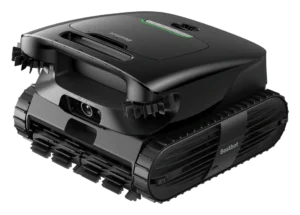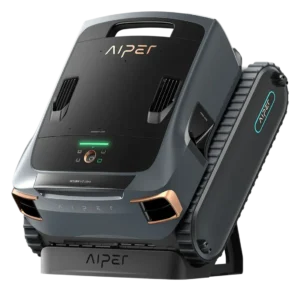
Aiper Scuba V3 Ultra · Beatbot AquaSense X
All robot pool cleaners. Every measure below is plotted against the full class, so a difference can be read against how much the class itself varies.
- Aiper Scuba V3 Ultra
- Beatbot AquaSense X
What each one does on its own.
The Autonomy Ladder is the same five rungs for every robot on the site. A rung describes the conditions a robot handles without you, not how good it is.
Where they actually differ.
The Robovations Score is nine inputs across three pillars, each weighted as shown and each scored so that more is better. A robot can lead on one and trail on another, which is the point of showing them apart. Cost of ownership and data handling are reported on each robot's own page and are never averaged into the score.
Capability
- Aiper Scuba V3 Ultra84
- Beatbot AquaSense X72
- Aiper Scuba V3 Ultra30
- Beatbot AquaSense X78
- Aiper Scuba V3 Ultra25
- Beatbot AquaSense X32
- Aiper Scuba V3 Ultra60
- Beatbot AquaSense X68
Dependability
- Aiper Scuba V3 Ultra60
- Beatbot AquaSense X34
- Aiper Scuba V3 Ultra65
- Beatbot AquaSense X65
- Aiper Scuba V3 Ultra28
- Beatbot AquaSense X58
Ownership burden
- Aiper Scuba V3 Ultra48
- Beatbot AquaSense X100
- Aiper Scuba V3 Ultra57
- Beatbot AquaSense X69
How far apart is a long way?
A number only means something next to the spread it sits in. Each track below is the real range across every classified robot in the class, with the median marked.
- Aiper Scuba V3 Ultra$2,299.99
- Beatbot AquaSense X$4,250
- Aiper Scuba V3 Ultra270 min
- Beatbot AquaSense X270 min
- Aiper Scuba V3 Ultra28.8 lbs
- Beatbot AquaSense X28.9 lbs
Not compared, because fewer than two of these robots carry a published figure: Suction, Runtime, Noise, Height.
What the numbers leave out.
The trade-off
What each design gives up to be good at what it is good at.
Battery-powered autonomy relies entirely on dock reliability and overnight charging. A failed dock connection or degraded charge cycle breaks the hands-off promise faster than cable entanglement breaks wired cleaners.
Cordless premium ($500+ over comparable wired models) is justified only if multi-season battery degradation rates prove acceptable. Early market data on battery cycle life (2-4 years baseline) will determine whether the cordless convenience translates to lower total-cost ownership.
Unproven dock automation. AstroRinse self-cleaning is a genuine feature differentiation, but four months of real-world seasonal data is insufficient to validate filter/gasket durability under freeze cycles or algae-season intensity.
Price premium rests on CES honoree status, not field-maturity data. Early adopters fund the reliability evidence that mainstream users will eventually rely on.
Who each one is wrong for
Stated by the record itself. A robot being wrong for a household is a fact about fit, not a fault.
- Small above-ground pools under 5,000 gallons
- The V3 Ultra's form factor and footprint are optimized for spacious in-ground layouts. Above-ground pools with tight entry/exit constraints may struggle with dock positioning and cable-free operation advantages diminish on smaller areas.
- Owners requiring minimal upfront investment
- At $2,300, the V3 Ultra targets premium ownership. Budget-conscious buyers should evaluate wired alternatives (Aiper Scuba models, Dolphin, Pentair) below $1,500, which cover floors, walls and waterlines but stop short of sun shelves and shallow water and carry cable management trade-offs.
- Pools with severe algae blooms or industrial contamination
- The V3 Ultra targets maintenance cleaning and light debris; heavy biochemical loads or prolonged pool closure recovery may exceed the cleaner's designed operating envelope.
- Small pools with light seasonal debris
- The AstroRinse station, the sealed 22 L debris container, and five cleaning functions are built for sustained load across a long season. On a small pool with light debris that capability sits well above what the job asks for.
- Owners seeking a proven multi-season track record
- First-season product with no multi-year field history. Beatbot backs it with a 3-year standard warranty, extended to 4 years for the first 500 pre-orders, and states the machine is built for heavy debris and winter-season algae, but dock gasket longevity and freeze-climate dock behavior have no independent record yet.
- Budget-conscious buyers or those averse to subscription-gating risk
- Price of $4,250 assumes no secondary subscriptions. Firmware roadmap not disclosed; future app features may require paid tier.
What stays your job
The upkeep ownership hands back to you, whatever the autonomy level says.
- After every use: Empty debris basket and rinse filter basket (5 minutes).
- Weekly: Check filter for trapped debris; clean dock charging contacts with dry cloth.
- While charging: Keep the dock on a hard non-combustible surface and do not leave a charge running unattended overnight. Both CPSC recalls on Aiper’s cordless line have been charging faults, neither covering the V3 Ultra: the Elite Pro GS100 in August 2023 (recall 23-784, about 22,000 units, 17 reports of the battery overheating when the cord was connected without the adapter or directly to the charging port) and the Seagull Pro in March 2025 (recall 25-187, about 32,660 units, 19 reports of units melting, smoking or catching fire on charge, traced to the high-current adapter). The 2023 recall was remedied with a free Seagull Pro, the model recalled in 2025. Both were remedied by replacement and neither remains open against a currently sold model.
- Every 3-6 months: Backwash filter cartridge or replace if clogged; inspect brush bristles for wear.
- Annually: Replace brush cartridge (~$30-50); inspect dock for algae buildup on electrical contacts.
- Every 2 years: Professional dock inspection and seal replacement if waterproofing shows age.
- As needed: Replace battery module if runtime drops below 60% original capacity (estimated 2-4 years of use).
- After each cycle: No owner task. AstroRinse rinses the robot’s internal filter and flushes debris into the sealed container automatically, on a self-clean cycle Beatbot describes as about 3 minutes.
- Up to every 2 months: Empty the sealed 22 L debris container; Beatbot states it holds up to two months of debris.
- Seasonally: Beatbot has not published a winterization protocol for the dock in freeze climates.
How much each of these is standing on.
Classifications rest on different depths of evidence. A pre-release assessment and a verified one are not the same kind of claim.
| Robot | Evidence status | Sources reviewed | Last assessed |
|---|---|---|---|
| Aiper Scuba V3 Ultra | Provisional | 8 | Aug 2026 |
| Beatbot AquaSense X | Provisional | 3 | Aug 2026 |
Add a robot
Comparing across classes is allowed — the page will switch to per-class positioning and tell you it has.