
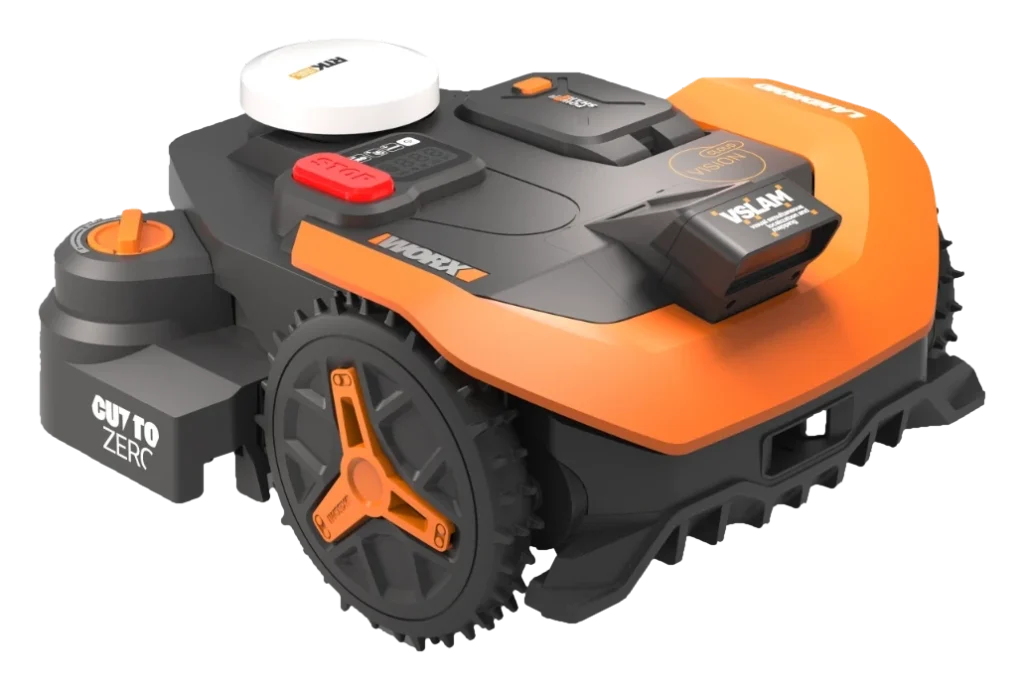
- Autonomy
- IIIConditional
- Score
- 67/100Capable
- Readiness
- Ready Now
- Price
- $1,199.99list
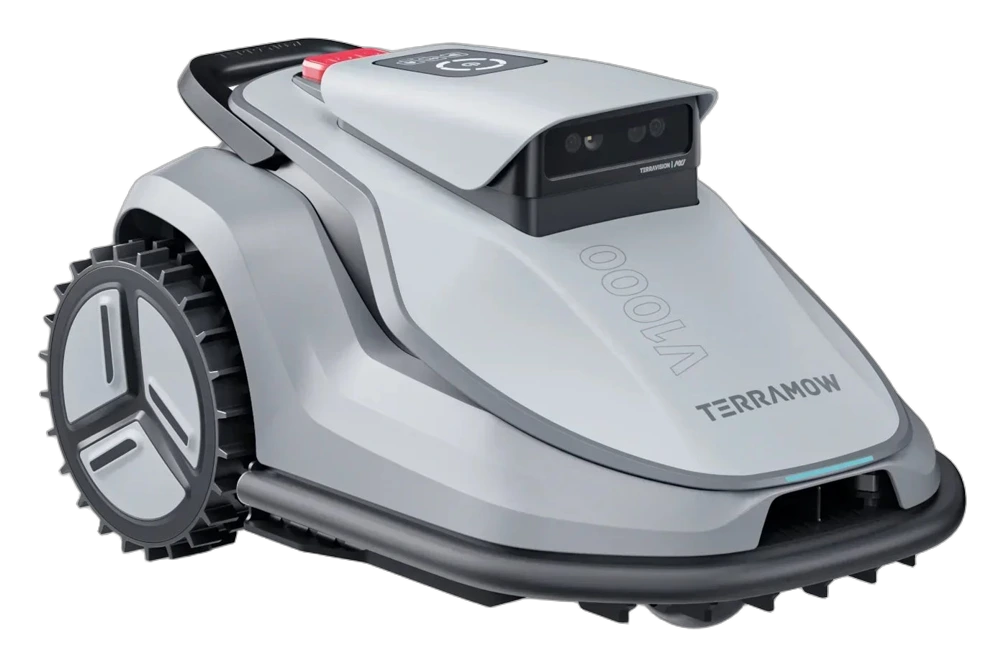
TerraMow
Up to three
All robot lawn mowers. Every figure below is placed against the whole class, so a gap can be read against how much the class itself varies.
The conditions each robot was assessed against, side by side. Rows marked in gold are where these machines genuinely differ.
| Condition | Worx Landroid Vision … | TerraMow V1000 |
|---|---|---|
| Yard size | ||
| Under ¼ acre | GoodQuarter-acre rating matches this size, with RTK cloud positioning and camera V-SLAM holding shaded corners. | GoodManufacturer-rated coverage of up to 1,200 sq m (about 0.3 acre) comfortably covers lots under a quarter acre. |
| ¼ – ½ acrethey differ | PoorRated to a quarter-acre ceiling; the WR320 sibling covers up to half an acre instead. | DependsRated coverage tops out around 0.3 acre, so only the low end of this bracket fits; larger yards in this range exceed the documented maximum. |
| Over ½ acre | PoorQuarter-acre max area rating falls well short of this range; a larger Worx model is needed. | PoorManufacturer-rated maximum coverage (about 0.3 acre) falls well short of yards over half an acre. |
| Terrain | ||
| Mostly flat | GoodHandles flat ground well within its 30 percent slope rating, camera V-SLAM holding position without a wire. | GoodFlat terrain is the baseline condition camera-based vision navigation is documented to handle without added positioning uncertainty. |
| Gentle slopes | Good30 percent slope rating (17 degrees) comfortably covers gentle grades with no reported traction loss. | GoodManufacturer specifications rate a maximum operating slope of 18 degrees (about 32.5% grade), covering typical moderate terrain. |
| Steep / hillythey differ | DependsSlope cap is 30 percent (17 degrees), documented as modest against camera-and-LiDAR competitors; may not hold true hillside grades. | PoorThe manufacturer's rated maximum slope is 18 degrees; grades commonly described as steep exceed this documented limit. |
| Grass type | ||
| Typical lawn grass | GoodCutting range of 1.57 to 3.54 inches and a 3-blade Cut-to-Zero deck suit typical turfgrass without extra passes. | GoodStandard turfgrass mowed on a routine schedule is the baseline case for rotary-blade robotic mowers like the V1000. |
| Mixed / tall growth | DependsNo published guidance for overgrown growth; camera-based grass classification may struggle distinguishing mixed-height turf from bare ground. | DependsManufacturer guidance for this mower class discourages long gaps between cuts; overgrown grass risks jamming the blade and vision system. |
| Thick (Bermuda / Zoysia) | DependsNo independent test of dense Bermuda or Zoysia turf performance exists; the 1.57 to 3.54 inch cutting range is manufacturer-published only. | DependsDense or wiry turf typically needs more frequent passes from a single fixed-speed rotary blade; no V1000-specific thick-turf test was found. |
| Boundary setup | ||
| Wireless required | GoodRTK cloud positioning plus camera V-SLAM eliminates the wire entirely, the model's whole design premise. | GoodThe V1000 is built entirely around camera-based, wire-free boundary mapping through an app-guided walk, matching this directly. |
| Wire required | PoorNo boundary-wire input exists on this model; RTK cloud plus V-SLAM is the only navigation method. | PoorNo buried perimeter wire input is documented for the V1000; it operates as a wire-free, vision-navigated mower only. |
| No preference | GoodNo preference stated; the WR310's cloud RTK plus V-SLAM system means the reader's choice doesn't change the fit. | GoodA reader with no boundary preference is served by the V1000's wire-free camera mapping, with nothing to trench or bury. |
A robot being poor for a condition is a fact about fit, not a fault. “Depends” means the record names a limit worth reading, not that the answer is unknown.
Nine inputs across three pillars, each weighted as shown and each scored so more is better. A robot can lead on one and trail on another, which is the point of showing them apart.
A number only means something next to the spread it sits in. Each track is the real range across every classified robot in the class, with the median marked.
Not compared, because fewer than two of these robots carry a published figure: Runtime, Noise.
Written on each record, and the only thing here every robot on the site carries.
What each design gives up to be good at what it is good at.
Camera-based semantic segmentation replaces a retained lawn map, so early coverage is semi-random and takes a day or two to even out on a larger yard.
RTK corrections travel over the network instead of to a local antenna, which means no antenna to site, and no navigation without a signal.
Quarter-acre ceiling: a bigger lawn needs the WR320 sibling, not a longer charge on this one.
Skipping the trench buys back a weekend of setup labor and hands boundary accuracy to a camera reading a fence line in changing light.
A hands-on review documents inconsistent boundary recognition near obstacles, because a single-camera vision system has no wire signal to fall back on when lighting or contrast is poor.
Single-review evidence base: TerraMow’s field record outside one publication’s short testing window is effectively unestablished.
Stated by the record itself. A robot being wrong for a household is a fact about fit, not a fault.
The upkeep ownership hands back to you, whatever the autonomy level says.
Classifications rest on different depths of evidence. A pre-release assessment and a verified one are not the same kind of claim.
| Robot | Evidence status | Sources reviewed | Last assessed |
|---|---|---|---|
| Worx Landroid Vision Cloud WR310 | Pending | 2 | Sep 2026 |
| TerraMow V1000 | Provisional | 4 | Sep 2026 |
Evidence status counts the sources behind a classification, not their kind. A high count can be maker documentation and price coverage, so read it as how much was reviewed rather than as independent testing. How we weigh evidence.
 The full recordWorx Landroid Vision Cloud WR310Specifications, evidence, the Fit Check in full, and every tracked change.
 The full recordTerraMow V1000Specifications, evidence, the Fit Check in full, and every tracked change.
Robovations classifies robots; it does not rank them. Nothing on this page is a recommendation, and no manufacturer influences a classification or its placement here.
Comparing across classes is allowed — the page will switch to per-class positioning and tell you it has.