
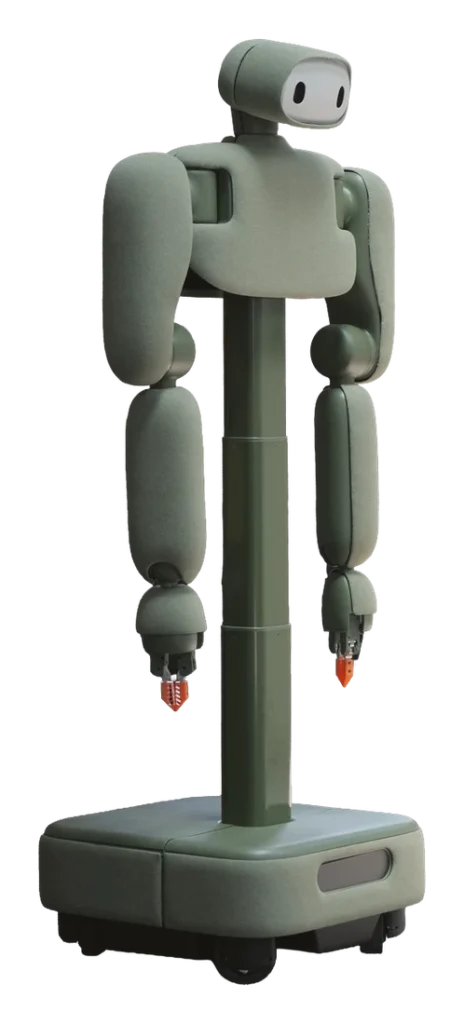
Weave Robotics
Weave Isaac 1
- Autonomy
- IIAssisted
- Pre-release
- 45/100Concept Stage
- Readiness
- Not assessed
- Price
- $7,999list
Weave Robotics

Samsung
Up to three
All multi-task robots. Every figure below is placed against the whole class, so a gap can be read against how much the class itself varies.
The conditions each robot was assessed against, side by side. Rows marked in gold are where these machines genuinely differ.
| Condition | Weave Isaac 1 | Samsung Ballie |
|---|---|---|
| Primary use case | ||
| Home / residential | GoodDesigned explicitly for ordinary home environments: laundry, beds, clutter, hampers. | GoodDesigned as a home companion. Projector, voice, home monitoring; the consumer home is the sole target. |
| Professional setting | PoorNo documented commercial or professional deployment mode; hardware and pricing target residential use. | PoorConsumer device with no commercial or facility deployment model announced. |
| Mixed contexts | DependsHome-only task set documented; no evidence of professional or shared-space capability. | DependsHome-only scope; no documented hybrid or out-of-home operation. |
| Task variety | ||
| One or two tasks | DependsTask set covers laundry and tidying specifically; buyers needing only one task may find the price hard to justify. | DependsDemos center on projection, reminders, and monitoring; depth of any single task is unproven pre-launch. |
| Several tasksthey differ | GoodLaundry Flow, bed-making, clutter tidying, and item placement cover a meaningful range of home manipulation tasks. | DependsPositioned for several light household roles, but real-world task range is undemonstrated as of mid-2026. |
| General-purpose | PoorOpen-ended task execution beyond the documented chore set is not supported; manipulation is domain-specific. | PoorNot a manipulation platform; open-ended physical tasks are outside its rolling-projector design. |
| Environment | ||
| Controlled / familiar | GoodPerforms best in tidy, obstacle-clear homes with navigable floor paths and standard doorway widths. | GoodA mapped, Wi-Fi-covered home is the intended setting for its navigation and projection features. |
| Shared with people | DependsTeleoperator fallback introduces remote video access; shared living spaces raise privacy considerations for all occupants. | DependsBuilt for family homes, but multi-user task handling remains unverified ahead of release. |
| Unstructured spaces | PoorCluttered, unpredictable, or frequently rearranged environments exceed documented navigation reliability at this stage. | PoorRequires a known indoor layout; unstructured or outdoor spaces are out of scope. |
| Oversight model | ||
| Autonomous operationthey differ | PoorTeleoperator fallback is part of the documented operation model; fully autonomous, unattended operation is not confirmed. | DependsMarketed as autonomous, but six years of delays leave unattended reliability unproven. |
| Light supervision | GoodDesigned for supervised home use with remote human assistance available when the robot cannot complete a task. | GoodApp-guided, owner-in-the-loop operation is the realistic mode for an early consumer unit. |
| Active operator | GoodEarly-adopter pre-order structure suits buyers comfortable with pilot-phase hardware and iterative capability improvements. | GoodStill effectively pre-release; early-adopter use with hands-on owners fits its maturity. |
A robot being poor for a condition is a fact about fit, not a fault. “Depends” means the record names a limit worth reading, not that the answer is unknown.
None of these has shipped, so they are assessed on track record, engineering plausibility and how the demonstrations match the claims.
Never averaged into it. These describe how much the maker has disclosed, not what the machine does.
| Weave Isaac 1 | Samsung Ballie | |
|---|---|---|
| ReadinessShip-date specificity, pricing transparency, distribution and regulatory status. Published beside the number; never averaged in. | 84/100 | 15/100 |
| DisclosureHow much of the product is disclosed. Higher means fewer fundamental unknowns remain. Published beside the number; never averaged in. | 38/100 | 20/100 |
A number only means something next to the spread it sits in. Each track is the real range across every classified robot in the class, with the median marked.
These robots share no measured specification with enough published figures to plot. That is a gap in the record, not a finding about the robots.
Written on each record, and the only thing here every robot on the site carries.
What each design gives up to be good at what it is good at.
Teleoperation is not a fallback feature. It is the current autonomy ceiling. Level II classification holds until Weave documents end-to-end task completion without remote human intervention.
Successor to a stationary robot (Isaac 0); the wheeled base and manipulation arm represent a significant mechanical leap with no shipping track record to validate durability or failure rates.
Subscription pricing ($449/month) means the total cost of ownership over two years exceeds the one-time purchase price. And feature availability may depend on continued subscription status.
The rolling sphere form factor is conceptually novel. But six years of delays and no published roadmap suggests Samsung has encountered fundamental engineering or market challenges that prevent commercialization.
Stated by the record itself. A robot being wrong for a household is a fact about fit, not a fault.
The upkeep ownership hands back to you, whatever the autonomy level says.
Classifications rest on different depths of evidence. A pre-release assessment and a verified one are not the same kind of claim.
| Robot | Evidence status | Sources reviewed | Last assessed |
|---|---|---|---|
| Weave Isaac 1 | Pre-Release | 2 | Sep 2026 |
| Samsung Ballie | Pre-Release | 5 | Aug 2026 |
Evidence status counts the sources behind a classification, not their kind. A high count can be maker documentation and price coverage, so read it as how much was reviewed rather than as independent testing. How we weigh evidence.
 The full recordWeave Isaac 1Specifications, evidence, the Fit Check in full, and every tracked change.
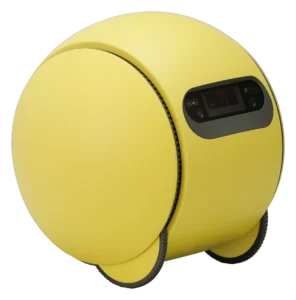 The full recordSamsung BallieSpecifications, evidence, the Fit Check in full, and every tracked change.
Robovations classifies robots; it does not rank them. Nothing on this page is a recommendation, and no manufacturer influences a classification or its placement here.
Comparing across classes is allowed — the page will switch to per-class positioning and tell you it has.