
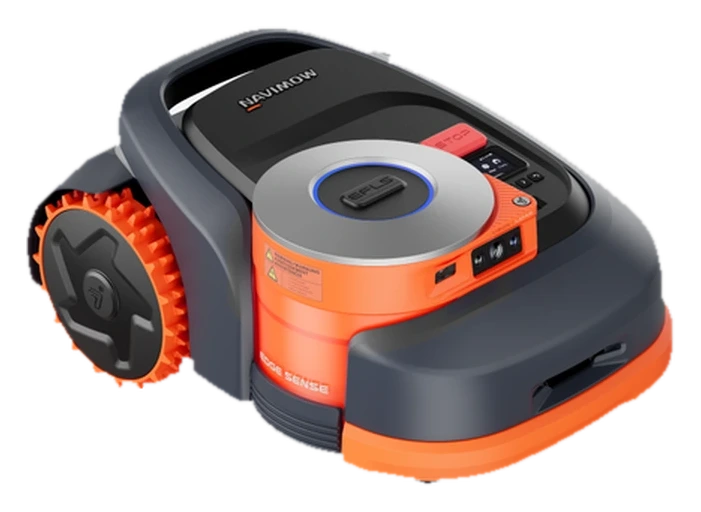
Segway
Segway Navimow H2
- Autonomy
- IVEnvironmental
- Score
- 71/100Strong
- Readiness
- Ready Now
- Price
- $1,799list
Segway
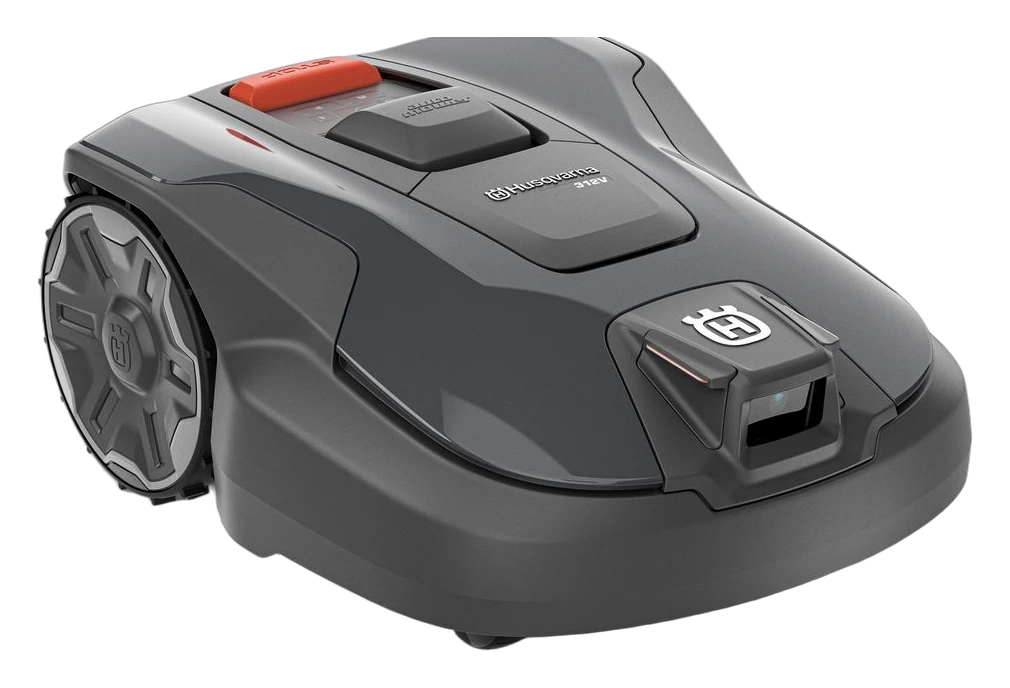
Husqvarna
Up to three
All robot lawn mowers. Every figure below is placed against the whole class, so a gap can be read against how much the class itself varies.
The conditions each robot was assessed against, side by side. Rows marked in gold are where these machines genuinely differ.
| Condition | Segway Navimow H2 | Automower 312V |
|---|---|---|
| Yard size | ||
| Under ¼ acre | GoodCapable but overkill for compact lots under 0.25 acre. Simpler wire-guided mowers handle smaller yards adequately. | GoodRated for 1,200 m², a little more than a quarter acre, so smaller lawns are covered. |
| ¼ – ½ acrethey differ | GoodDesigned for 0.25–0.5 acre yards. Runtime and coverage align well; wire-free boundary ideal for this size. | DependsHusqvarna's 1,200 m² rating covers only the smaller end of a quarter to half acre. |
| Over ½ acrethey differ | GoodRated up to 1 acre. Coverage and runtime support larger, complex residential properties without overcharging. | PoorLawns over half an acre are well beyond Husqvarna's 1,200 m² rating for the 312V. |
| Terrain | ||
| Mostly flat | GoodOptimal performance on level or gently rolling yards. No slope constraints; navigation and grip both excellent. | GoodA hands-on review found the cut quality excellent once the mower was configured on its lawns. |
| Gentle slopes | GoodRated for slopes up to 35%. Motor torque and LiDAR adapt well to gradual incline; traction stable on dry-to-damp slopes. | GoodT3's lawn is far from flat after mole damage, and the 312V coped with it well. |
| Steep / hillythey differ | PoorMotor and grip diminish above 35% slope. Manufacturer reports traction loss on steep wet grass; unsuitable for hillside properties. | DependsHusqvarna rates 40% inside the lawn but 15% at the boundary, and no steep test was found. |
| Grass type | ||
| Typical lawn grass | GoodStandard turf (perennial ryegrass, fescue) performs well. Blade design and cut height suit typical residential lawns. | GoodA hands-on review rated the cut quality excellent and the cutting options highly versatile. |
| Mixed / tall growth | DependsTall or rough grass (rescue, hardscape debris) requires slower mowing pace. Blade may clog; manual pre-cutting recommended. | DependsHusqvarna lists spiral cutting for uneven growth, but no long-grass test of the 312V was found. |
| Thick (Bermuda / Zoysia) | DependsDense bermuda or zoysia increases motor load and blade wear. Seasonal thinning or aeration extends mower life. | DependsNo test in thick or dense turf was found for its 22 cm cut. |
| Boundary setup | ||
| Wireless required | GoodWire-free operation is the core feature. Wireless boundary via app mapping eliminates installation labor and upkeep. | GoodVirtual boundaries are set in the app, with no perimeter wire to lay. |
| Wire required | PoorNavimow H2 has no perimeter-wire compatibility. Wire-dependent owners must choose a different platform. | PoorHusqvarna lists virtual boundaries as the only boundary type, so there is no wired installation. |
| No preference | GoodNo preference needed; wire-free design is the only option. App-based boundary works for all property types. | GoodIts wire-free setup meets a no-preference buyer, provided Wi-Fi and open sky cover the lawn. |
A robot being poor for a condition is a fact about fit, not a fault. “Depends” means the record names a limit worth reading, not that the answer is unknown.
Nine inputs across three pillars, each weighted as shown and each scored so more is better. A robot can lead on one and trail on another, which is the point of showing them apart.
A number only means something next to the spread it sits in. Each track is the real range across every classified robot in the class, with the median marked.
Not compared, because fewer than two of these robots carry a published figure: Runtime, Charge time.
Written on each record, and the only thing here every robot on the site carries.
What each design gives up to be good at what it is good at.
Upfront mapping effort replaces ongoing wire maintenance. Zero buried boundaries, but 30-60 minute initial setup trades monthly perimeter inspection against one-time configuration.
LiDAR-camera redundancy adds weight and cost. Robust positioning lists at $1,799 for the H210 and $2,199 for the H220, versus simpler wire-guided models at $800-1100. Autonomy justifies the premium only on larger, complex yards.
An excellent, customisable cut once running, but getting there meant repeated troubleshooting in the app.
Stated by the record itself. A robot being wrong for a household is a fact about fit, not a fault.
The upkeep ownership hands back to you, whatever the autonomy level says.
Classifications rest on different depths of evidence. A pre-release assessment and a verified one are not the same kind of claim.
| Robot | Evidence status | Sources reviewed | Last assessed |
|---|---|---|---|
| Segway Navimow H2 | Provisional | 8 | Aug 2026 |
| Husqvarna Automower 312V | Provisional | 4 | Sep 2026 |
Evidence status counts the sources behind a classification, not their kind. A high count can be maker documentation and price coverage, so read it as how much was reviewed rather than as independent testing. How we weigh evidence.
 The full recordSegway Navimow H2Specifications, evidence, the Fit Check in full, and every tracked change.
 The full recordHusqvarna Automower 312VSpecifications, evidence, the Fit Check in full, and every tracked change.
Robovations classifies robots; it does not rank them. Nothing on this page is a recommendation, and no manufacturer influences a classification or its placement here.
Comparing across classes is allowed — the page will switch to per-class positioning and tell you it has.