
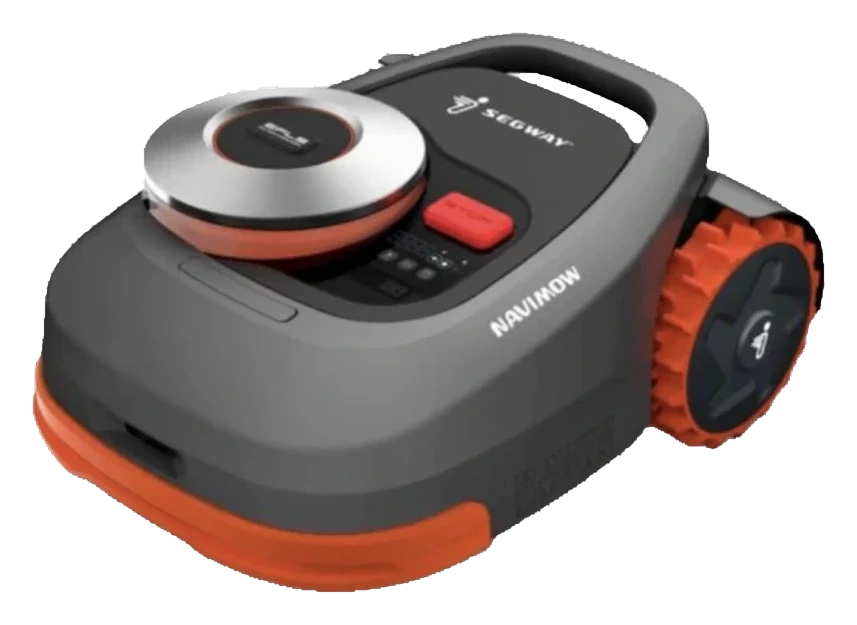
Segway
Segway Navimow H1500E
- Autonomy
- IIIConditional
- Score
- 73/100Strong
- Readiness
- Ready Now
- Price
- Not tracked
Segway
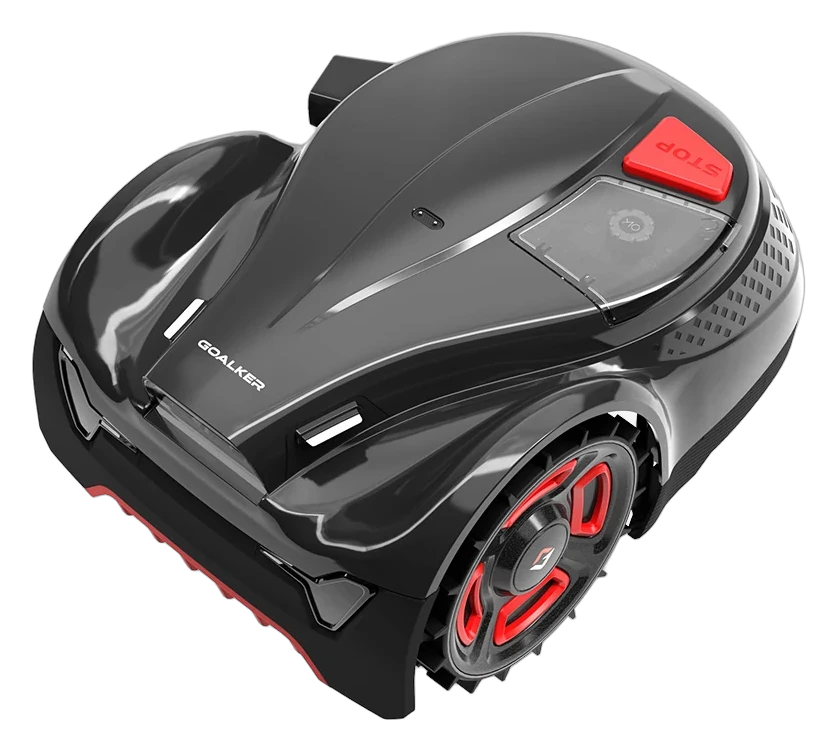
Goalker
Up to three
All robot lawn mowers. Every figure below is placed against the whole class, so a gap can be read against how much the class itself varies.
The conditions each robot was assessed against, side by side. Rows marked in gold are where these machines genuinely differ.
| Condition | Segway Navimow H1500E | Goalker H3 Pro |
|---|---|---|
| Yard size | ||
| Under ¼ acre | GoodGNSS setup overhead for very small yards (under 1000 sqft); simpler wire-guided mowers more cost-effective. | GoodRated to 1,500 m² (about 0.37 acres); comfortably covers yards under a quarter acre. |
| ¼ – ½ acre | Good0.25-0.5 acre is the optimal range; GNSS coverage is reliable and setup labor saved is maximized. | GoodRecommended area is 1,200 m² (about 0.3 acres) with a stated 1,500 m² max, matching this range. |
| Over ½ acrethey differ | DependsH1500E capacity is 1500 m² (~0.37 acre); larger yards require boundary exclusions or multi-zone scheduling. | PoorGoalker caps documented coverage at 1,500 m² (about 0.37 acres); not rated for yards over half an acre. |
| Terrain | ||
| Mostly flat | GoodFlat yards under 5% slope are ideal for GNSS accuracy and consistent blade-height turf contact. | GoodRated to a 35% (about 19°) gradient, well beyond flat ground. |
| Gentle slopesthey differ | Depends15-25% slopes are supported, but satellite drift increases on hillside sections; manual edge trimming required. | GoodThe 35% (about 19°) gradient rating comfortably covers moderate slopes. |
| Steep / hillythey differ | PoorSlopes above 25% cause wheel slip, uneven cutting, and GNSS positional drift. Terrain is beyond the mower's rated operating gradient. | DependsRated to a 35% (about 19°) gradient, but no independent test confirms traction on wet or uneven steep terrain. |
| Grass type | ||
| Typical lawn grass | GoodKentucky bluegrass and perennial ryegrass integrate well with systematic cutting and seasonal storage cycles. | GoodCutting height adjusts 25-60mm, suited to standard turfgrass. |
| Mixed / tall growth | DependsTall fescue or bahiagrass require higher blade-setting documentation; performance is predictable but blade dulling accelerates. | DependsNo documented pass count or cutting headroom beyond the stated 25-60mm range for overgrown grass. |
| Thick (Bermuda / Zoysia) | DependsDense Bermuda or thick zoysia requires lower blade pitch; check manufacturer documentation for mulching capability on dense cover. | DependsNo independent test of dense grass varieties was found; blade torque for heavy growth is undocumented. |
| Boundary setup | ||
| Wireless required | GoodThe H1500E is wire-free via GNSS; this is the intended boundary mode for this mower. | GoodWire-free by design; navigates via RTK and VSLAM with no boundary wire needed. |
| Wire required | PoorThe H1500E does not support buried-wire perimeter fencing; GNSS + EFLS is the only boundary system. | PoorWire-free architecture only; no boundary-wire support is documented. |
| No preference | GoodWire-free GNSS operation is the mower's core feature; it excels in wireless boundary mode. | GoodOperates wire-free with no boundary wire required, suiting readers with no wire preference. |
A robot being poor for a condition is a fact about fit, not a fault. “Depends” means the record names a limit worth reading, not that the answer is unknown.
A number only means something next to the spread it sits in. Each track is the real range across every classified robot in the class, with the median marked.
Not compared, because fewer than two of these robots carry a published figure: Price, Weight, Height.
Written on each record, and the only thing here every robot on the site carries.
What each design gives up to be good at what it is good at.
Wire-free convenience moves the install work rather than removing it: no buried perimeter, but a GNSS receiver that has to be pole or wall mounted with clear sky view, at least 2 m from tall structures and wired back to the dock, before the mower can hold its 2 cm fix.
The lateral-shift deck solves the edge-trimming problem no independent source has yet tested for long-term wear.
Direct-to-consumer sales keep the price down; there is no third-party retailer to fall back on if support lapses.
Stated by the record itself. A robot being wrong for a household is a fact about fit, not a fault.
The upkeep ownership hands back to you, whatever the autonomy level says.
Classifications rest on different depths of evidence. A pre-release assessment and a verified one are not the same kind of claim.
| Robot | Evidence status | Sources reviewed | Last assessed |
|---|---|---|---|
| Segway Navimow H1500E | Provisional | 4 | Sep 2026 |
| Goalker H3 Pro | Pre-Release | 5 | Sep 2026 |
Evidence status counts the sources behind a classification, not their kind. A high count can be maker documentation and price coverage, so read it as how much was reviewed rather than as independent testing. How we weigh evidence.
 The full recordSegway Navimow H1500ESpecifications, evidence, the Fit Check in full, and every tracked change.
 The full recordGoalker H3 ProSpecifications, evidence, the Fit Check in full, and every tracked change.
Robovations classifies robots; it does not rank them. Nothing on this page is a recommendation, and no manufacturer influences a classification or its placement here.
Comparing across classes is allowed — the page will switch to per-class positioning and tell you it has.