
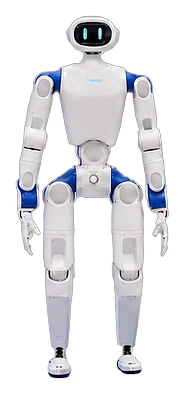
RoboParty
RoboParty RP1
- Autonomy
- IIAssisted
- Pre-release
- 70/100Plausible
- Readiness
- Not assessed
- Price
- Not tracked
RoboParty
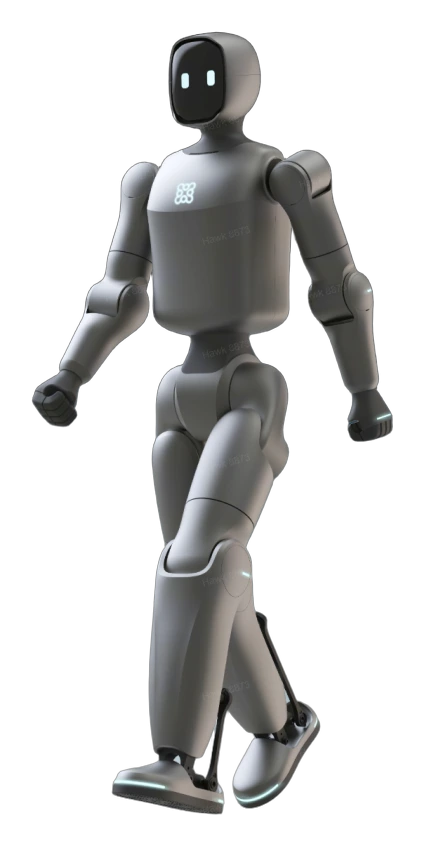
Zeroth
Up to three
All humanoid robots. Every figure below is placed against the whole class, so a gap can be read against how much the class itself varies.
The conditions each robot was assessed against, side by side. Rows marked in gold are where these machines genuinely differ.
| Condition | RoboParty RP1 | Zeroth Bridge |
|---|---|---|
| Where it operates | ||
| Home / residential | DependsNo consumer home deployment has been announced; RP1 targets labs, classrooms and developer workspaces, not households. | DependsBuilt as a developer and research platform, not a home appliance; it performs no documented household task. |
| Office / retail | DependsNo commercial deployment exists yet; RoboParty has described research and development use, not business operations. | DependsSold to universities, research teams and developers for skill building, not packaged for a commercial service role. |
| Warehouse / factory | PoorRP1 is positioned as a research and development platform; no industrial deployment or ruggedization has been documented. | PoorNo ingress rating or industrial payload spec; a 2 kg two-finger grip suits bench work, not factory duty. |
| Primary tasks | ||
| Household chores | PoorNo household or chore-task capability has been documented; the public demo covered balance recovery only. | PoorBuilt-in skills are walking, squatting, dancing and backflips; no household or workplace chore is documented. |
| Social / carethey differ | PoorRoboParty has not documented any social-interaction or companion behavior for RP1. | DependsCarries a microphone array and touch sensing but no documented conversational or companion software ships with it. |
| Specialized job | GoodBuilt for robotics research and embodied-AI development, with an open stack intended for a team to specialize toward its own project. | GoodA published joint map, open SDK and VR teleoperation suit specialized locomotion and manipulation research. |
| Supervision needs | ||
| Fully autonomous | PoorNo autonomous, unsupervised operation has been documented; the only public demo ran on a staffed show floor. | PoorNo autonomous task completion is documented; it cannot be left to run a job unattended. |
| With oversightthey differ | GoodMatches RoboParty's own demonstrated use: a staffed IROS 2026 session with visitors directly interacting with the robot. | DependsFall recovery is undocumented for a 13 kg biped doing backflips; keep a person watching and the area clear. |
| Teleoperated | GoodFits a lab or classroom pilot project, which is the use case RoboParty is building the open stack for. | GoodTele_Bridge provides real-time whole-body VR teleoperation, the robot's intended hands-on operating mode. |
| Timeline | ||
| Ready today | PoorNo units have shipped to anyone; nothing is available to use today. | PoorAnnounced September 2026 as a first-batch pre-order with no delivery date; no delivered unit is documented. |
| Near-term (1–2 yrs) | DependsRoboParty has named a Q4 2026 mass-production target, but with no firm date, price, or confirmed distribution to outside teams. | DependsBeta SDK and simulation access opened September 2026, but hardware ship timing is still unstated. |
| Research phase | GoodMatches the platform's stated purpose: an open research and embodied-AI development kit, demonstrated live at IROS 2026. | GoodPositioned as an open research and development biped, which is the maturity stage it genuinely occupies. |
A robot being poor for a condition is a fact about fit, not a fault. “Depends” means the record names a limit worth reading, not that the answer is unknown.
None of these has shipped, so they are assessed on track record, engineering plausibility and how the demonstrations match the claims.
Excluded as unevidenced, so it is left out of the number: RoboParty RP1
Never averaged into it. These describe how much the maker has disclosed, not what the machine does.
| RoboParty RP1 | Zeroth Bridge | |
|---|---|---|
| ReadinessShip-date specificity, pricing transparency, distribution and regulatory status. Published beside the number; never averaged in. | 42/100 | 60/100 |
| DisclosureHow much of the product is disclosed. Higher means fewer fundamental unknowns remain. Published beside the number; never averaged in. | 32/100 | 45/100 |
A number only means something next to the spread it sits in. Each track is the real range across every classified robot in the class, with the median marked.
These robots share no measured specification with enough published figures to plot. That is a gap in the record, not a finding about the robots.
Written on each record, and the only thing here every robot on the site carries.
What each design gives up to be good at what it is good at.
RP1 is open by design, but openness is also the only thing proven so far: the IROS demo showed balance recovery, not the manipulation or task-autonomy claims the fuller platform makes.
Building on RP1 today means building on a roadmap, because the motion-control system, simulation environment and SDKs RoboParty calls “full-stack” are still being opened in stages, not shipped complete.
$3,999 buys a biped with a published joint map and no published runtime.
Because control is replayed motion or live teleoperation, every new behavior is something a developer has to build.
Two weights on one page: about 10 kg in the header, about 13 kg in the spec table.
Stated by the record itself. A robot being wrong for a household is a fact about fit, not a fault.
The upkeep ownership hands back to you, whatever the autonomy level says.
Classifications rest on different depths of evidence. A pre-release assessment and a verified one are not the same kind of claim.
| Robot | Evidence status | Sources reviewed | Last assessed |
|---|---|---|---|
| RoboParty RP1 | Pre-Release | 3 | Oct 2026 |
| Zeroth Bridge | Pre-Release | 6 | Oct 2026 |
Evidence status counts the sources behind a classification, not their kind. A high count can be maker documentation and price coverage, so read it as how much was reviewed rather than as independent testing. How we weigh evidence.
 The full recordRoboParty RP1Specifications, evidence, the Fit Check in full, and every tracked change.
 The full recordZeroth BridgeSpecifications, evidence, the Fit Check in full, and every tracked change.
Robovations classifies robots; it does not rank them. Nothing on this page is a recommendation, and no manufacturer influences a classification or its placement here.
Comparing across classes is allowed — the page will switch to per-class positioning and tell you it has.