All specialty robots. Every figure below is placed against the whole class, so a gap can be read against how much the class itself varies.
How far apart is a long way?
A number only means something next to the spread it sits in. Each track is the real range across every classified robot in the class, with the median marked.
Runtime31 with a published figure
360 min720 min
Miko 3360 min
Serve Robotics Gen 3720 min
30 minmedian 300 min960 min
Not compared, because fewer than two of these robots carry a published figure: Price, Charge time, Noise, Weight, Height.
What the numbers leave out.
Written on each record, and the only thing here every robot on the site carries.
The trade-off
What each design gives up to be good at what it is good at.
Miko 3
The $299 price buys the hardware; the library that makes it worth talking to costs $180 a year.
A camera that makes video calls to a parent’s phone also means face and voice data leave the house, kept for up to three years under Miko’s policy.
Serve Robotics Gen 3
Claims Level IV sidewalk autonomy but requires remote operators for complex scenarios; actual deployment autonomy is closer to Level II-Level III, bounded by jurisdiction and decision edge cases.
Who each one is wrong for
Stated by the record itself. A robot being wrong for a household is a fact about fit, not a fault.
Miko 3
Families unwilling to pay an ongoing subscription
Without Miko Max, The Gadgeteer found only one module or story per section plus progress reports and time controls, which leaves little to play after the first week.
Children who mumble or are still learning to talk
The Gadgeteer found the conversational AI poor at understanding anything but clear speech and unable to answer many questions.
Homes without dependable Wi-Fi
Miko's FAQ ties games and educational content to a Wi-Fi connection, so a weak network removes most of what the robot does.
Households that want no camera or microphone near children
Face and voice data are collected; Miko's privacy policy keeps biometric data up to three years, although the camera and microphone can be switched off in the app.
Buyers expecting a robot that roams and explores rooms
It rolls on flat surfaces but builds no map, cannot dock itself, and showed no obstacle avoidance in The Gadgeteer's review.
Serve Robotics Gen 3
Fully autonomous operation without human fallback
Serve keeps remote assistance in the loop for situations the robot does not resolve on its own, and does not publish how often operators take over. Unattended operation cannot be assumed.
Buying or operating a unit yourself
Serve runs the fleet itself and sells delivery as a service. The robot is not offered for purchase, lease, or operator licensing.
Scenarios requiring arm manipulation or package handling
Gen 3 is a sidewalk transport platform with a cargo compartment about 15 percent larger than Gen 2, sized to take four 16-inch pizzas. It has no arm: the merchant loads it and the customer unloads it. No pickup, placement, or signature capability is documented.
What stays your job
The upkeep ownership hands back to you, whatever the autonomy level says.
Miko 3
Daily: Recharge over the included USB-C charger; about 4 hours for 6 to 7 hours of play.
As needed: Shut the robot fully down between sessions, since standby drain can empty the battery overnight.
Weekly: Wipe the touchscreen and camera window with a dry cloth.
As needed: Install app and firmware updates, which can be lengthy during first setup.
Annually: Renew or cancel Miko Max, which carries most of the content library.
Serve Robotics Gen 3
Daily: Battery charge cycle management and route software updates from Serve operations center.
Weekly: Sensor cleaning (cameras, LiDAR) and wheel tread inspection for debris.
Monthly: Software security patches and navigation model updates; remote diagnostics from Serve support.
As needed: Wheel replacement if flat or worn; bumper/skirt damage repair.
Seasonally: Weather-proofing inspection; firmware version management across fleet.
How much each of these is standing on.
Classifications rest on different depths of evidence. A pre-release assessment and a verified one are not the same kind of claim.
Evidence behind each classification
Robot
Evidence status
Sources reviewed
Last assessed
Miko 3
Pending
4
Sep 2026
Serve Robotics Gen 3
Not Consumer-Ready
4
Aug 2026
Evidence status counts the sources behind a classification, not their kind. A high count can be maker documentation and price coverage, so read it as how much was reviewed rather than as independent testing. How we weigh evidence.
Robovations classifies robots; it does not rank them. Nothing on this page is a recommendation, and no manufacturer influences a classification or its placement here.
Add a robot
Comparing across classes is allowed — the page will switch to per-class positioning and tell you it has.
Our own analytics, plus optional Google Analytics. No ads, no cross-site tracking. Privacy policy

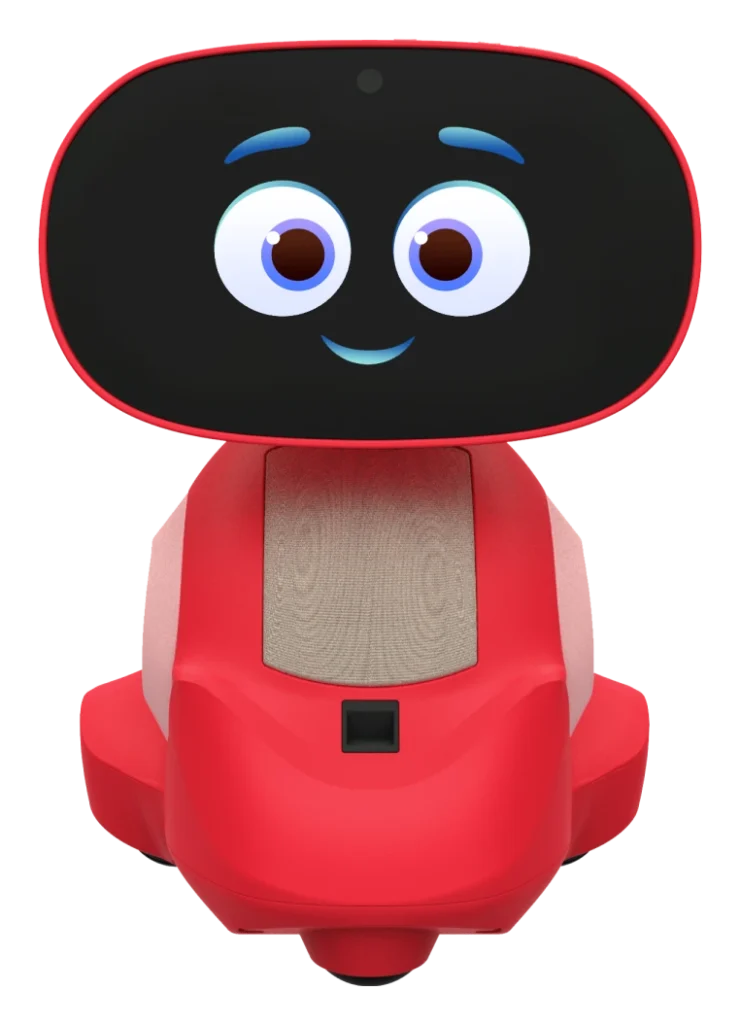

 The full recordMiko 3Specifications, evidence, the Fit Check in full, and every tracked change.
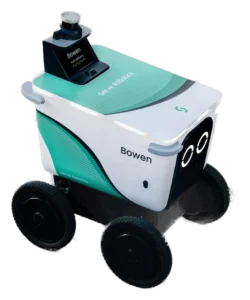 The full recordServe Robotics Gen 3Specifications, evidence, the Fit Check in full, and every tracked change.