
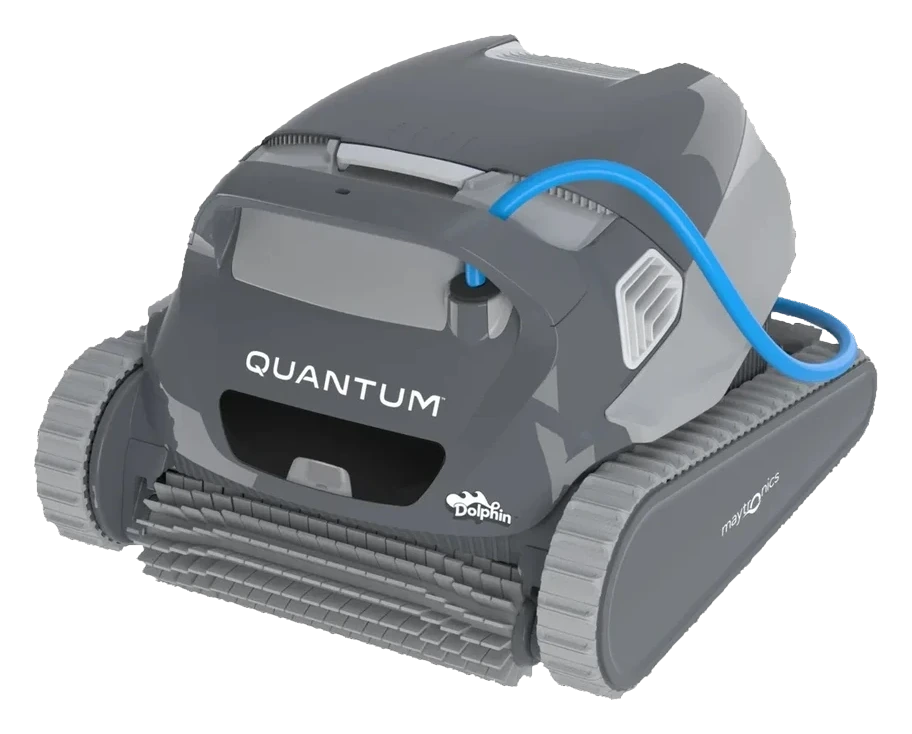
Maytronics
Maytronics Dolphin Quantum
- Autonomy
- IIIConditional
- Score
- 68/100Capable
- Readiness
- Ready Now
- Price
- $1,549list
Maytronics
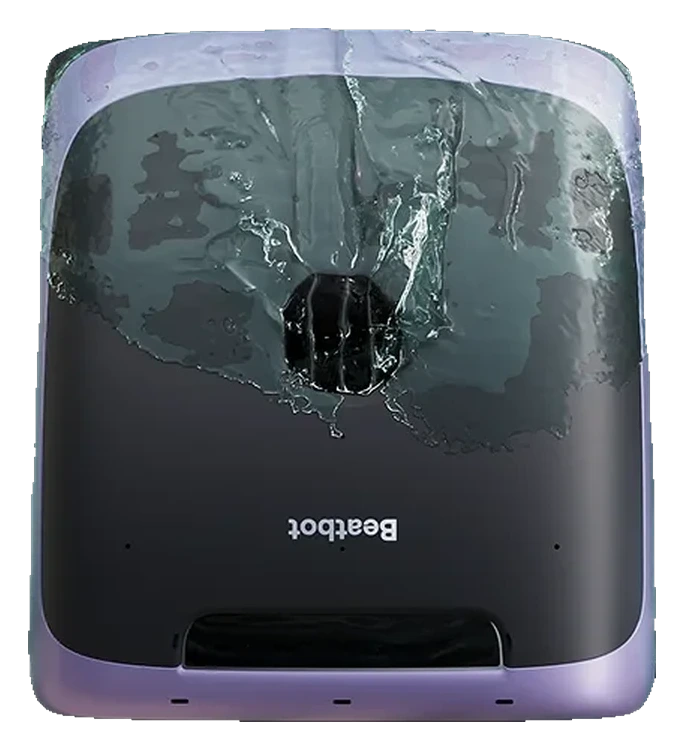
Beatbot
Up to three
All robot pool cleaners. Every figure below is placed against the whole class, so a gap can be read against how much the class itself varies.
The conditions each robot was assessed against, side by side. Rows marked in gold are where these machines genuinely differ.
| Condition | Dolphin Quantum | Beatbot Sora 70 |
|---|---|---|
| Pool type | ||
| In-ground | GoodDesigned for in-ground pool geometry and depth; standard slope and diving-section handling. | GoodDesigned for in-ground pool geometry. Manufacturer specs target standard gunite and vinyl installations. |
| Above-ground | PoorWall angles and shallow depth of above-ground pools incompatible with in-ground navigation design. | PoorMapping system assumes in-ground sloped floor and vertical walls. Above-ground ramp entry and shelf geometry will confound navigation. |
| Mixed setup | GoodIn-ground operation is the design basis; above-ground not supported. | GoodNo preference; see location-specific specs. |
| Pool size | ||
| Small (< 400 sqft) | GoodUnder-10,000-gallon pools see over-engineering; cable-less cordless models would be more efficient for small residential pools. | GoodBelow optimal pool volume for smart-mapping efficiency. Charging cycles may interrupt coverage in pools under 8,000 gallons. |
| Medium (400 – 800) | Good12,000–18,000 gallon range optimal; dual-brush system and filter basket sized for this throughput. | GoodTarget capacity (12,000–25,000 gallons). Runtime and coverage align with mid-size in-ground standard dimensions. |
| Large (> 800)they differ | Good18,000–25,000 gallon pools see excellent coverage; cable length and oversized basket handle multi-session depth. | DependsAbove 25,000 gallons, battery runtime limits each charge cycle to partial coverage. Multi-day full cleaning requires resumption across sessions. |
| Debris load | ||
| Fine (sand / silt) | GoodFine-mesh filter basket and multi-stage filtration handle sand and pollen efficiently. | GoodFilter and brush handle fine silt and dust. Weekly cartridge rinse sufficient for light debris load. |
| Leaves / large debristhey differ | GoodOversized basket capacity handles seasonal leaf load; 2–3 week emptying cycle appropriate for light-to-moderate debris. | DependsLeaf load requires pre-skimming and frequent filter checks. Smart mapping may get confused by floating debris; manual intervention likely. |
| Algae / heavy foulingthey differ | GoodDual brushes target waterline algae and staining; firmware updates have refined algae-specific navigation paths. | DependsAlgae buildup increases brush clogging and motor load. Chemical treatment and wall scrubbing often require manual intervention; robot handles maintenance phase only. |
| Coverage you want | ||
| Floor only | GoodThorough floor coverage via multi-zone navigation; all floor surfaces contacted within daily cycle. | GoodPrimary coverage mode. Smart mapping optimized for floor traversal and obstacle avoidance. |
| Floor + walls | GoodBalanced floor and wall coverage; wall climbing is secondary but effective on vertical algae staining. | GoodWall-climbing is claimed but unvalidated independently. Vertical coverage efficacy and energy cost per cycle not documented. |
| Floor + walls + waterline | GoodWaterline scrubbing is primary brush function; floor and wall coverage balanced with waterline protection. | Good4-in-1 coverage claimed: floor, walls, waterline, surface. Independent validation of sustained waterline and surface performance pending. |
A robot being poor for a condition is a fact about fit, not a fault. “Depends” means the record names a limit worth reading, not that the answer is unknown.
Nine inputs across three pillars, each weighted as shown and each scored so more is better. A robot can lead on one and trail on another, which is the point of showing them apart.
A number only means something next to the spread it sits in. Each track is the real range across every classified robot in the class, with the median marked.
Not compared, because fewer than two of these robots carry a published figure: Runtime, Charge time, Noise.
Written on each record, and the only thing here every robot on the site carries.
What each design gives up to be good at what it is good at.
Scheduling is real but blind. The power supply’s built-in weekly timer will start a cycle every day, every other day or every third day without anyone present, but there is no app, no status and no way to know the filter is loaded until the next time the unit comes out of the pool.
Cordless convenience replaces cable and swivel maintenance, it does not add to it. What you take on instead is charge scheduling and off-season battery storage.
Smart mapping is early-stage for pool cleaners. Independent hands-on reviews published from May 2026 cover floor, wall, waterline and surface performance; what has no record yet is how mapping and coverage hold up across several seasons.
Stated by the record itself. A robot being wrong for a household is a fact about fit, not a fault.
The upkeep ownership hands back to you, whatever the autonomy level says.
Classifications rest on different depths of evidence. A pre-release assessment and a verified one are not the same kind of claim.
| Robot | Evidence status | Sources reviewed | Last assessed |
|---|---|---|---|
| Maytronics Dolphin Quantum | Pending | 1 | Aug 2026 |
| Beatbot Sora 70 | Pending | 3 | Aug 2026 |
Evidence status counts the sources behind a classification, not their kind. A high count can be maker documentation and price coverage, so read it as how much was reviewed rather than as independent testing. How we weigh evidence.
 The full recordMaytronics Dolphin QuantumSpecifications, evidence, the Fit Check in full, and every tracked change.
 The full recordBeatbot Sora 70Specifications, evidence, the Fit Check in full, and every tracked change.
Robovations classifies robots; it does not rank them. Nothing on this page is a recommendation, and no manufacturer influences a classification or its placement here.
Comparing across classes is allowed — the page will switch to per-class positioning and tell you it has.