
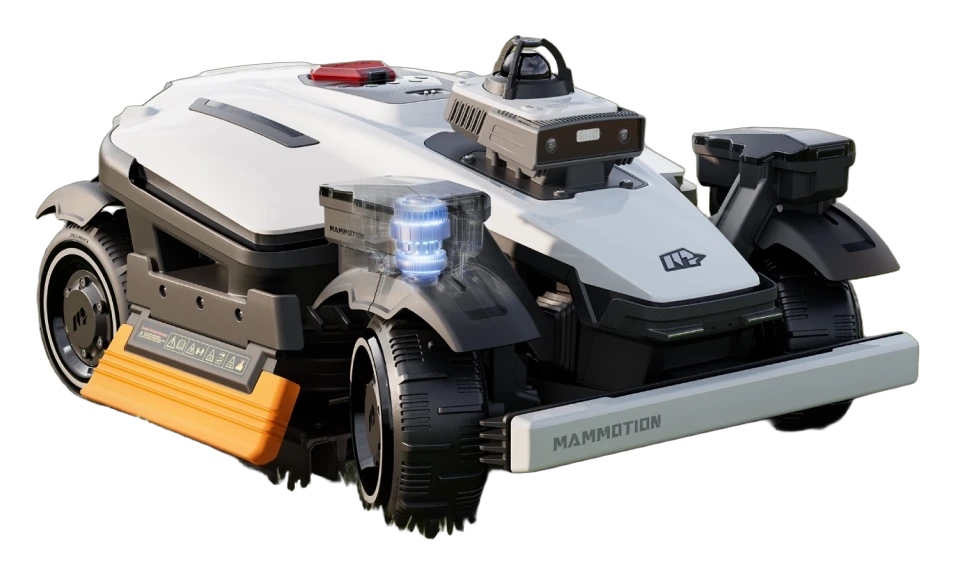
Mammotion
Mammotion LUBA 4 AWD
- Autonomy
- IVEnvironmental
- Pre-release
- 75/100Promising
- Readiness
- Not assessed
- Price
- Not tracked
Mammotion
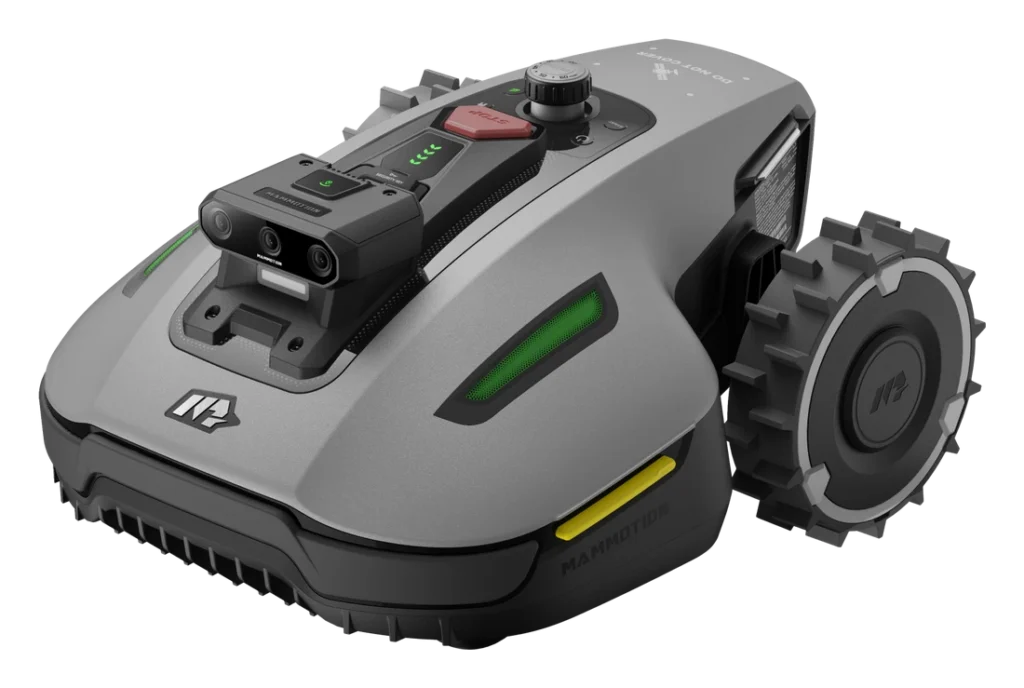
Mammotion
Up to three
All robot lawn mowers. Every figure below is placed against the whole class, so a gap can be read against how much the class itself varies.
The conditions each robot was assessed against, side by side. Rows marked in gold are where these machines genuinely differ.
| Condition | Mammotion LUBA 4 AWD | YUKA mini 2 800 |
|---|---|---|
| Yard size | ||
| Under ¼ acre | GoodComfortably within range; the 3000F is the sensible variant and larger tiers are more machine than the ground needs. | GoodRated for about 8,600 sqft (0.20 acre), matching a sub-quarter-acre lot on scheduled mapped runs. |
| ¼ – ½ acrethey differ | GoodThe 3000F covers roughly three quarters of an acre, so this sits inside its rated area with margin. | PoorCoverage tops out near 8,600 sqft (0.20 acre), about 2,150 sqft per charge; a quarter-to-half-acre lot exceeds its mapped area. |
| Over ½ acrethey differ | GoodThe 6000F reaches about one and a half acres and the 12000F about three, the top of the consumer range. | PoorFar beyond the 0.20-acre rating; a half-acre-plus lawn cannot be completed, so this is the wrong size class. |
| Terrain | ||
| Mostly flat | GoodAll-wheel drive is unnecessary here but costs nothing in capability on level ground. | GoodHandles flat lawns comfortably; vision and NetRTK keep straight, systematic passes on open ground. |
| Gentle slopes | GoodBanked and rolling ground is well inside the published 80 percent slope rating on an AWD chassis. | GoodRated to 45 percent (24 degree) gradients, so moderate slopes sit well within its traction range. |
| Steep / hillythey differ | GoodMammotion rates 80 percent, about 38.6 degrees, though no independent test of that figure exists yet. | DependsRated to 45 percent; traction and NetRTK accuracy can drop on wet grass or banks near that limit. |
| Grass type | ||
| Typical lawn grass | GoodOrdinary turfgrass is the stated design case for the floating disc deck. | GoodCuts standard turfgrass cleanly at 20 to 60 mm using five pivoting razor blades on a 190 mm deck. |
| Mixed / tall growth | DependsMammotion publishes no cutting height range for this series, so performance in long growth is undocumented. | DependsThe 190 mm deck suits regular cutting; long or overgrown grass needs a manual first cut before it keeps pace. |
| Thick (Bermuda / Zoysia) | DependsNo independent test of dense or matted turf was found, and the deck cutting height range is unpublished. | DependsDense or wiry grass slows the single-disc 190 mm deck; more frequent passes keep an even cut. |
| Boundary setup | ||
| Wireless required | GoodWire-free by design, using LiDAR, network RTK and cameras with no perimeter wire and no owner-sited base station. | GoodFully wire-free: NetRTK satellite positioning and tri-camera vision replace any buried perimeter cable. |
| Wire required | PoorThere is no wired boundary mode; a buried perimeter wire cannot be used to constrain this machine. | PoorNo perimeter-wire mode exists; containment is wire-free only, so a cable boundary is not available. |
| No preference | GoodSets up wire-free with no buried perimeter and no base station to power. | GoodNo boundary preference means its wire-free NetRTK and vision setup fits with nothing to bury. |
A robot being poor for a condition is a fact about fit, not a fault. “Depends” means the record names a limit worth reading, not that the answer is unknown.
A number only means something next to the spread it sits in. Each track is the real range across every classified robot in the class, with the median marked.
Not compared, because fewer than two of these robots carry a published figure: Price, Runtime, Charge time, Noise, Weight.
Written on each record, and the only thing here every robot on the site carries.
What each design gives up to be good at what it is good at.
The variant with the most ground to cover is the one that cannot fit the edge trimmer, so scale and finish are sold as alternatives rather than together.
Cloud-served RTK removes the base station the owner had to site and power, and moves the dependency to a network Mammotion has not mapped in public.
You buy wire-free convenience and pay for it in sky: under a dense canopy the NetRTK fix is the first thing to go.
The 800 square meter area cap means a lawn that grows past a fifth of an acre outruns what one charge can map, not what the blades can cut.
Camera-only navigation on this model: obstacle reading leans on vision alone, without the LiDAR the larger variant in the line carries.
Stated by the record itself. A robot being wrong for a household is a fact about fit, not a fault.
The upkeep ownership hands back to you, whatever the autonomy level says.
Classifications rest on different depths of evidence. A pre-release assessment and a verified one are not the same kind of claim.
| Robot | Evidence status | Sources reviewed | Last assessed |
|---|---|---|---|
| Mammotion LUBA 4 AWD | Pre-Release | 4 | Sep 2026 |
| Mammotion YUKA mini 2 800 | Pending | 1 | Oct 2026 |
Evidence status counts the sources behind a classification, not their kind. A high count can be maker documentation and price coverage, so read it as how much was reviewed rather than as independent testing. How we weigh evidence.
 The full recordMammotion LUBA 4 AWDSpecifications, evidence, the Fit Check in full, and every tracked change.
 The full recordMammotion YUKA mini 2 800Specifications, evidence, the Fit Check in full, and every tracked change.
Robovations classifies robots; it does not rank them. Nothing on this page is a recommendation, and no manufacturer influences a classification or its placement here.
Comparing across classes is allowed — the page will switch to per-class positioning and tell you it has.