
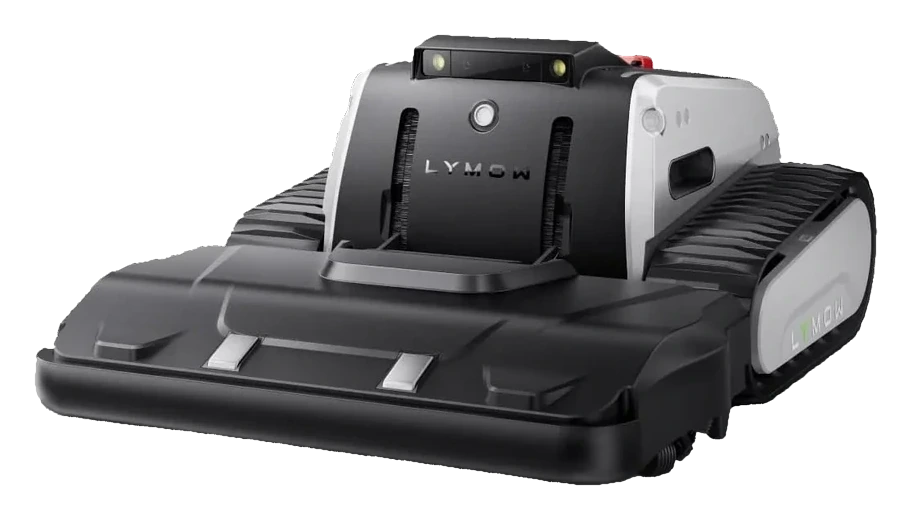
Lymow
Lymow One Plus
- Autonomy
- IIIConditional
- Score
- 73/100Strong
- Readiness
- Ready Now
- Price
- $2,999list
Lymow
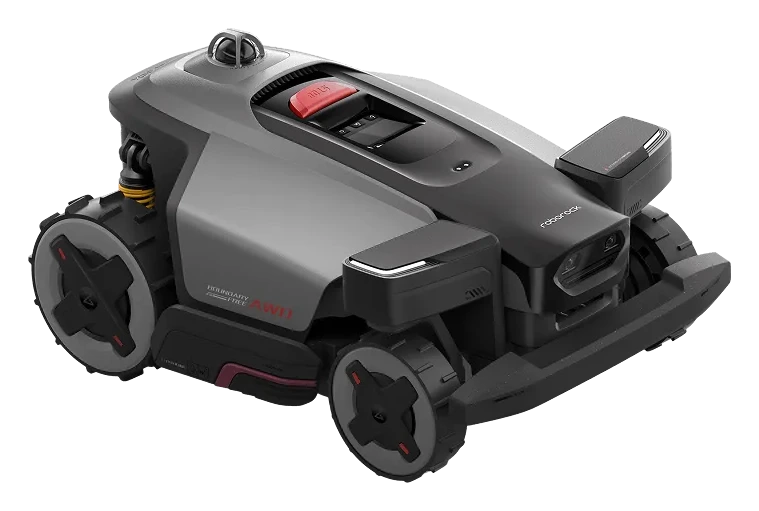
Roborock
Up to three
All robot lawn mowers. Every figure below is placed against the whole class, so a gap can be read against how much the class itself varies.
The conditions each robot was assessed against, side by side. Rows marked in gold are where these machines genuinely differ.
| Condition | Lymow One Plus | RockMow X120H LiDAR |
|---|---|---|
| Yard size | ||
| Under ¼ acre | Good1,000–10,000 sqft yards are ideal; minimal setup overhead, full charge handles multiple runs. | GoodRoborock rates it for up to 0.49 acre per day, well above a sub-quarter-acre lawn. |
| ¼ – ½ acrethey differ | Good10,000–21,780 sqft (0.5 acre) handled in one to two passes per charge cycle. | DependsRoborock rates it for 0.49 acre per day, but no independent test confirms coverage at that size. |
| Over ½ acrethey differ | DependsYards over 21,780 sqft require multiple charge cycles or segment mowing; RTK boundary recalibration overhead per session. | PoorIts 0.49 acre per day rating falls short of lawns larger than half an acre. |
| Terrain | ||
| Mostly flat | Good0–5% slopes ideal; RTK positioning and track drive deliver maximum efficiency. | GoodAll-wheel drive with active steering and suspension is built for far rougher ground than a flat lawn. |
| Gentle slopesthey differ | Good5–20% gradients supported; track drive excels on wet slopes where rotary mowers slip. | DependsRoborock rates it for 80% slopes and 3.15 in obstacles, but no independent terrain test was found. |
| Steep / hilly | DependsRated to 25% gradient; traction loss and tipover risk increase above 20% on wet soil. Test boundary zones first. | DependsThe 80% slope rating comes from Roborock alone; no independent source has tested it on steep grass. |
| Grass type | ||
| Typical lawn grass | GoodFescue, bluegrass, zoysia, Bermuda. Typical cool and warm-season grasses handled efficiently. | GoodA 1.6 to 3.5 inch cutting height and 9.5 inch width cover typical residential lawn heights. |
| Mixed / tall growth | DependsTall fescue and bahiagrass over 4 inches require pre-season mowing or mulching to avoid blade clogging. | DependsCutting height tops out at 3.5 inches, so grass kept taller than that cannot be matched. |
| Thick (Bermuda / Zoysia) | DependsDense St. Augustine or thick Bermuda increase blade wear and power draw; shorter mowing intervals needed. | DependsRoborock claims its six-blade system handles thick grass, but no independent dense-turf test was found. |
| Boundary setup | ||
| Wireless required | GoodVirtual RTK boundary is native; no perimeter wire required or supported. | GoodIt maps and bounds the lawn with LiDAR and cameras, with no wire and no RTK antenna. |
| Wire required | PoorLymow One Plus uses RTK virtual boundaries only; no buried-wire fallback available. | PoorIt has no perimeter-wire mode; boundaries come from its LiDAR and camera map. |
| No preference | GoodWire-free operation is the design; no preference needed. Any yard compatible with RTK signals works well. | GoodWith no boundary preference, its wire-free LiDAR mapping covers the lawn without burying any wire. |
A robot being poor for a condition is a fact about fit, not a fault. “Depends” means the record names a limit worth reading, not that the answer is unknown.
A number only means something next to the spread it sits in. Each track is the real range across every classified robot in the class, with the median marked.
Not compared, because fewer than two of these robots carry a published figure: Charge time, Noise.
Written on each record, and the only thing here every robot on the site carries.
What each design gives up to be good at what it is good at.
Wire-free RTK ships with its antenna and mounting hardware in the box, so there is no separate base station to purchase. Setup moves from wire burial to antenna placement and signal calibration.
Rubber tracks hold slopes and wet grass that wheeled mowers slip on, at the cost of a 78 lb machine to move, transport and store.
Camera-assisted navigation: the front camera feeds obstacle avoidance and an in-app live view. Lymow has not published what is retained or uploaded.
LiDAR removes the RTK antenna from the setup, but every navigation claim still rests on Roborock alone.
Four driven wheels and suspension for 80% slopes come at $3,199, more than twice the RockNeo Q110H’s $1,299.
Stated by the record itself. A robot being wrong for a household is a fact about fit, not a fault.
The upkeep ownership hands back to you, whatever the autonomy level says.
Classifications rest on different depths of evidence. A pre-release assessment and a verified one are not the same kind of claim.
| Robot | Evidence status | Sources reviewed | Last assessed |
|---|---|---|---|
| Lymow One Plus | Pending | 3 | Sep 2026 |
| Roborock RockMow X120H LiDAR | Provisional | 5 | Sep 2026 |
Evidence status counts the sources behind a classification, not their kind. A high count can be maker documentation and price coverage, so read it as how much was reviewed rather than as independent testing. How we weigh evidence.
 The full recordLymow One PlusSpecifications, evidence, the Fit Check in full, and every tracked change.
 The full recordRoborock RockMow X120H LiDARSpecifications, evidence, the Fit Check in full, and every tracked change.
Robovations classifies robots; it does not rank them. Nothing on this page is a recommendation, and no manufacturer influences a classification or its placement here.
Comparing across classes is allowed — the page will switch to per-class positioning and tell you it has.