Skip to content
Saved
Comparison · 2 robots

Labrador Systems Retriever · Whisker Litter-Robot 5 Pro

All specialty robots. Every measure below is plotted against the full class, so a difference can be read against how much the class itself varies.
  1. Labrador Systems Retriever
  2. Whisker Litter-Robot 5 Pro
Labrador Systems

Labrador Systems Retriever

Autonomy
IIIConditional Autonomy
Score
71/100 Promising
Readiness
Not assessed
Price
Not tracked

Up to three

01 Classification

What each one does on its own.

The Autonomy Ladder is the same five rungs for every robot on the site. A rung describes the conditions a robot handles without you, not how good it is.

V
Generalized
Any task, any setting
IV
Environmental
Handles new obstacles without help
III
Conditional
Finishes familiar jobs on its own
Labrador Systems RetrieverWhisker Litter-Robot 5 Pro
II
Assisted
Runs preset routines, needs rescue
I
Manual
One action, on command
02 Assessment

Where they actually differ.

The Robovations Score is nine inputs across three pillars, each weighted as shown and each scored so that more is better. A robot can lead on one and trail on another, which is the point of showing them apart. Cost of ownership and data handling are reported on each robot's own page and are never averaged into the score.

Capability

Task completion16% of score
Does it finish the job it is sold to do, unattended
  • Whisker Litter-Robot 5 Pro75
18median 72 across 429 scored robots100

Not scored: Labrador Systems Retriever

Coverage and navigation10% of score
Does it work the whole area, and hold that between runs
  • Whisker Litter-Robot 5 Pro70
0median 70 across 417 scored robots100

Not scored: Labrador Systems Retriever

Edge-case recovery10% of score
Does it recover from the failures its category presents
  • Whisker Litter-Robot 5 Pro62
18median 52 across 318 scored robots100

Not scored: Labrador Systems Retriever

Operating envelope4% of score
How far conditions can vary before performance drops
  • Whisker Litter-Robot 5 Pro58
28median 68 across 393 scored robots100

Not scored: Labrador Systems Retriever

Dependability

Field failure rate16% of score
Documented hardware failures per owner-year
  • Whisker Litter-Robot 5 Pro70
6median 70 across 355 scored robots100

Not scored: Labrador Systems Retriever

Software stability14% of score
Whether updates fix more than they break
  • Whisker Litter-Robot 5 Pro65
15median 65 across 340 scored robots100

Not scored: Labrador Systems Retriever

Support longevity10% of score
Committed parts, service and updates, with dates
  • Whisker Litter-Robot 5 Pro72
0median 62 across 425 scored robots100

Not scored: Labrador Systems Retriever

Ownership burden

Routine maintenance12% of score
Hands-on time it asks for in normal operation
  • Whisker Litter-Robot 5 Pro76
22median 67 across 430 scored robots100

Not scored: Labrador Systems Retriever

Consumables8% of score
Parts that must be bought to keep it working
  • Whisker Litter-Robot 5 Pro66
8median 69 across 430 scored robots100

Not scored: Labrador Systems Retriever

03 Measured against the class

How far apart is a long way?

A number only means something next to the spread it sits in. Each track below is the real range across every classified robot in the class, with the median marked.

These robots share no measured specification with enough published figures to plot. That is a gap in the record, not a finding about the robots.

04 Ownership

What the numbers leave out.

The trade-off

What each design gives up to be good at what it is good at.

Labrador Systems Retriever

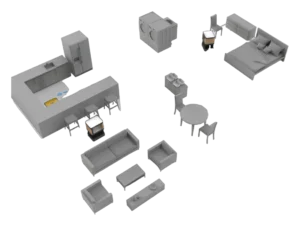
It solves reaching by changing the kitchen: pallets attached to counters stand in for a grasping arm.

A consumer product on the reservation page, a care-provider service in practice.

Whisker Litter-Robot 5 Pro

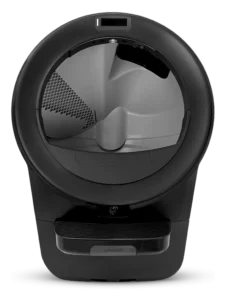
You are trading scooping for supervision: the globe keeps you from touching soiled litter, not from being recorded by two always-on cameras aimed at the box.

Litter lock-in: the sifting mechanism is built for clumping litter, so switching to a preferred crystal or natural formula isn’t possible on this hardware.

AI cat identification and extended video storage sit behind a paid Whisker+ subscription, so the headline AI feature is not fully included at the $899 price.

Who each one is wrong for

Stated by the record itself. A robot being wrong for a household is a fact about fit, not a fault.

Labrador Systems Retriever
Households hoping to buy one outright in 2026
Labrador's availability page ties the consumer Retriever to Retriever Pro demand and gives no date. Its reservation page still quotes a delivery estimate for the second half of 2023.
Homes where daily life spans two or more floors
The Robot Report describes cliff sensors that detect stairs and drops, and no stair-climbing ability is published. One unit serves one floor, so items still need carrying between levels.
Anyone needing loose objects picked up from floors or shelves
Retrieval works only with prepared trays on installed pallets, as IEEE Spectrum described it. Nothing in Labrador's material describes grasping an arbitrary object.
Loads heavier than 25 pounds across both decks
Labrador lists 25 pounds as the carrying limit over two decks, and its launch release caps each retrievable tray at 10 pounds.
Buyers who require a published data policy for camera devices
Labrador's privacy policy, last updated December 2021, covers its website only. It says nothing about the robot's 3D camera imagery, home map or voice commands.
Whisker Litter-Robot 5 Pro
Households running crystal or silica non-clumping litter
The globe's sifting grate is designed around clumping litter; crystal and other non-clumping formulas do not separate correctly and are not manufacturer-supported.
Homes with kittens under the 3 lb sensor minimum
The weight sensor confirms a session has ended starting at a registered 3 lb minimum; kittens below that weight cannot reliably trigger automatic cycling until they grow.
Households not comfortable with an always-on in-home camera
Both the forward-facing and in-globe cameras record and will capture people in the room, not only the cat; recordings can be disabled or deleted, but the hardware ships active.
Buyers expecting AI cat identification included at the base price
Facial-recognition cat identification and expanded video storage are gated behind a paid Whisker+ membership; the $899 unit ships with camera hardware but not the full AI tier active.

What stays your job

The upkeep ownership hands back to you, whatever the autonomy level says.

Labrador Systems Retriever
  • Daily: Stage trays on the counter-mounted pallets before the robot is sent to fetch them.
  • Daily: Keep the route to the self-charging dock clear; Labrador lists about 4 hours for a full recharge.
  • Weekly: Wipe both decks and the trays that carry food, drinks and dishes.
  • As needed: Keep passages at least 28 inches wide after moving furniture.
  • As needed: Arrange service through the care provider or Labrador; no public parts or repair channel is listed.
Whisker Litter-Robot 5 Pro
  • Weekly: Empty and reline the waste drawer; tie-and-toss bag.
  • Weekly: Top off litter to the fill line as automatic sifting reduces the level.
  • Monthly: Wipe down the globe interior, base and camera lenses to prevent residue buildup.
  • Every 3-6 months: Replace the carbon odor filter.
  • As needed: Clear an obstruction or reset a cycle paused and flagged by the app.
  • As needed: Reconnect the unit to WiFi if remote alerts or camera streaming stop working.
05 Evidence

How much each of these is standing on.

Classifications rest on different depths of evidence. A pre-release assessment and a verified one are not the same kind of claim.

Evidence behind each classification
Robot Evidence status Sources reviewed Last assessed
Labrador Systems Retriever Not Consumer-Ready 10 Sep 2026
Whisker Litter-Robot 5 Pro Provisional 5 Aug 2026

Robovations classifies robots; it does not rank them. Nothing on this page is a recommendation, and no manufacturer influences a classification or its placement here.