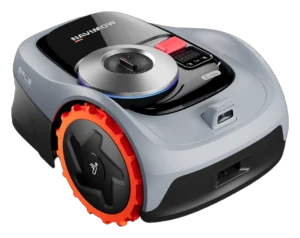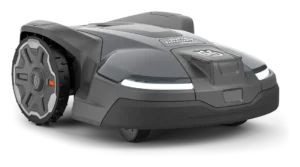
Husqvarna Automower 450X NERA · Segway Navimow i105N
All robot lawn mowers. Every measure below is plotted against the full class, so a difference can be read against how much the class itself varies.
- Husqvarna Automower 450X NERA
- Segway Navimow i105N
What each one does on its own.
The Autonomy Ladder is the same five rungs for every robot on the site. A rung describes the conditions a robot handles without you, not how good it is.
Where they actually differ.
The Robovations Score is nine inputs across three pillars, each weighted as shown and each scored so that more is better. A robot can lead on one and trail on another, which is the point of showing them apart. Cost of ownership and data handling are reported on each robot's own page and are never averaged into the score.
Capability
- Husqvarna Automower 450X NERA85
- Segway Navimow i105N68
- Husqvarna Automower 450X NERA75
- Segway Navimow i105N65
- Husqvarna Automower 450X NERA70
- Segway Navimow i105N52
- Husqvarna Automower 450X NERA65
- Segway Navimow i105N50
Dependability
- Husqvarna Automower 450X NERA100
- Segway Navimow i105N33
- Husqvarna Automower 450X NERA100
- Segway Navimow i105N65
- Husqvarna Automower 450X NERA97
- Segway Navimow i105N65
Ownership burden
- Husqvarna Automower 450X NERA75
- Segway Navimow i105N70
- Husqvarna Automower 450X NERA94
- Segway Navimow i105N75
How far apart is a long way?
A number only means something next to the spread it sits in. Each track below is the real range across every classified robot in the class, with the median marked.
- Husqvarna Automower 450X NERA145 min
- Segway Navimow i105N60 min
- Husqvarna Automower 450X NERA40 min
- Segway Navimow i105N90 min
- Husqvarna Automower 450X NERA58 dB
- Segway Navimow i105N58 dB
- Husqvarna Automower 450X NERA33.1 lbs
- Segway Navimow i105N24 lbs
- Husqvarna Automower 450X NERA11 in
- Segway Navimow i105N11.2 in
Not compared, because fewer than two of these robots carry a published figure: Price, Suction.
What the numbers leave out.
The trade-off
What each design gives up to be good at what it is good at.
Satellite positioning eliminates boundary wire labor and expense, but accuracy depends on clear sky line-of-sight and degrades under dense canopy.
Large 5000m² capacity is what the premium pricing buys; smaller yards benefit from simpler and cheaper alternatives.
Autonomous seasonal scheduling reduces user oversight, but weather-triggered pauses and frost avoidance limit mowing frequency compared to operator control.
Wire-free setup skips the trenching every boundary-wire mower requires, but it trades that convenience for RTK signal dependency that a buried wire never had to worry about.
Entry-tier coverage area: sized and priced for small, simple lots, not the acreage Segway markets its H-series line to handle.
Who each one is wrong for
Stated by the record itself. A robot being wrong for a household is a fact about fit, not a fault.
- Small lawns under 2500m²
- Conventional boundary-wire mowers and simpler robotic models offer lower acquisition cost and faster deployment for typical suburban properties.
- Properties with dense tree canopy
- Heavy overhead coverage degrades EPOS signal reliability, requiring fallback boundary wire or manual intervention that undermines autonomous operation benefits.
- Budget-conscious buyers
- Entry-level robotic mowers and manual alternatives provide significantly lower acquisition cost, though with higher operational effort.
- Owners unable to accept seasonal operation windows
- Frost detection and rain-triggered pauses limit mowing frequency during spring and autumn transition periods.
- Rental properties or frequently changing landscapes
- Perimeter remapping and recalibration overhead make this model inefficient for properties with frequent layout changes.
- Lawns over roughly half an acre
- Coverage sits well below Segway's larger i-series and H-series models; oversized lots outrun a single charge cycle and the mapped area limit this entry model is built for.
- Yards with grades beyond roughly 30%
- The front-wheel-drive chassis with off-road traction control is documented for slopes up to 30%; Segway positions its AWD models for terrain beyond that.
- Yards shaded by dense tree cover or tall buildings
- RTK positioning depends on a clear sky view; heavy canopy or nearby structures are a documented condition that degrades satellite-based navigation accuracy.
- Owners who specifically want a buried perimeter wire
- There is no wired-boundary option on this line; the entire design point is wire-free RTK-and-camera navigation instead of a buried loop.
- Overgrown or thick, fast-growing turf
- Small pivoting blades and a frequent-mow design are built for regular upkeep, not for clearing tall or dense grass that has gone unmowed for weeks.
What stays your job
The upkeep ownership hands back to you, whatever the autonomy level says.
- Weekly: Visual deck inspection for debris and grass buildup, estimated 5 minutes.
- Monthly: Clean the wheels and check the drive wheel treads for wear, estimated 10 minutes.
- Every 4-8 weeks: Blade replacement. Husqvarna states Automower blades are single-use and must never be sharpened, because sharpening weakens the safety coating and can lead to blade breakage. Replace the blades as a set together with their screws. Husqvarna sells Automower blades in multi-packs with screws included.
- Annually: Seasonal check including boundary verification, plus a full charge, cleaning and indoor storage over winter.
- As needed: Charging station cleaning and docking alignment verification.
- Occasional: Wheel replacement as treads wear. Parts retailers list rear wheels at around EUR 35 and a front wheel kit at around EUR 47.
- Monthly: Wipe down the AI camera lens on the mower body to keep obstacle detection accurate.
- Monthly: Check the underside for grass buildup and clear it away from the blade disc and wheels.
- Every 3-6 months: Replace the pivoting cutting blades; more often on thick or fast-growing turf.
- Seasonally: Clean the charging contacts on the dock and mower before spring startup.
- Seasonally: Store the mower and RTK reference station indoors over winter per Segway’s cold-weather guidance.
- As needed: Reposition or re-survey the RTK reference station if satellite accuracy drifts.
- Annually: Check wheel motors and drive belts for wear before the new mowing season.
How much each of these is standing on.
Classifications rest on different depths of evidence. A pre-release assessment and a verified one are not the same kind of claim.
| Robot | Evidence status | Sources reviewed | Last assessed |
|---|---|---|---|
| Husqvarna Automower 450X NERA | Provisional | 9 | Sep 2026 |
| Segway Navimow i105N | Provisional | — | Sep 2026 |
Add a robot
Comparing across classes is allowed — the page will switch to per-class positioning and tell you it has.