
Husqvarna
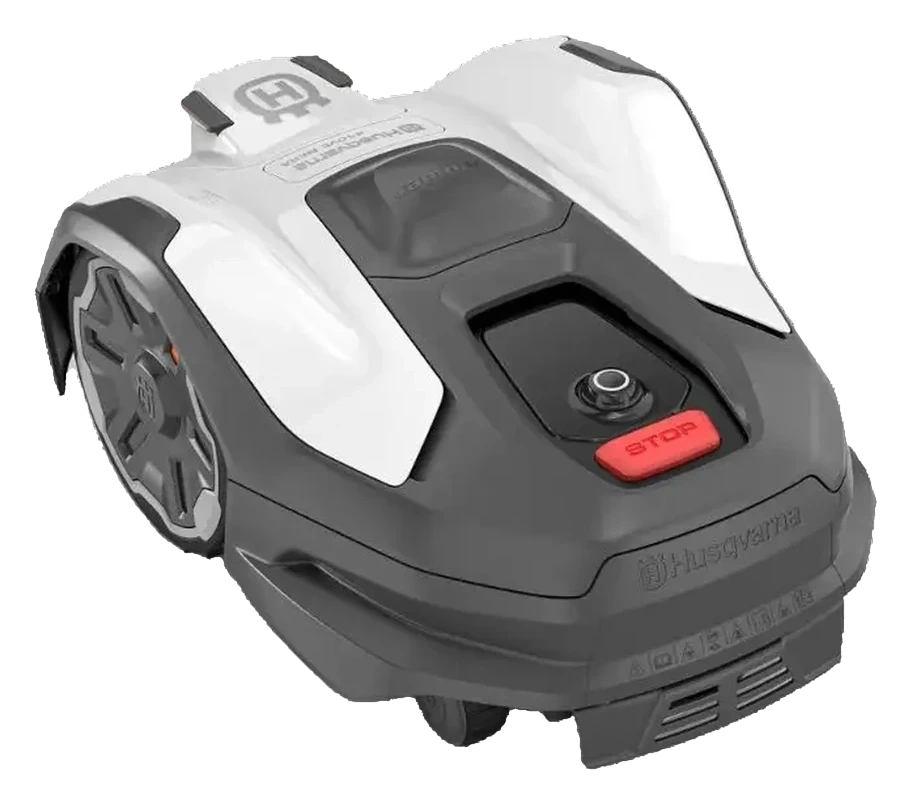
Husqvarna Automower 410VE NERA
- Autonomy
- IVEnvironmental
- Score
- 77/100Strong
- Readiness
- Ready Now
- Price
- $3,550list
Husqvarna
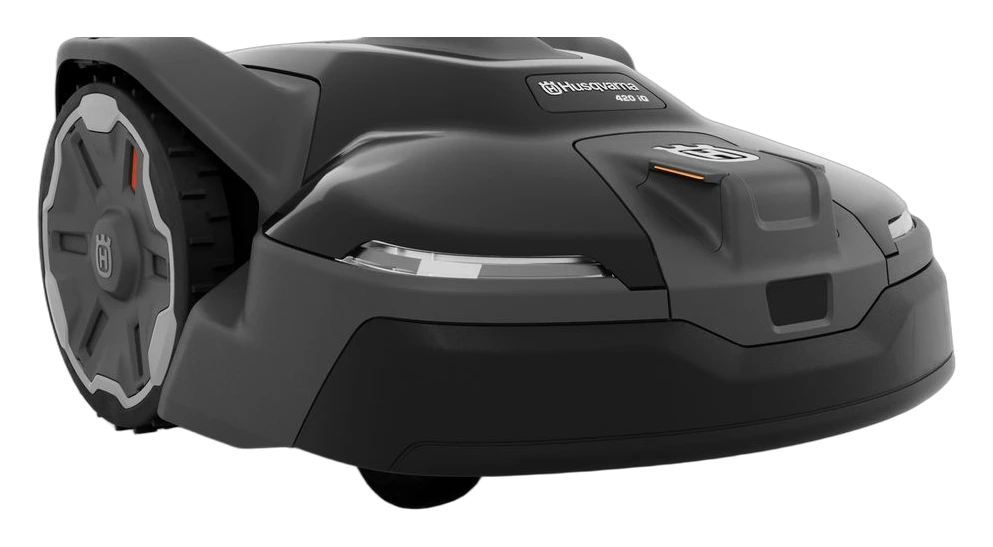
Husqvarna
Up to three
All robot lawn mowers. Every figure below is placed against the whole class, so a gap can be read against how much the class itself varies.
The conditions each robot was assessed against, side by side. Rows marked in gold are where these machines genuinely differ.
| Condition | Automower 410VE NERA | Automower 420 iQ |
|---|---|---|
| Yard size | ||
| Under ¼ acre | GoodCovers 1500 m2 (0.37 acres); exceeds capacity; excessive dock cycles and battery stress. | GoodHusqvarna rates it for 1 acre, four times a quarter-acre lot, so capacity is not a limit. |
| ¼ – ½ acre | GoodCovers 0.25–0.5 acres comfortably; one dock cycle per 2-3 days within specification. | GoodHalf an acre sits within Husqvarna's rating even for irregular lawns, though no independent test was found. |
| Over ½ acre | DependsRated to 1500 m2 (0.37 acres); larger yards require multiple mower units or zone division. | DependsHusqvarna rates 1 acre only for open lawns; irregular lots are rated at half an acre. |
| Terrain | ||
| Mostly flat | GoodFlat terrain maximizes EPOS accuracy and blade engagement consistency. | GoodHusqvarna designs its systematic EPOS mowing around open lawns, though no independent test was found. |
| Gentle slopesthey differ | GoodRated for slopes up to 25 percent; traction stable on moderate gradients with standard turfgrass. | DependsHusqvarna rates 45% slopes inside the lawn, but no independent slope test of the 420 iQ was found. |
| Steep / hilly | DependsSlopes above 25 percent cause traction loss and blade-engagement inconsistency, especially on wet grass. | DependsHusqvarna limits slopes at the boundary to 15%, far below its 45% interior rating. |
| Grass type | ||
| Typical lawn grassthey differ | GoodKentucky bluegrass and perennial ryegrass cuts predictably; blade wear follows manufacturer seasonal intervals. | DependsHusqvarna lists a 1-4 inch electric cut height, but no independent cut-quality test was found. |
| Mixed / tall growth | DependsTall-fescue and tall wheat-grass require more frequent blade swaps; AI Vision edge detection may struggle with dense growth. | DependsNo independent test of the 420 iQ in long or overgrown grass was found. |
| Thick (Bermuda / Zoysia) | DependsThick Bermuda and zoysiagrass accelerate blade wear; 2-4 week replacement intervals during peak season versus 6-8 weeks on cool-season turf. | DependsNo independent test in thick or dense turf was found for its 9.4 inch cut. |
| Boundary setup | ||
| Wireless required | GoodWire-free EPOS+Vision operation is the 410VE NERA's core design; no buried wire required. | GoodEPOS virtual boundaries need no wire, using cloud correction or the included reference station. |
| Wire requiredthey differ | PoorMower uses satellite navigation; does not support traditional perimeter-wire operation. | GoodHusqvarna lists physical wire as a supported boundary type alongside virtual boundaries. |
| No preference | GoodWire-free architecture handles any boundary preference; no backward compatibility for buried-wire systems. | GoodWith both virtual and physical boundary options, it covers either setup preference. |
A robot being poor for a condition is a fact about fit, not a fault. “Depends” means the record names a limit worth reading, not that the answer is unknown.
A number only means something next to the spread it sits in. Each track is the real range across every classified robot in the class, with the median marked.
Written on each record, and the only thing here every robot on the site carries.
What each design gives up to be good at what it is good at.
EPOS satellite navigation is wire-free, but it is not self-contained: correction data arrives over cellular or Wi-Fi, or from a separately purchased EPOS RS1 reference station, so the boundary depends on a connection that buried wire never needed.
AI Vision removes the wire installation entirely, but the model reached market in 2026, so there is little public record of how vision-assisted boundary holding behaves across several seasons of growth and changing light.
One acre of rated capacity and a 54-minute typical charge, with no independent test yet of the 420 iQ itself.
Husqvarna rates 45% slopes inside the lawn, but only 15% at the boundary.
Stated by the record itself. A robot being wrong for a household is a fact about fit, not a fault.
The upkeep ownership hands back to you, whatever the autonomy level says.
Classifications rest on different depths of evidence. A pre-release assessment and a verified one are not the same kind of claim.
| Robot | Evidence status | Sources reviewed | Last assessed |
|---|---|---|---|
| Husqvarna Automower 410VE NERA | Pending | 4 | Oct 2026 |
| Husqvarna Automower 420 iQ | Verified | 9 | Sep 2026 |
Evidence status counts the sources behind a classification, not their kind. A high count can be maker documentation and price coverage, so read it as how much was reviewed rather than as independent testing. How we weigh evidence.
 The full recordHusqvarna Automower 410VE NERASpecifications, evidence, the Fit Check in full, and every tracked change.
 The full recordHusqvarna Automower 420 iQSpecifications, evidence, the Fit Check in full, and every tracked change.
Robovations classifies robots; it does not rank them. Nothing on this page is a recommendation, and no manufacturer influences a classification or its placement here.
Comparing across classes is allowed — the page will switch to per-class positioning and tell you it has.