
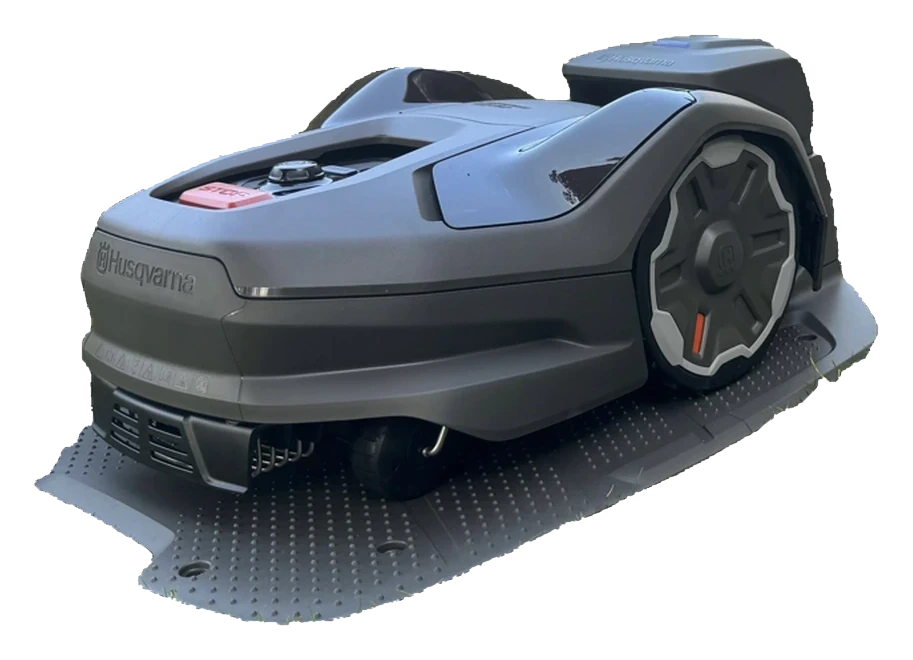
Husqvarna
Husqvarna Automower 405XE NERA
- Autonomy
- IIIConditional
- Score
- 71/100Strong
- Readiness
- Ready Now
- Price
- Not tracked
Husqvarna
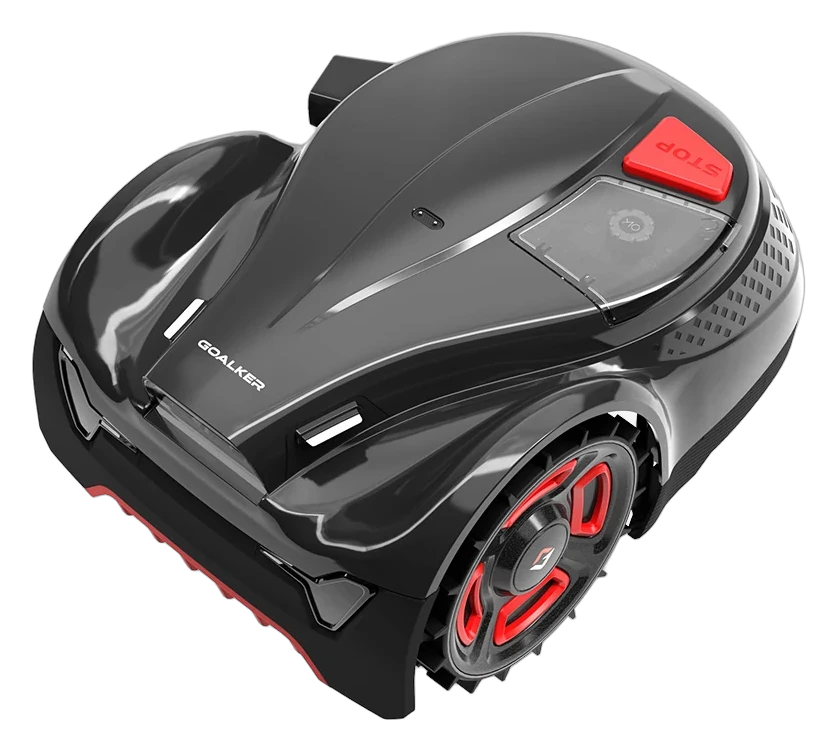
Goalker
Up to three
All robot lawn mowers. Every figure below is placed against the whole class, so a gap can be read against how much the class itself varies.
The conditions each robot was assessed against, side by side. Rows marked in gold are where these machines genuinely differ.
| Condition | Automower 405XE NERA | Goalker H3 Pro |
|---|---|---|
| Yard size | ||
| Under ¼ acre | Good405XE NERA handles sub-0.25-acre yards efficiently; setup time under 2 hours; full coverage per mow cycle. | GoodRated to 1,500 m² (about 0.37 acres); comfortably covers yards under a quarter acre. |
| ¼ – ½ acre | GoodDesigned for 0.25–0.5-acre range. Manufacturer specs document full coverage in single runs at this scale. | GoodRecommended area is 1,200 m² (about 0.3 acres) with a stated 1,500 m² max, matching this range. |
| Over ½ acrethey differ | DependsOver 0.5 acres requires longer run times and mid-cycle returns to charging station. Coverage may need multiple days or extended schedule. | PoorGoalker caps documented coverage at 1,500 m² (about 0.37 acres); not rated for yards over half an acre. |
| Terrain | ||
| Mostly flat | GoodFlat or gently rolling yards are ideal for EPOS and wheel traction. No slope-related coverage issues. | GoodRated to a 35% (about 19°) gradient, well beyond flat ground. |
| Gentle slopesthey differ | DependsRated to 25% gradient. Owner reports suggest traction loss above 20% on wet grass; performance degrades in rainy seasons. | GoodThe 35% (about 19°) gradient rating comfortably covers moderate slopes. |
| Steep / hillythey differ | PoorSlopes above 25% exceed manufacturer spec. Steep terrain causes wheel slip, uneven cutting, and increased motor strain. | DependsRated to a 35% (about 19°) gradient, but no independent test confirms traction on wet or uneven steep terrain. |
| Grass type | ||
| Typical lawn grass | GoodStandard cool-season and warm-season turf are the design baseline. Manufacturer specs confirm reliable mowing on common lawn grasses. | GoodCutting height adjusts 25-60mm, suited to standard turfgrass. |
| Mixed / tall growth | DependsTall fescue, St. Augustine, and overseeded lawns require more frequent blade swaps (every 3-4 weeks vs. 6-8 weeks). Motor load increases. | DependsNo documented pass count or cutting headroom beyond the stated 25-60mm range for overgrown grass. |
| Thick (Bermuda / Zoysia) | DependsDense or thick turf (Bermuda overseeded, dormant thatch) can clog discharge and strain motor. May benefit from rougher blade angle adjustment. | DependsNo independent test of dense grass varieties was found; blade torque for heavy growth is undocumented. |
| Boundary setup | ||
| Wireless required | Good405XE NERA is wireless-first; EPOS virtual boundary is the primary use case. No wire-setup friction. | GoodWire-free by design; navigates via RTK and VSLAM with no boundary wire needed. |
| Wire required | Poor405XE NERA does not support perimeter-wire operation. Owner wanting traditional wire boundary should choose wire-based Automower models. | PoorWire-free architecture only; no boundary-wire support is documented. |
| No preference | GoodNo boundary preference? 405XE NERA's wire-free design eliminates installation work and ongoing wire maintenance. | GoodOperates wire-free with no boundary wire required, suiting readers with no wire preference. |
A robot being poor for a condition is a fact about fit, not a fault. “Depends” means the record names a limit worth reading, not that the answer is unknown.
A number only means something next to the spread it sits in. Each track is the real range across every classified robot in the class, with the median marked.
Not compared, because fewer than two of these robots carry a published figure: Price, Weight, Height.
Written on each record, and the only thing here every robot on the site carries.
What each design gives up to be good at what it is good at.
Wire-free setup sounds low-friction, but EPOS requires line-of-sight satellite visibility to maintain the virtual boundary. Dense tree cover, metal structures, and weather patterns affect reliability in ways traditional perimeter wire does not.
Seasonal blade maintenance remains mandatory every 4-8 weeks of active mowing (spring through fall). No self-sharpening; dull blades harm grass health and increase motor load.
The lateral-shift deck solves the edge-trimming problem no independent source has yet tested for long-term wear.
Direct-to-consumer sales keep the price down; there is no third-party retailer to fall back on if support lapses.
Stated by the record itself. A robot being wrong for a household is a fact about fit, not a fault.
The upkeep ownership hands back to you, whatever the autonomy level says.
Classifications rest on different depths of evidence. A pre-release assessment and a verified one are not the same kind of claim.
| Robot | Evidence status | Sources reviewed | Last assessed |
|---|---|---|---|
| Husqvarna Automower 405XE NERA | Verified | 10 | Sep 2026 |
| Goalker H3 Pro | Pre-Release | 5 | Sep 2026 |
Evidence status counts the sources behind a classification, not their kind. A high count can be maker documentation and price coverage, so read it as how much was reviewed rather than as independent testing. How we weigh evidence.
 The full recordHusqvarna Automower 405XE NERASpecifications, evidence, the Fit Check in full, and every tracked change.
 The full recordGoalker H3 ProSpecifications, evidence, the Fit Check in full, and every tracked change.
Robovations classifies robots; it does not rank them. Nothing on this page is a recommendation, and no manufacturer influences a classification or its placement here.
Comparing across classes is allowed — the page will switch to per-class positioning and tell you it has.