
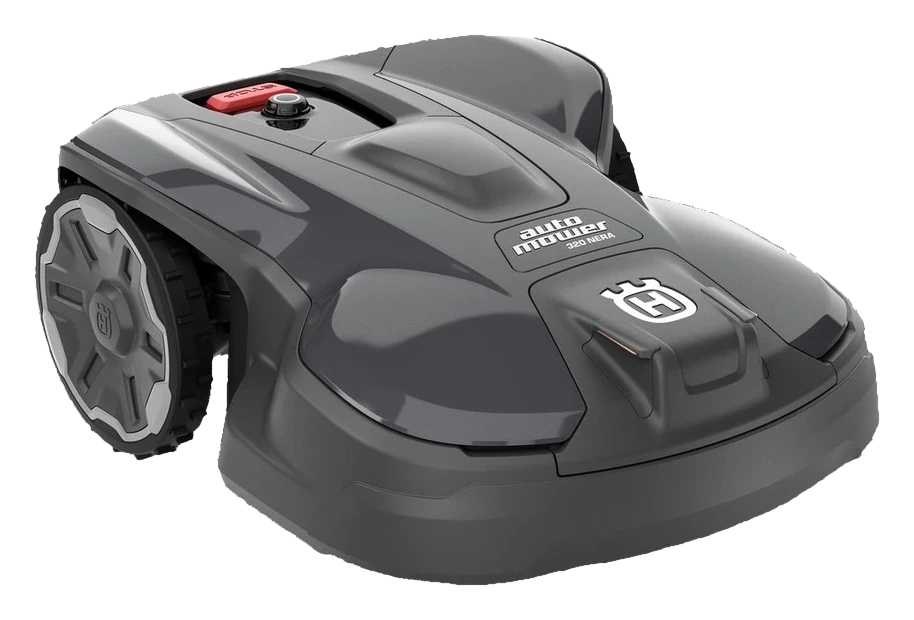
Husqvarna
Husqvarna Automower 320 NERA
- Autonomy
- IIIConditional
- Score
- 71/100Strong
- Readiness
- Ready Now
- Price
- $2,999list
Husqvarna
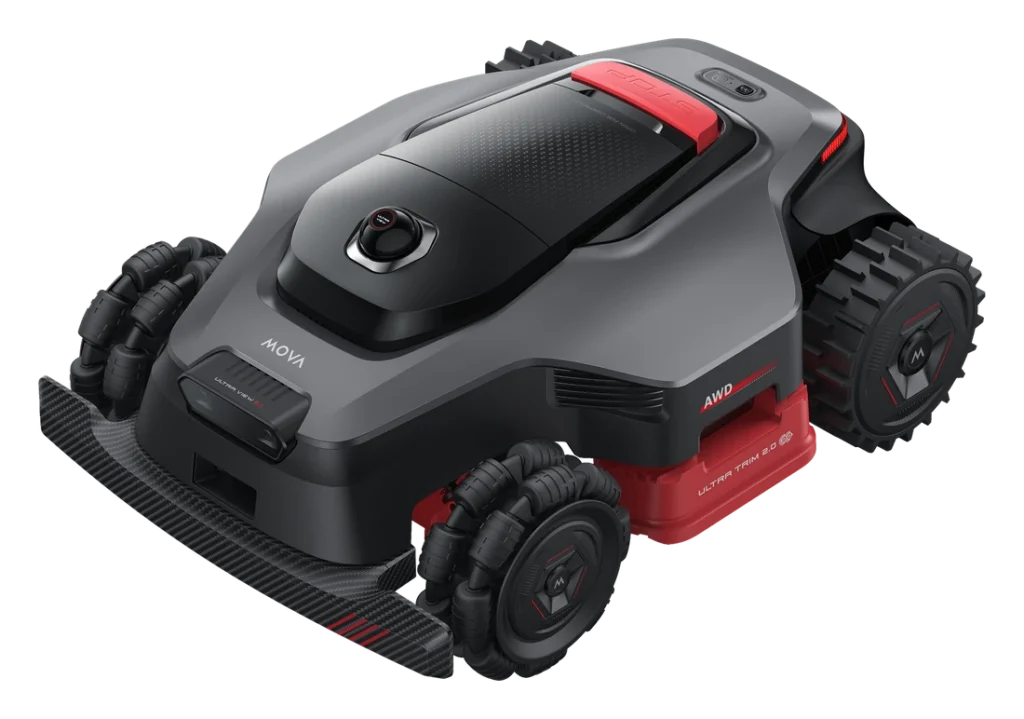
Up to three
All robot lawn mowers. Every figure below is placed against the whole class, so a gap can be read against how much the class itself varies.
The conditions each robot was assessed against, side by side. Rows marked in gold are where these machines genuinely differ.
| Condition | Automower 320 NERA | LiDAX Ultra 3000 AWD |
|---|---|---|
| Yard size | ||
| Under ¼ acre | GoodRuntime caps at 70 minutes; under-quarter properties may require reduced cutting height or edge trimming separately. | GoodCapable but exceeds needs for compact properties; entry-level wire-free mowers cost $1,500-$1,800. |
| ¼ – ½ acre | GoodEPOS positioning scales efficiently within 0.25–0.5 acre range. Typical cutting cycles complete in single runtime window. | GoodOptimally designed for 0.25-0.75 acre yards; LiDAR navigation suits this size range. |
| Over ½ acrethey differ | DependsProperties over 0.5 acres require multiple daily sessions or scheduled multi-hour mowing windows for full coverage. | PoorCoverage ceiling is 0.75 acre; larger yards exceed documented operating range. |
| Terrain | ||
| Mostly flat | GoodOptimal for EPOS performance. Flat terrain maintains consistent satellite signal and maximizes traction control. | GoodLiDAR and vision mapping excel on flat terrain with no traction or stability concerns. |
| Gentle slopes | GoodRated to 35-degree slopes. Moderate terrain up to 20 degrees shows reliable operation per owner reports. | GoodRated for slopes to 80%; performs reliably on hillsides up to 40-60% depending on grass moisture. |
| Steep / hilly | DependsManufacturer spec to 35 degrees but traction loss documented on wet slopes above 20 degrees. Seasonal drainage affects performance. | DependsRated to 80% grade; traction risk increases above 60% on wet soil; not recommended for saturated ground. |
| Grass type | ||
| Typical lawn grass | GoodTypical lawn grasses (fescue, bluegrass, ryegrass) show standard blade wear and mowing efficiency. | GoodCutting height range 1.2-3.9 inches handles typical cool-season and warm-season grasses. |
| Mixed / tall growth | DependsTall fescue or native grass may require more frequent passes. Initial overgrown lots need manual cutting before deployment. | DependsCutting height supports tall grasses; frequent runs may be needed to avoid scalping or stalling motor. |
| Thick (Bermuda / Zoysia) | DependsThick sod or dense clover increases blade wear and firmware recalibration needs due to slower mowing cycles. | DependsHeavy or dense turf increases blade wear and motor load; blade replacement may exceed annual cadence. |
| Boundary setup | ||
| Wireless required | GoodEPOS virtual boundaries are the primary feature. Wireless enforcement avoids wire installation entirely. | GoodWire-free LiDAR navigation is the primary design; app-defined boundaries are the operating standard. |
| Wire required | PoorEPOS does not support traditional boundary wire. Physical wire operation not possible with this model. | PoorNo perimeter-wire option available; LiDAR-based boundaries are the only supported mode. |
| No preference | GoodEPOS virtual boundaries available exclusively. No wire fallback option if GNSS signal is lost. | GoodWire-free design suits owners without preference for specific boundary-setup method. |
A robot being poor for a condition is a fact about fit, not a fault. “Depends” means the record names a limit worth reading, not that the answer is unknown.
Nine inputs across three pillars, each weighted as shown and each scored so more is better. A robot can lead on one and trail on another, which is the point of showing them apart.
A number only means something next to the spread it sits in. Each track is the real range across every classified robot in the class, with the median marked.
Not compared, because fewer than two of these robots carry a published figure: Noise.
Written on each record, and the only thing here every robot on the site carries.
What each design gives up to be good at what it is good at.
EPOS removes the boundary wire but adds a plug-in kit and, where Wi-Fi does not cover the garden, a fixed reference station. One dependency substitutes for another rather than disappearing.
Sub-centimeter boundary accuracy pairs with bump-sensor-only obstacle detection. Precision positioning does not buy onboard sensing.
Wire-free operation is an add-on rather than a standard fitting. The EPOS Plug-in kit is a separate purchase, so the wire-free configuration and the base machine are two different prices under one model name.
Wire-free convenience comes at premium price relative to traditional perimeter-wire mowers.
Stated by the record itself. A robot being wrong for a household is a fact about fit, not a fault.
The upkeep ownership hands back to you, whatever the autonomy level says.
Classifications rest on different depths of evidence. A pre-release assessment and a verified one are not the same kind of claim.
| Robot | Evidence status | Sources reviewed | Last assessed |
|---|---|---|---|
| Husqvarna Automower 320 NERA | Provisional | 6 | Sep 2026 |
| MOVA LiDAX Ultra 3000 AWD | Provisional | 5 | Aug 2026 |
Evidence status counts the sources behind a classification, not their kind. A high count can be maker documentation and price coverage, so read it as how much was reviewed rather than as independent testing. How we weigh evidence.
 The full recordHusqvarna Automower 320 NERASpecifications, evidence, the Fit Check in full, and every tracked change.
 The full recordMOVA LiDAX Ultra 3000 AWDSpecifications, evidence, the Fit Check in full, and every tracked change.
Robovations classifies robots; it does not rank them. Nothing on this page is a recommendation, and no manufacturer influences a classification or its placement here.
Comparing across classes is allowed — the page will switch to per-class positioning and tell you it has.