
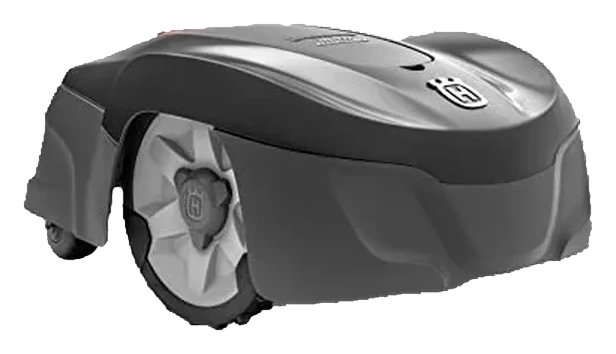
Husqvarna
Husqvarna Automower 115H
- Autonomy
- IIAssisted
- Score
- 69/100Capable
- Readiness
- Ready Now
- Price
- $700list
Husqvarna
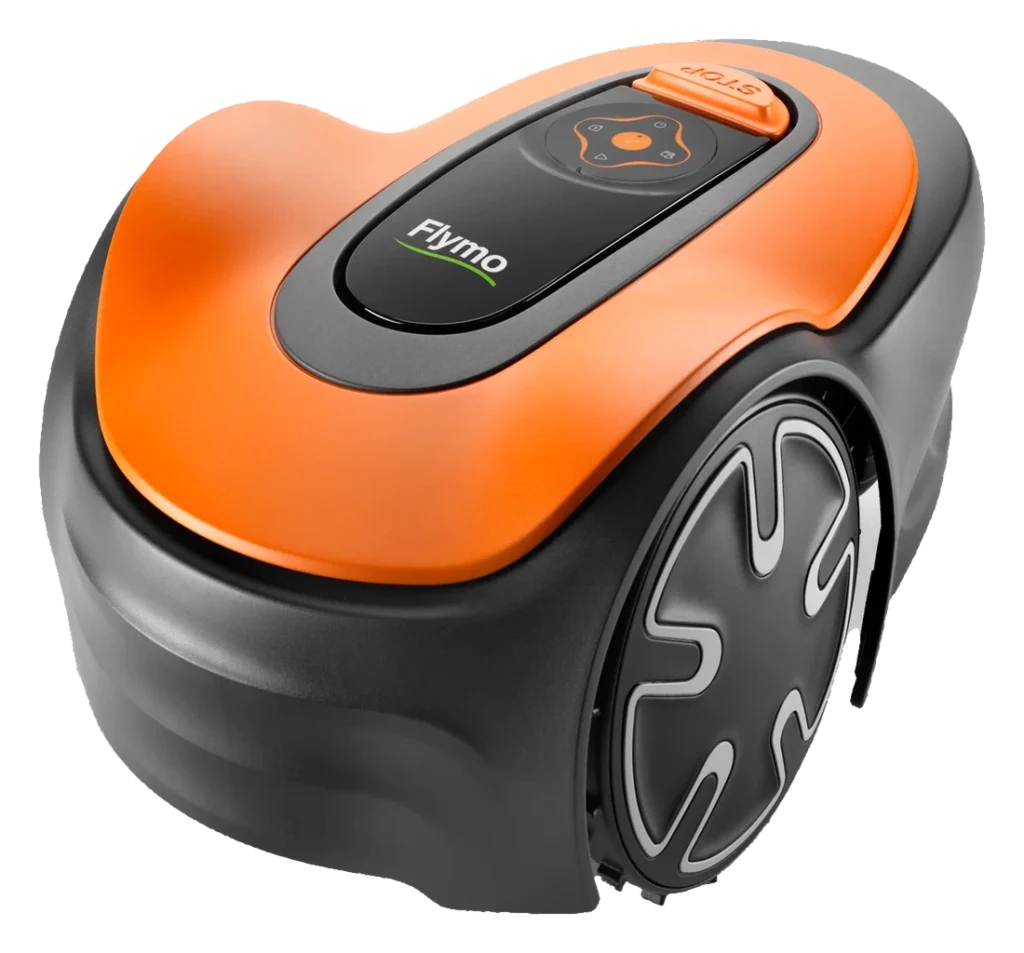
Flymo (Husqvarna Group)
Up to three
All robot lawn mowers. Every figure below is placed against the whole class, so a gap can be read against how much the class itself varies.
The conditions each robot was assessed against, side by side. Rows marked in gold are where these machines genuinely differ.
| Condition | Automower 115H | Flymo EasiLife Go 200 |
|---|---|---|
| Yard size | ||
| Under ¼ acre | Good115H runtime covers sub-1,000 sqft yards in one pass; well-matched to compact lots. | GoodRated to 2,153 sq ft, well matched to under-quarter-acre gardens where the EasiLife line is designed to run. |
| ¼ – ½ acrethey differ | Depends1,000-2,000 sqft range is the 115H design target; 2,000 sqft edges the 60-minute runtime ceiling with one-pass coverage. | Poor2,153 sq ft max coverage falls well short of a quarter-to-half-acre lawn; this model is not rated for that size. |
| Over ½ acre | Poor60-minute runtime does not cover yards over 2,500 sqft in one mowing cycle; multi-pass operation required. | Poor2,153 sq ft maximum coverage is a small fraction of a half-acre-plus lawn; this model is built for small gardens only. |
| Terrain | ||
| Mostly flat | GoodOptimal operating condition; manufacturer specs and owner reports show consistent performance on level yards. | GoodThe 2,153 sq ft random-pattern coverage works best on flat, unobstructed ground where run-time alone decides the result. |
| Gentle slopes | DependsRated to 20% slope per manufacturer documentation; steeper grades may cause traction loss and uphill stalling. | DependsNo slope rating is published for this model; coverage is random rather than systematic, which matters more on uneven ground. |
| Steep / hilly | PoorManufacturer documentation does not support operation above 20% gradient; owner reports document traction failure on steeper terrain. | PoorNo slope rating is published at all, and the mowing pattern is random rather than systematic, a poor match for hilly ground. |
| Grass type | ||
| Typical lawn grass | GoodDesigned for typical cool-season and warm-season turf; perennial ryegrass, fescue, and Bermuda all perform within spec. | GoodThree pivoting razor blades with dual cutting direction handle typical lawn grass within the 20-45 mm height range. |
| Mixed / tall growth | DependsCutting deck height adjusts to 50 mm maximum; tall fescue and some native grasses may exceed cutting reach; multiple passes improve appearance. | DependsCutting height tops out at 45 mm with no mulching or clearing capability documented for mixed or overgrown growth. |
| Thick (Bermuda / Zoysia) | DependsDense turf increases motor load and blade dulling frequency; weekly blade inspection recommended in high-density stands. | DependsA 16 cm cutting width and 45 mm height ceiling are not documented as handling dense Bermuda or Zoysia growth. |
| Boundary setup | ||
| Wireless required | PoorBuried boundary wire is mandatory; no GPS or wireless boundary option available on the 115H. | PoorThe boundary is a buried wire system only; Flymo supplies 150 m of wire and 150 stakes, with no wire-free option. |
| Wire required | GoodWire-based perimeter is the sole positioning method; perimeter installation (2-4 hours) is a standard prerequisite. | Good150 m of loop wire and 150 stakes ship in the box, matched to the buried-wire boundary this model requires. |
| No preference | GoodWire-guided operation works for any boundary preference; no wireless requirement complicates setup decision. | GoodNo preference means the buried-wire design here works fine; 150 m of wire and stakes ship in the box. |
A robot being poor for a condition is a fact about fit, not a fault. “Depends” means the record names a limit worth reading, not that the answer is unknown.
A number only means something next to the spread it sits in. Each track is the real range across every classified robot in the class, with the median marked.
Not compared, because fewer than two of these robots carry a published figure: Price.
Written on each record, and the only thing here every robot on the site carries.
What each design gives up to be good at what it is good at.
Wire confinement trades flexibility for reliability. Rewiring costs $200-500 per expansion; GPS-free positioning never strays but never adapts to layout changes without manual installation.
The Go adds app scheduling and weather-based adjustment over the EasiLife 200, but the boundary is still a buried wire with the install labor that implies.
At 6.1 kg and 57 dB(A) it is light and quiet enough for a small garden, though its 2,153 sq ft ceiling rules out anything beyond a compact lawn.
Bluetooth-only app control keeps the connection local with no cloud account required, but that also means no off-site scheduling or status checks once you leave the house.
Stated by the record itself. A robot being wrong for a household is a fact about fit, not a fault.
The upkeep ownership hands back to you, whatever the autonomy level says.
Classifications rest on different depths of evidence. A pre-release assessment and a verified one are not the same kind of claim.
| Robot | Evidence status | Sources reviewed | Last assessed |
|---|---|---|---|
| Husqvarna Automower 115H | Provisional | 4 | Aug 2026 |
| Flymo EasiLife Go 200 | Pending | 1 | Jul 2026 |
Evidence status counts the sources behind a classification, not their kind. A high count can be maker documentation and price coverage, so read it as how much was reviewed rather than as independent testing. How we weigh evidence.
 The full recordHusqvarna Automower 115HSpecifications, evidence, the Fit Check in full, and every tracked change.
 The full recordFlymo EasiLife Go 200Specifications, evidence, the Fit Check in full, and every tracked change.
Robovations classifies robots; it does not rank them. Nothing on this page is a recommendation, and no manufacturer influences a classification or its placement here.
Comparing across classes is allowed — the page will switch to per-class positioning and tell you it has.