

Fourier Intelligence
Fourier GR-1
- Autonomy
- IIAssisted
- Pre-release
- 75/100Promising
- Readiness
- Not assessed
- Price
- Not tracked
Fourier Intelligence
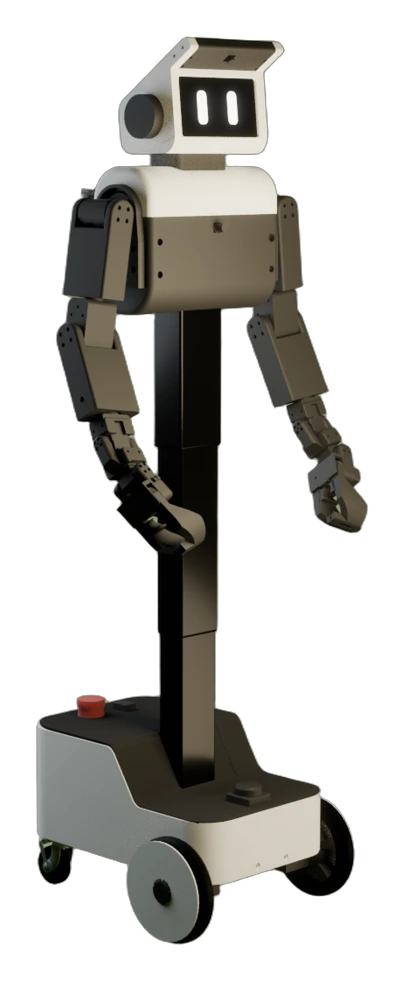
Nori Robotics
Up to three
All humanoid robots. Every figure below is placed against the whole class, so a gap can be read against how much the class itself varies.
The conditions each robot was assessed against, side by side. Rows marked in gold are where these machines genuinely differ.
| Condition | Fourier GR-1 | Nori A3 |
|---|---|---|
| Where it operates | ||
| Home / residentialthey differ | PoorNot available for home use; designed for institutional and industrial deployment only. | DependsLaunch demos show home chores, but no delivered-unit report shows them working without the owner's own training. |
| Office / retail | DependsRequires factory-floor integration; not plug-and-play for general commercial environments. | DependsOffice and shelf-restocking use appears in Nori's Y Combinator profile with no published demonstration behind it. |
| Warehouse / factorythey differ | GoodDesigned for industrial logistics, inspection, and assembly with on-site technician support. | PoorEach arm is rated for 1.5 kg on a differential-drive base; nothing documents industrial duty. |
| Primary tasks | ||
| Household choresthey differ | PoorNo consumer household robotics support; dexterity is optimized for industrial manipulation, not domestic tasks. | DependsFetching, pouring and folding appear in launch footage; each task must be recorded in Nori Lab before it runs. |
| Social / carethey differ | PoorTeleoperation dependency and institutional-only deployment excludes social-companion use cases. | DependsA microphone and speaker take spoken commands, but no companion or conversation behavior is documented. |
| Specialized job | GoodSpecialized industrial and research tasks (assembly, sorting, gait training) are the core application domain. | GoodAn open end-effector connector and LeRobot-format datasets suit builders training one task of their own. |
| Supervision needs | ||
| Fully autonomous | PoorTeleoperation required for complex tasks; unattended autonomous operation is not supported. | PoorNo source shows the A3 finishing a chore unattended, and Nori reports no measured task performance. |
| With oversightthey differ | GoodDesigned for on-site technician supervision; teleoperation available as fallback for all tasks. | DependsTaught routines run through an off-board backend with no published success rates; each run needs watching. |
| Teleoperated | GoodIndustrial pilots with factory or research-facility integration are the primary deployment model. | GoodRecording demonstrations and iterating policies in Nori Lab is the workflow the platform is built around. |
| Timeline | ||
| Ready todaythey differ | PoorNot consumer-ready; institutional research and industrial pilots only. | DependsFirst units shipped July 21, 2026, but new orders ship fall 2026 with no published skill list. |
| Near-term (1–2 yrs)they differ | GoodMature institutional platform with 100+ deployments; consumer market timeline unknown. | DependsThe second batch ships fall 2026; the planned Skills Marketplace has no published launch date. |
| Research phase | GoodActive platform for academic locomotion and manipulation research at universities globally. | GoodNori's paper sets the A3 against research platforms, with datasets that plug into existing training pipelines. |
A robot being poor for a condition is a fact about fit, not a fault. “Depends” means the record names a limit worth reading, not that the answer is unknown.
None of these has shipped, so they are assessed on track record, engineering plausibility and how the demonstrations match the claims.
Never averaged into it. These describe how much the maker has disclosed, not what the machine does.
| Fourier GR-1 | Nori A3 | |
|---|---|---|
| ReadinessShip-date specificity, pricing transparency, distribution and regulatory status. Published beside the number; never averaged in. | 50/100 | 74/100 |
| DisclosureHow much of the product is disclosed. Higher means fewer fundamental unknowns remain. Published beside the number; never averaged in. | 100/100 | 40/100 |
A number only means something next to the spread it sits in. Each track is the real range across every classified robot in the class, with the median marked.
Not compared, because fewer than two of these robots carry a published figure: Price, Runtime, Charge time, Noise.
Written on each record, and the only thing here every robot on the site carries.
What each design gives up to be good at what it is good at.
GR-1 walks and reaches to a marked position on its own; any task beyond that defaults to a human teleoperator.
Documented deployments name Chinese hospitals and European auto plants as sites, not tasks: Fourier publishes no task-level detail for either program.
No published battery capacity or runtime figure exists for the GR-1, so planning a multi-day deployment depends on terms set by the distributor, not Fourier.
Fourier’s decade of rehab-robotics experience explains why the GR-1 was engineered for safe human proximity, but gait training and patient spotting belong to the ExoMotus exoskeleton line, not to any documented GR-1 task.
At $1,688 you get the hardware; the chores are a project you record yourself.
Off-board inference keeps the onboard computer at Raspberry Pi 5 cost, which makes the home network part of the robot.
Stated by the record itself. A robot being wrong for a household is a fact about fit, not a fault.
The upkeep ownership hands back to you, whatever the autonomy level says.
Classifications rest on different depths of evidence. A pre-release assessment and a verified one are not the same kind of claim.
| Robot | Evidence status | Sources reviewed | Last assessed |
|---|---|---|---|
| Fourier GR-1 | Not Consumer-Ready | 5 | Aug 2026 |
| Nori A3 | Not Consumer-Ready | 8 | Sep 2026 |
Evidence status counts the sources behind a classification, not their kind. A high count can be maker documentation and price coverage, so read it as how much was reviewed rather than as independent testing. How we weigh evidence.
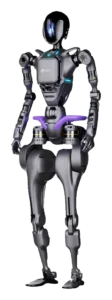 The full recordFourier GR-1Specifications, evidence, the Fit Check in full, and every tracked change.
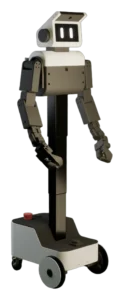 The full recordNori A3Specifications, evidence, the Fit Check in full, and every tracked change.
Robovations classifies robots; it does not rank them. Nothing on this page is a recommendation, and no manufacturer influences a classification or its placement here.
Comparing across classes is allowed — the page will switch to per-class positioning and tell you it has.