
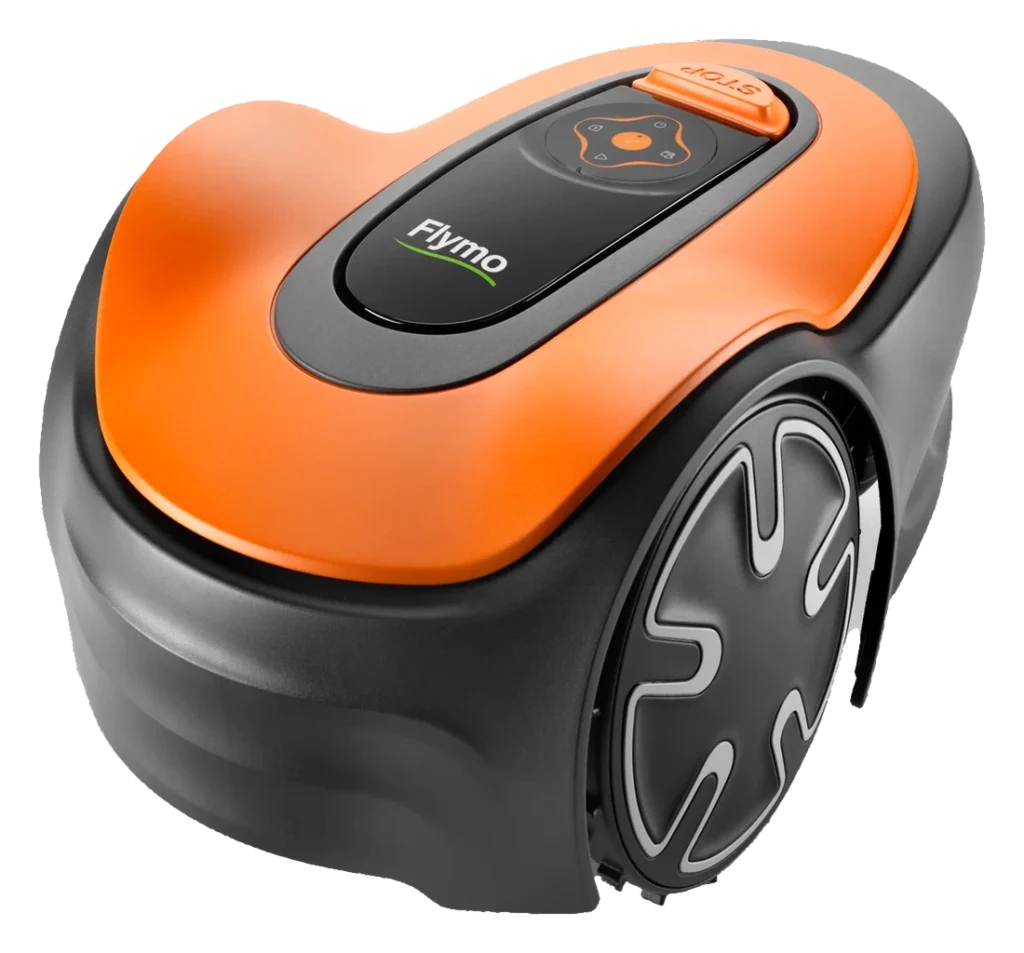
Flymo (Husqvarna Group)
Flymo EasiLife Go 200
- Autonomy
- IIAssisted
- Score
- Not scored
- Readiness
- Not assessed
- Price
- Not tracked
Flymo (Husqvarna Group)
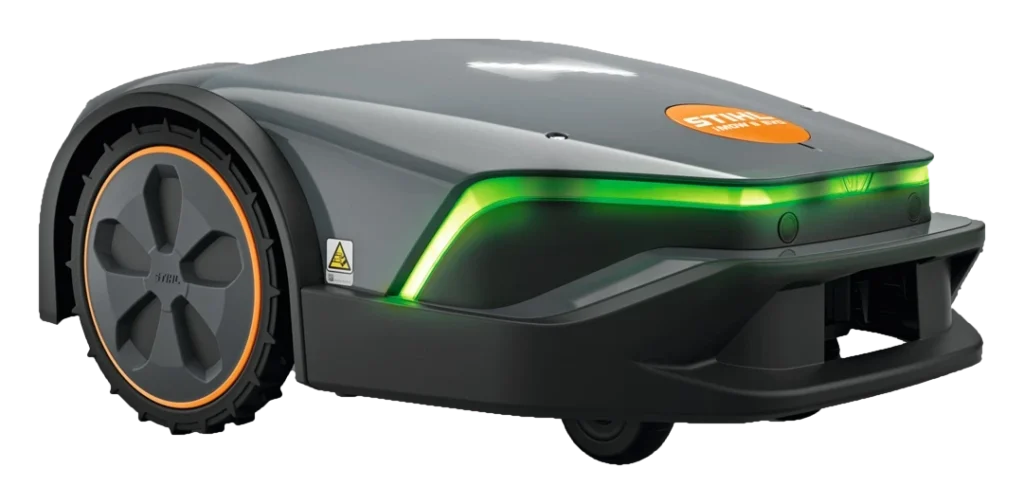
Stihl
Up to three
All robot lawn mowers. Every figure below is placed against the whole class, so a gap can be read against how much the class itself varies.
The conditions each robot was assessed against, side by side. Rows marked in gold are where these machines genuinely differ.
| Condition | Flymo EasiLife Go 200 | Stihl iMow 6 EVO |
|---|---|---|
| Yard size | ||
| Under ¼ acre | GoodRated to 2,153 sq ft, well matched to under-quarter-acre gardens where the EasiLife line is designed to run. | GoodRated to about 0.74 acres, well more coverage than a quarter-acre lawn requires; a smaller iMOW model would do the same job. |
| ¼ – ½ acrethey differ | Poor2,153 sq ft max coverage falls well short of a quarter-to-half-acre lawn; this model is not rated for that size. | GoodAbout 0.74 rated acres comfortably covers this range, with the 28 cm cutting width doing the work in fewer passes. |
| Over ½ acrethey differ | Poor2,153 sq ft maximum coverage is a small fraction of a half-acre-plus lawn; this model is built for small gardens only. | GoodA rated ceiling of about 0.74 acres reaches into this bracket, and long daily run hours extend coverage further still. |
| Terrain | ||
| Mostly flat | GoodThe 2,153 sq ft random-pattern coverage works best on flat, unobstructed ground where run-time alone decides the result. | Good45 percent standard slope tolerance leaves comfortable headroom for flat terrain and level ground. |
| Gentle slopesthey differ | DependsNo slope rating is published for this model; coverage is random rather than systematic, which matters more on uneven ground. | GoodRated to 45 percent slope as sold, with the gradient kit raising that to 55 percent for steeper hillside sections. |
| Steep / hillythey differ | PoorNo slope rating is published at all, and the mowing pattern is random rather than systematic, a poor match for hilly ground. | DependsGerman testers report it can be stranded on the smallest edges of steep ground even with the gradient kit fitted. |
| Grass type | ||
| Typical lawn grass | GoodThree pivoting razor blades with dual cutting direction handle typical lawn grass within the 20-45 mm height range. | GoodThree free-swinging blades in a mulching cut handle typical turf grass with a clean, documented cut pattern. |
| Mixed / tall growth | DependsCutting height tops out at 45 mm with no mulching or clearing capability documented for mixed or overgrown growth. | DependsThe mulching cut and free-swinging blades are built for regular turf; no coverage evidence addresses mixed or overgrown grass. |
| Thick (Bermuda / Zoysia) | DependsA 16 cm cutting width and 45 mm height ceiling are not documented as handling dense Bermuda or Zoysia growth. | DependsNo documented cutting-power or blade-speed data addresses dense Bermuda or Zoysia; the mulching design is built for standard turf. |
| Boundary setup | ||
| Wireless required | PoorThe boundary is a buried wire system only; Flymo supplies 150 m of wire and 150 stakes, with no wire-free option. | PoorThe EVO range is a buried boundary wire design; there is no wire-free or satellite option on this model. |
| Wire required | Good150 m of loop wire and 150 stakes ship in the box, matched to the buried-wire boundary this model requires. | GoodA buried perimeter wire is the entire boundary system here, backed by ultrasonic obstacle sensors inside that fixed line. |
| No preference | GoodNo preference means the buried-wire design here works fine; 150 m of wire and stakes ship in the box. | GoodBoundary is wire-only regardless of preference, with ultrasonic sensors and obstacle detection working inside the buried perimeter. |
A robot being poor for a condition is a fact about fit, not a fault. “Depends” means the record names a limit worth reading, not that the answer is unknown.
A number only means something next to the spread it sits in. Each track is the real range across every classified robot in the class, with the median marked.
Not compared, because fewer than two of these robots carry a published figure: Price, Charge time, Noise.
Written on each record, and the only thing here every robot on the site carries.
What each design gives up to be good at what it is good at.
The Go adds app scheduling and weather-based adjustment over the EasiLife 200, but the boundary is still a buried wire with the install labor that implies.
At 6.1 kg and 57 dB(A) it is light and quiet enough for a small garden, though its 2,153 sq ft ceiling rules out anything beyond a compact lawn.
Bluetooth-only app control keeps the connection local with no cloud account required, but that also means no off-site scheduling or status checks once you leave the house.
Three EVO generations in, STIHL still buries the boundary wire; anyone hoping the EVO name meant a move to wire-free navigation will not find it here.
The extra size and a slope rating up to 55 percent with the kit cost more than the 5 EVO, and dealer-set pricing makes the actual number hard to pin down before a quote.
German testers found a clean mulching cut, but also a documented failure mode: the machine can be stranded on the smallest edges of steep ground.
Stated by the record itself. A robot being wrong for a household is a fact about fit, not a fault.
The upkeep ownership hands back to you, whatever the autonomy level says.
Classifications rest on different depths of evidence. A pre-release assessment and a verified one are not the same kind of claim.
| Robot | Evidence status | Sources reviewed | Last assessed |
|---|---|---|---|
| Flymo EasiLife Go 200 | Pending | 2 | Jul 2026 |
| Stihl iMow 6 EVO | Provisional | 4 | Aug 2026 |
Evidence status counts the sources behind a classification, not their kind. A high count can be maker documentation and price coverage, so read it as how much was reviewed rather than as independent testing. How we weigh evidence.
 The full recordFlymo EasiLife Go 200Specifications, evidence, the Fit Check in full, and every tracked change.
 The full recordStihl iMow 6 EVOSpecifications, evidence, the Fit Check in full, and every tracked change.
Robovations classifies robots; it does not rank them. Nothing on this page is a recommendation, and no manufacturer influences a classification or its placement here.
Comparing across classes is allowed — the page will switch to per-class positioning and tell you it has.