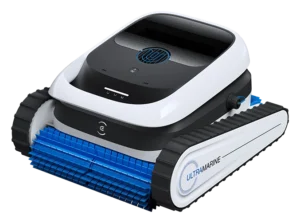
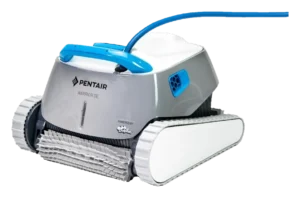
Ecovacs Ultramarine P1 · Pentair Warrior SE
All robot pool cleaners. Every measure below is plotted against the full class, so a difference can be read against how much the class itself varies.
- Ecovacs Ultramarine P1
- Pentair Warrior SE


Pentair Warrior SE
- Autonomy
- IIAssisted Autonomy
- Score
- 65/100 Capable
- Readiness
- Not assessed
- Price
- Not tracked
Up to three
What each one does on its own.
The Autonomy Ladder is the same five rungs for every robot on the site. A rung describes the conditions a robot handles without you, not how good it is.
Where they actually differ.
The Robovations Score is nine inputs across three pillars, each weighted as shown and each scored so that more is better. A robot can lead on one and trail on another, which is the point of showing them apart. Cost of ownership and data handling are reported on each robot's own page and are never averaged into the score.
Capability
- Ecovacs Ultramarine P178
- Pentair Warrior SE75
- Ecovacs Ultramarine P168
- Pentair Warrior SE45
- Ecovacs Ultramarine P158
- Pentair Warrior SE25
- Ecovacs Ultramarine P164
- Pentair Warrior SE44
Dependability
- Ecovacs Ultramarine P170
- Pentair Warrior SE88
- Ecovacs Ultramarine P165
- Pentair Warrior SE33
- Ecovacs Ultramarine P162
- Pentair Warrior SE67
Ownership burden
- Ecovacs Ultramarine P152
- Pentair Warrior SE62
- Ecovacs Ultramarine P172
- Pentair Warrior SE80
How far apart is a long way?
A number only means something next to the spread it sits in. Each track below is the real range across every classified robot in the class, with the median marked.
- Ecovacs Ultramarine P122.3 lbs
- Pentair Warrior SE19.8 lbs
Not compared, because fewer than two of these robots carry a published figure: Price, Suction, Runtime, Charge time, Noise, Height.
What the numbers leave out.
The trade-off
What each design gives up to be good at what it is good at.
No cable to manage, and no way back out of the water without a pole and hook.
Floors came up clean for both reviewers; walls were where results split.
Outlet siting is the constraint, not cable length. The 60 ft swivel cable runs from the power supply to the robot, but the supply must sit at least 12 feet from the pool edge on a GFCI-protected receptacle, and Pentair’s safety instructions state that an extension cord must not be used to connect it. A pool with no suitable outlet in reach needs one installed.
Who each one is wrong for
Stated by the record itself. A robot being wrong for a household is a fact about fit, not a fault.
- Owners who want the robot out of the pool on its own
- It parks near the edge when done, but the manual has the owner lift it out with a hook on a pool pole every run.
- Pools where spotless walls matter most
- Digital Reviews found some wall sections cleaned to the waterline while on others the robot detached and drifted back down.
- Pools with sun shelves or shallow steps
- The manual says ledges under 50 cm deep can trap it and that it was not designed to clean steps.
- Owners who want live monitoring during a clean
- The app connects over Bluetooth only above water, so progress cannot be watched once it submerges, per the manual and Digital Reviews.
- Daily back-to-back cleaning cycles
- The manual lists about 4 hours to charge, and EFTM measured 3 hours 40 minutes from 5 percent.
- Pools with heavy leaf or debris load
- Random search pattern means longer cycles and incomplete coverage during high-debris periods. Manual pre-skimming is required.
- Above-ground or small plunge pools
- Oversized for pools under 5,000 gallons. Power cord management becomes a constraint in compact setups.
- Owners needing app control or remote monitoring
- There is no WiFi and no mobile app. The power supply carries a built-in weekly timer with three LED-selected intervals: daily, every other day, and every third day. Anything past that, including status reporting away from the pool, is not available.
What stays your job
The upkeep ownership hands back to you, whatever the autonomy level says.
- After every use: Lift it out with the pole hook, then rinse the 180-micron basket and 3-micron filter separately.
- After every use: Dry the charging port and recharge for about 4 hours indoors.
- Every 3-6 months: Open the impeller cover and clear debris from the impeller, track and cogs (manual: every 3 to 4 months).
- As needed: Replace the 3-micron filter every 150 hours of use ($24.99 inner basket on Ecovacs’ US store).
- Annually: Check tracks and roller brushes for wear and replace them if worn.
- Seasonally: Store dry and charged, topping up to 40 to 60 percent every three months.
- After every cleaning cycle: Lift out the top-loading filter basket, empty it and rinse the screens; the manual’s instruction is per cycle, not weekly. Remove the cleaner from the pool before anyone swims.
- Monthly: Inspect the dual brush assemblies for debris and wear, and check the swivel cable and the power supply’s line cord for cuts or abrasion. Do not operate with a damaged cord.
- Seasonally: Store the unit and the power supply indoors over winter, out of freeze and direct sun.
- As needed: Replace the brushes once the contact surfaces are worn through.
How much each of these is standing on.
Classifications rest on different depths of evidence. A pre-release assessment and a verified one are not the same kind of claim.
| Robot | Evidence status | Sources reviewed | Last assessed |
|---|---|---|---|
| Ecovacs Ultramarine P1 | Provisional | 8 | Sep 2026 |
| Pentair Warrior SE | Discontinued | 2 | Sep 2026 |
Add a robot
Comparing across classes is allowed — the page will switch to per-class positioning and tell you it has.