
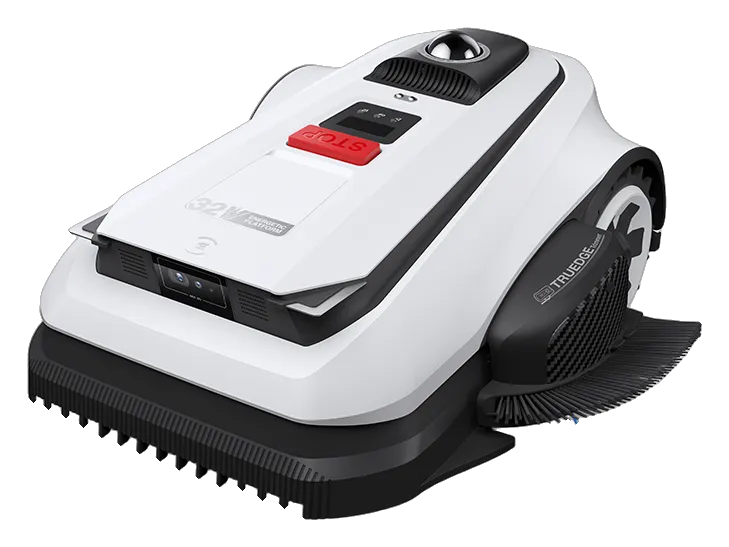
Ecovacs
Ecovacs Goat A3000 LiDAR PRO
- Autonomy
- IVEnvironmental
- Score
- 79/100Strong
- Readiness
- Ready Now
- Price
- $2,499list
Ecovacs
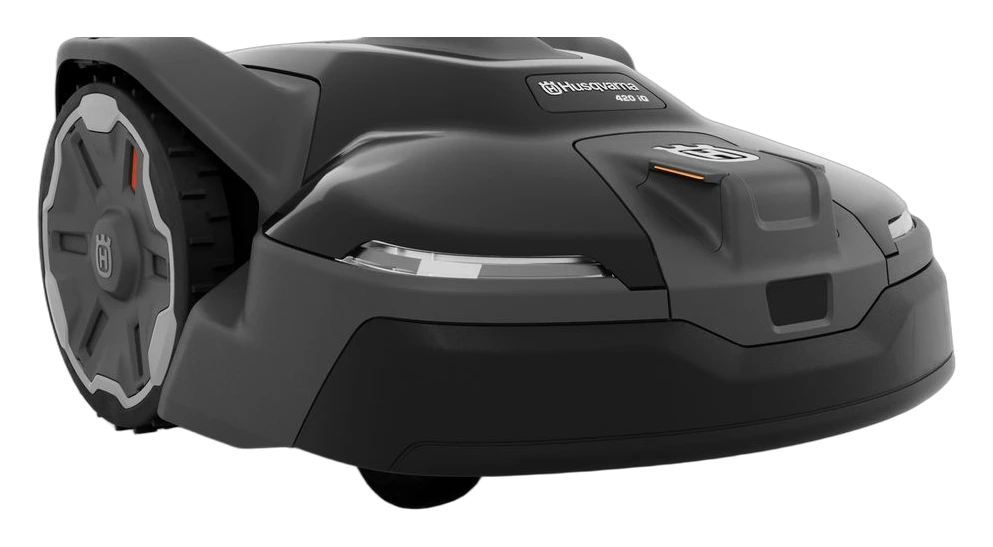
Husqvarna
Up to three
All robot lawn mowers. Every figure below is placed against the whole class, so a gap can be read against how much the class itself varies.
The conditions each robot was assessed against, side by side. Rows marked in gold are where these machines genuinely differ.
| Condition | Goat A3000 LiDAR PRO | Automower 420 iQ |
|---|---|---|
| Yard size | ||
| Under ¼ acre | GoodCapable but exceeds what quarter-acre yards need. Smaller wire-guided mowers offer same coverage at lower cost. | GoodHusqvarna rates it for 1 acre, four times a quarter-acre lot, so capacity is not a limit. |
| ¼ – ½ acre | GoodSweet spot for the A3000 LiDAR PRO. Dual LiDAR handles boundary complexity well; one-pass coverage typical. | GoodHalf an acre sits within Husqvarna's rating even for irregular lawns, though no independent test was found. |
| Over ½ acre | DependsRuntime caps at 3/4 acre per charge. Yards approaching one acre may require multi-pass mowing or supplemental manual cuts. | DependsHusqvarna rates 1 acre only for open lawns; irregular lots are rated at half an acre. |
| Terrain | ||
| Mostly flat | GoodOptimal condition for dual-LiDAR navigation and traction. Flat lawns under 25% gradient perform as designed. | GoodHusqvarna designs its systematic EPOS mowing around open lawns, though no independent test was found. |
| Gentle slopes | DependsRated for 25% gradient. Reports show traction loss above 20% on wet grass; sloped yards require careful dock and boundary placement. | DependsHusqvarna rates 45% slopes inside the lawn, but no independent slope test of the 420 iQ was found. |
| Steep / hillythey differ | PoorManufacturer specs cap gradient at 25%; slopes above 20% produce traction issues. Not suitable for hillside properties. | DependsHusqvarna limits slopes at the boundary to 15%, far below its 45% interior rating. |
| Grass type | ||
| Typical lawn grassthey differ | GoodDesigned for typical residential turfgrass maintained at weekly intervals. Standard heights and densities suit dual-LiDAR performance. | DependsHusqvarna lists a 1-4 inch electric cut height, but no independent cut-quality test was found. |
| Mixed / tall growththey differ | PoorFixed blade height cannot handle tall rescue or overgrown grass. Requires pre-mowed lawn to 2–3 inches before deployment. | DependsNo independent test of the 420 iQ in long or overgrown grass was found. |
| Thick (Bermuda / Zoysia) | DependsDense Bermuda or zoysia increases motor load and reduces runtime. Manual pre-conditioning may be needed; budget longer charge cycles. | DependsNo independent test in thick or dense turf was found for its 9.4 inch cut. |
| Boundary setup | ||
| Wireless required | GoodWire-free design is the signature strength. Dual LiDAR handles complex boundaries and irregular property lines autonomously. | GoodEPOS virtual boundaries need no wire, using cloud correction or the included reference station. |
| Wire requiredthey differ | PoorThis mower eliminates perimeter wire entirely. If you require wire-guided operation for legacy system compatibility, choose a wire-only model. | GoodHusqvarna lists physical wire as a supported boundary type alongside virtual boundaries. |
| No preference | GoodNo boundary preference is accommodated; wire-free LiDAR operation is standard and performs reliably across residential yard shapes. | GoodWith both virtual and physical boundary options, it covers either setup preference. |
A robot being poor for a condition is a fact about fit, not a fault. “Depends” means the record names a limit worth reading, not that the answer is unknown.
A number only means something next to the spread it sits in. Each track is the real range across every classified robot in the class, with the median marked.
Written on each record, and the only thing here every robot on the site carries.
What each design gives up to be good at what it is good at.
Dual LiDAR eliminates wire installation, at $2,499 MSRP. Entry cost is justified only if perimeter-wire avoidance or complex boundary mapping has real value to the owner; wire-guided mowers covering comparable area cost substantially less.
Cutting height is motorized rather than mechanical. Height moves across 1.18 to 3.54 inches in 0.39 inch steps with a swipe in the app, which puts a routine seasonal adjustment behind the app and the account rather than behind a dial on the deck.
One acre of rated capacity and a 54-minute typical charge, with no independent test yet of the 420 iQ itself.
Husqvarna rates 45% slopes inside the lawn, but only 15% at the boundary.
Stated by the record itself. A robot being wrong for a household is a fact about fit, not a fault.
The upkeep ownership hands back to you, whatever the autonomy level says.
Classifications rest on different depths of evidence. A pre-release assessment and a verified one are not the same kind of claim.
| Robot | Evidence status | Sources reviewed | Last assessed |
|---|---|---|---|
| Ecovacs Goat A3000 LiDAR PRO | Provisional | 7 | Aug 2026 |
| Husqvarna Automower 420 iQ | Verified | 8 | Sep 2026 |
Evidence status counts the sources behind a classification, not their kind. A high count can be maker documentation and price coverage, so read it as how much was reviewed rather than as independent testing. How we weigh evidence.
 The full recordEcovacs Goat A3000 LiDAR PROSpecifications, evidence, the Fit Check in full, and every tracked change.
 The full recordHusqvarna Automower 420 iQSpecifications, evidence, the Fit Check in full, and every tracked change.
Robovations classifies robots; it does not rank them. Nothing on this page is a recommendation, and no manufacturer influences a classification or its placement here.
Comparing across classes is allowed — the page will switch to per-class positioning and tell you it has.