
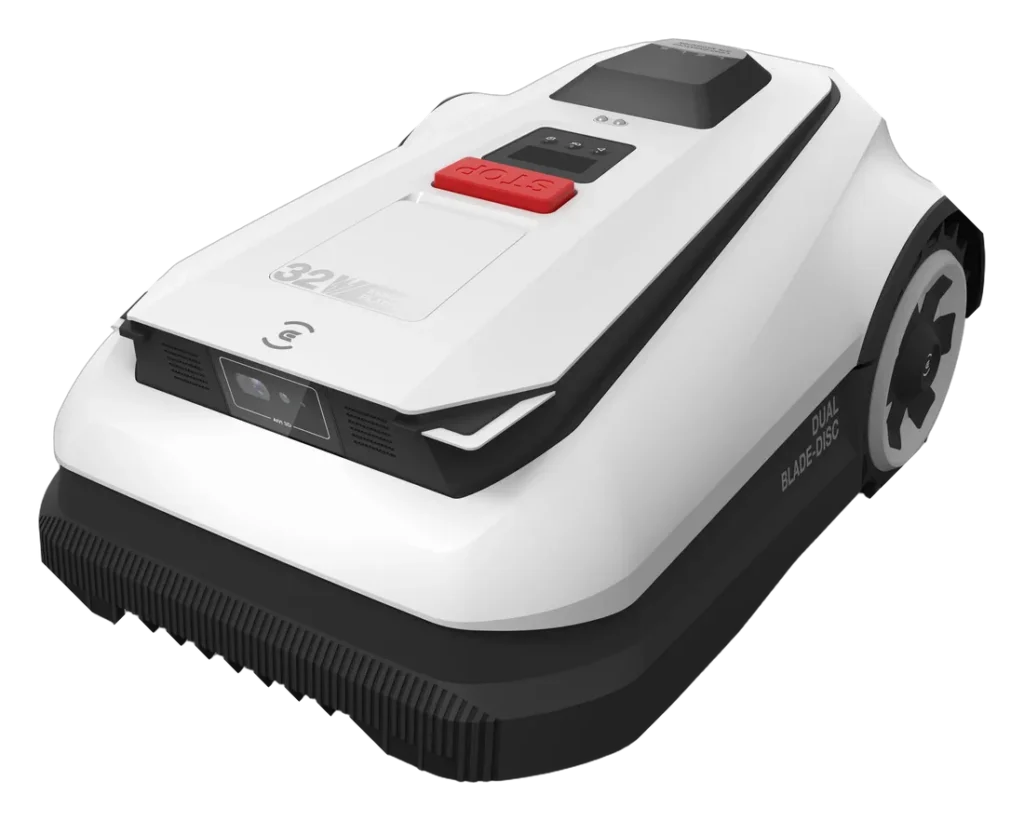
Ecovacs
Ecovacs GOAT A1600 RTK
- Autonomy
- IIIConditional
- Score
- Not scored
- Readiness
- Not assessed
- Price
- Not tracked
Ecovacs
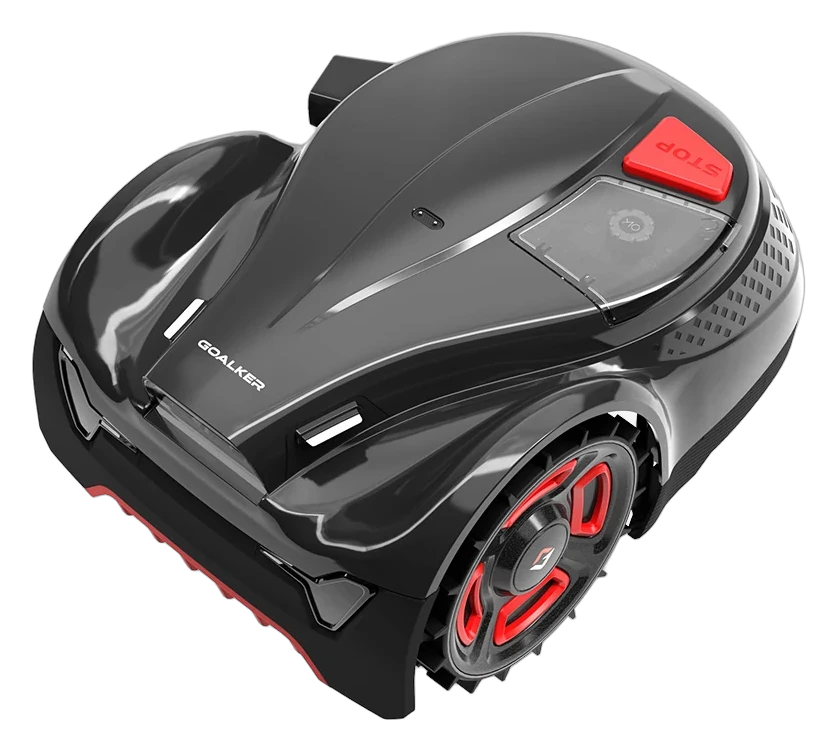
Goalker
Up to three
All robot lawn mowers. Every figure below is placed against the whole class, so a gap can be read against how much the class itself varies.
The conditions each robot was assessed against, side by side. Rows marked in gold are where these machines genuinely differ.
| Condition | Ecovacs GOAT A1600 RTK | Goalker H3 Pro |
|---|---|---|
| Yard size | ||
| Under ¼ acre | GoodRated up to 1,600 square meters, roughly 0.4 acre, so a sub-quarter-acre lot sits well inside its range. | GoodRated to 1,500 m² (about 0.37 acres); comfortably covers yards under a quarter acre. |
| ¼ – ½ acrethey differ | DependsRated up to about 0.4 acre, with 1,280 square meters (0.32 acre) suggested; lots toward half an acre exceed it. | GoodRecommended area is 1,200 m² (about 0.3 acres) with a stated 1,500 m² max, matching this range. |
| Over ½ acre | PoorStated maximum is 1,600 square meters, about 0.4 acre; lawns above half an acre are outside the rating. | PoorGoalker caps documented coverage at 1,500 m² (about 0.37 acres); not rated for yards over half an acre. |
| Terrain | ||
| Mostly flat | GoodFlat lawns sit well inside the stated 50 percent slope rating and the six-step cutting height range. | GoodRated to a 35% (about 19°) gradient, well beyond flat ground. |
| Gentle slopes | GoodThe maker's 50 percent slope rating covers moderate grades; no independent slope test was reviewed. | GoodThe 35% (about 19°) gradient rating comfortably covers moderate slopes. |
| Steep / hilly | DependsMaker states slopes up to 50 percent; no independent steep-lawn test was reviewed, so traction on wet steep grass is unverified. | DependsRated to a 35% (about 19°) gradient, but no independent test confirms traction on wet or uneven steep terrain. |
| Grass type | ||
| Typical lawn grass | GoodCutting height adjusts from 30 to 90 mm in six steps, which covers standard turf heights. | GoodCutting height adjusts 25-60mm, suited to standard turfgrass. |
| Mixed / tall growth | DependsCutting height tops out at 90 mm, about 3.5 inches, so taller growth is beyond its stated range. | DependsNo documented pass count or cutting headroom beyond the stated 25-60mm range for overgrown grass. |
| Thick (Bermuda / Zoysia) | DependsNo independent test on dense or thick turf was found; the 33 cm dual-blade deck is the only stated cutting hardware. | DependsNo independent test of dense grass varieties was found; blade torque for heavy growth is undocumented. |
| Boundary setup | ||
| Wireless required | GoodWire-free: positioning comes from LiDAR-assisted RTK and vision, so no perimeter wire is installed. | GoodWire-free by design; navigates via RTK and VSLAM with no boundary wire needed. |
| Wire required | PoorNo boundary cable is used; the lawn is bounded by satellite and vision positioning, so a wire-based setup does not apply. | PoorWire-free architecture only; no boundary-wire support is documented. |
| No preference | GoodWorks without any perimeter wire, which suits an owner with no boundary preference. | GoodOperates wire-free with no boundary wire required, suiting readers with no wire preference. |
A robot being poor for a condition is a fact about fit, not a fault. “Depends” means the record names a limit worth reading, not that the answer is unknown.
A number only means something next to the spread it sits in. Each track is the real range across every classified robot in the class, with the median marked.
Not compared, because fewer than two of these robots carry a published figure: Price, Runtime, Noise, Weight, Height.
Written on each record, and the only thing here every robot on the site carries.
What each design gives up to be good at what it is good at.
Going wire-free removes the boundary cable chore, and the stated 1,600 square meter ceiling, about 0.4 acre, becomes the limit on lawn size.
Obstacle recognition is documented as a feature; how it treats hoses, toys and animals is not established by the sources reviewed.
The lateral-shift deck solves the edge-trimming problem no independent source has yet tested for long-term wear.
Direct-to-consumer sales keep the price down; there is no third-party retailer to fall back on if support lapses.
Stated by the record itself. A robot being wrong for a household is a fact about fit, not a fault.
The upkeep ownership hands back to you, whatever the autonomy level says.
Classifications rest on different depths of evidence. A pre-release assessment and a verified one are not the same kind of claim.
| Robot | Evidence status | Sources reviewed | Last assessed |
|---|---|---|---|
| Ecovacs GOAT A1600 RTK | Provisional | — | Oct 2026 |
| Goalker H3 Pro | Pre-Release | 7 | Sep 2026 |
Evidence status counts the sources behind a classification, not their kind. A high count can be maker documentation and price coverage, so read it as how much was reviewed rather than as independent testing. How we weigh evidence.
 The full recordEcovacs GOAT A1600 RTKSpecifications, evidence, the Fit Check in full, and every tracked change.
 The full recordGoalker H3 ProSpecifications, evidence, the Fit Check in full, and every tracked change.
Robovations classifies robots; it does not rank them. Nothing on this page is a recommendation, and no manufacturer influences a classification or its placement here.
Comparing across classes is allowed — the page will switch to per-class positioning and tell you it has.