
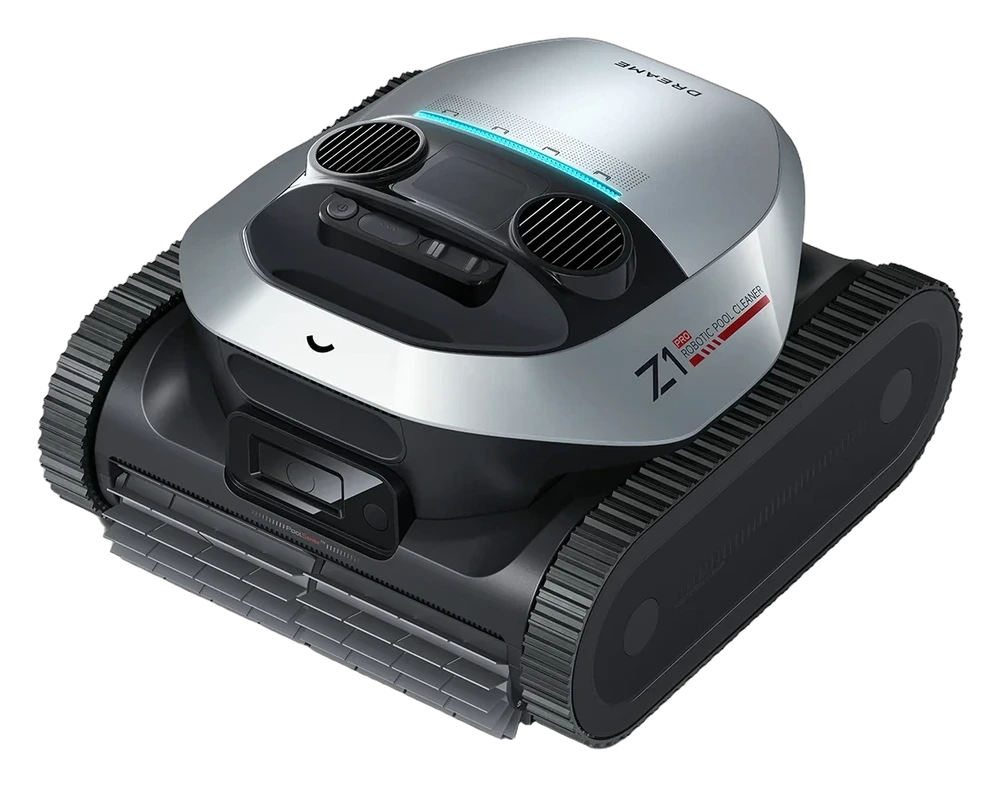
Dreame
Dreame Z1 Pro
- Autonomy
- IIIConditional
- Score
- 59/100Capable
- Readiness
- Ready Now
- Price
- $999.99list
Dreame
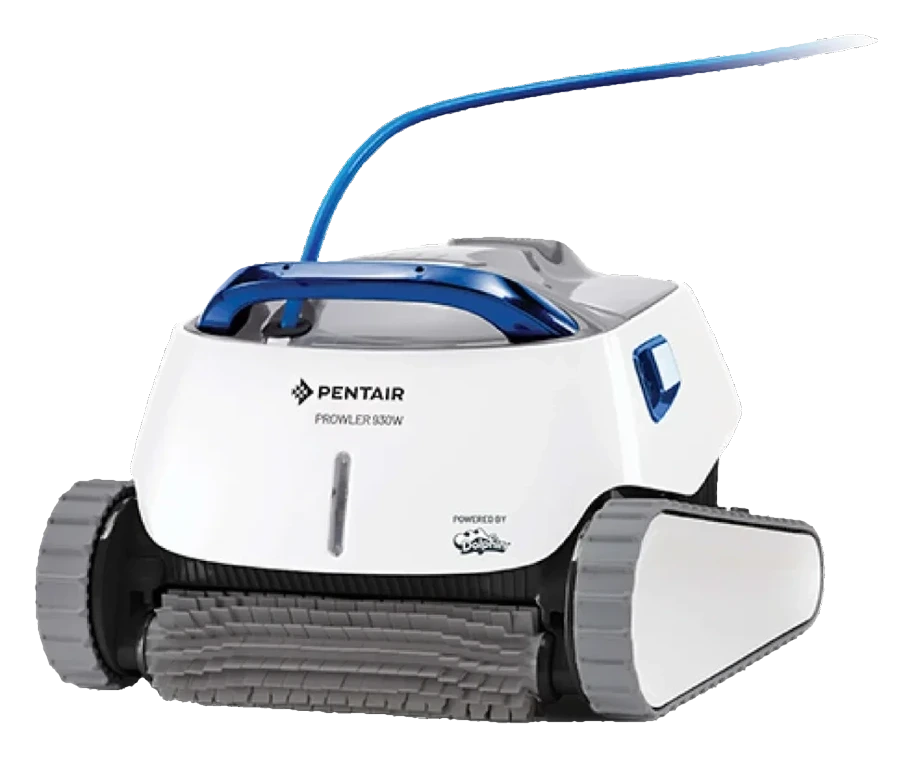
Pentair
Up to three
All robot pool cleaners. Every figure below is placed against the whole class, so a gap can be read against how much the class itself varies.
The conditions each robot was assessed against, side by side. Rows marked in gold are where these machines genuinely differ.
| Condition | Dreame Z1 Pro | Pentair Prowler 930W |
|---|---|---|
| Pool type | ||
| In-ground | GoodManufacturer rates coverage up to 2,160 sq ft with no documented pool-type restriction; matches typical in-ground layouts. | GoodPurpose-built for in-ground pools. WiFi control and cable routing suit gunite and plaster surfaces. |
| Above-groundthey differ | GoodManufacturer documents above-ground compatibility within the same 2,160 sq ft and 5,000 ppm salinity rating as in-ground pools. | PoorNot designed for above-ground pools. Corded design and mounting require in-ground infrastructure. |
| Mixed setup | GoodCoverage and salinity ratings apply identically across pool types, so a mixed setup fits the same documented envelope. | GoodAdapts to any in-ground pool type. Cable management is the only variable. |
| Pool size | ||
| Small (< 400 sqft) | GoodManufacturer's 2,160 sq ft rating comfortably covers pools this size, even with the shorter 80-minute full-cycle runtime. | GoodUnder-12,000 gallon pools clean in single cycles. WiFi app makes scheduling convenient for frequent runs. |
| Medium (400 – 800)they differ | DependsStill under the 2,160 sq ft rated area, but the full floor-wall-waterline cycle runs only about 80 minutes. | Good12,000–25,000 gallon range matches standard Prowler performance. Typical 2-4 hour cycles per run. |
| Large (> 800) | DependsManufacturer caps rated area at 2,160 sq ft; larger pools may exceed that, and full-cycle runtime is only 80 minutes. | DependsOver-25,000 gallon pools require multiple cycles. No integrated dock; plan extended filtration downtime for consecutive runs. |
| Debris load | ||
| Fine (sand / silt) | GoodThe single 180-micron filter is coarser than fine-filtration competitors; sand or silt may pass through uncaught. | GoodCartridge filter handles fine silt efficiently. Weekly rinse keeps suction performance stable. |
| Leaves / large debristhey differ | GoodA 180-micron filter mesh readily captures larger leaf debris, which sits well above that particle-size threshold. | DependsHeavy leaf load clogs filter faster than fine debris. Requires more frequent cleaning; consider pre-pool leaf skimming. |
| Algae / heavy fouling | DependsIndependent review found inconsistent mapping and debris left near steps even post-firmware; heavy fouling adds coverage risk. | DependsAlgae slime reduces track grip and clogs filter. Pool acid wash needed before operation; filter cleaning becomes daily during blooms. |
| Coverage you want | ||
| Floor onlythey differ | DependsFloor-only mode gets a generous 210-minute runtime, but independent review still found early-run navigation stalls of about ten minutes. | GoodSystematic floor coverage is core capability. WiFi app routes handle most floor-only needs efficiently. |
| Floor + wallsthey differ | DependsAdding walls drops full-cycle runtime to about 80 minutes; independent review found mapping inconsistent between runs before firmware fixes. | GoodManufacturer specs include wall-climbing. Coverage depends on programmed routes; not automatic for all wall types. |
| Floor + walls + waterline | DependsFull coverage reached roughly 90 percent post-firmware in independent testing, with debris still documented near steps on best runs. | DependsWaterline scrubbing is documented; full coverage requires careful app route programming. Performance varies by pool tile type. |
A robot being poor for a condition is a fact about fit, not a fault. “Depends” means the record names a limit worth reading, not that the answer is unknown.
A number only means something next to the spread it sits in. Each track is the real range across every classified robot in the class, with the median marked.
Not compared, because fewer than two of these robots carry a published figure: Runtime, Charge time, Noise, Weight, Height.
Written on each record, and the only thing here every robot on the site carries.
What each design gives up to be good at what it is good at.
The robot addresses all three core pool surfaces (floor, walls, waterline) in one cycle, but an independent review found first-run cleaning fell well short of that goal and only reached roughly 90 percent effectiveness after a firmware update.
Auto-parking at the waterline reduces the retrieval task compared to a fully submerged robot, but the same review found the five-minute window before it sinks back adds a different kind of attention requirement: promptness rather than physical retrieval.
Corded power eliminates the battery but adds tether management. There is no charging dock to maintain and no runtime ceiling, but the cable becomes a season-long fixture that needs untangling before a run, and the cleaner has to come out of the pool before anyone swims.
Stated by the record itself. A robot being wrong for a household is a fact about fit, not a fault.
The upkeep ownership hands back to you, whatever the autonomy level says.
Classifications rest on different depths of evidence. A pre-release assessment and a verified one are not the same kind of claim.
| Robot | Evidence status | Sources reviewed | Last assessed |
|---|---|---|---|
| Dreame Z1 Pro | Provisional | 9 | Sep 2026 |
| Pentair Prowler 930W | Discontinued | 5 | Aug 2026 |
Evidence status counts the sources behind a classification, not their kind. A high count can be maker documentation and price coverage, so read it as how much was reviewed rather than as independent testing. How we weigh evidence.
 The full recordDreame Z1 ProSpecifications, evidence, the Fit Check in full, and every tracked change.
 The full recordPentair Prowler 930WSpecifications, evidence, the Fit Check in full, and every tracked change.
Robovations classifies robots; it does not rank them. Nothing on this page is a recommendation, and no manufacturer influences a classification or its placement here.
Comparing across classes is allowed — the page will switch to per-class positioning and tell you it has.