
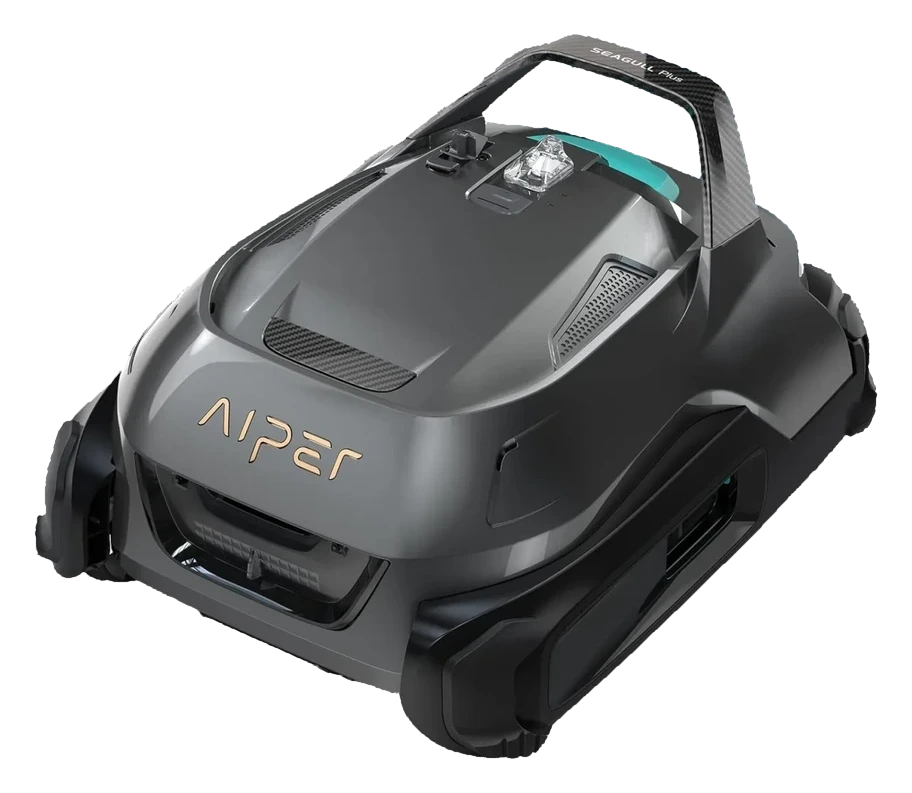
Aiper
Aiper Seagull Plus
- Autonomy
- IIAssisted
- Score
- 38/100Deficient
- Readiness
- Not assessed
- Price
- $399list
Aiper
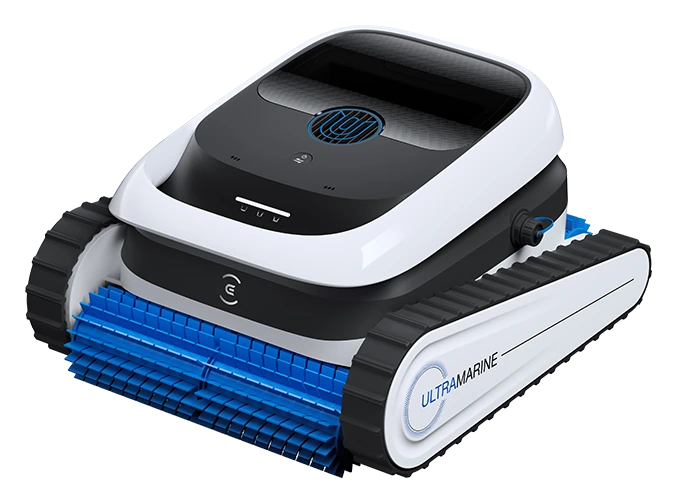
Ecovacs
Up to three
All robot pool cleaners. Every figure below is placed against the whole class, so a gap can be read against how much the class itself varies.
The conditions each robot was assessed against, side by side. Rows marked in gold are where these machines genuinely differ.
| Condition | Aiper Seagull Plus | Ecovacs Ultramarine P1 |
|---|---|---|
| Pool type | ||
| In-ground | GoodDesigned for in-ground gunite and concrete pools; cordless wheels optimized for hard surfaces. | GoodBoth reviewers used it in in-ground pools, including a large pebblecrete pool with sloped sections. |
| Above-groundthey differ | PoorCordless robots not suited for vinyl liners or soft pool bottoms; above-ground pools undersized for Seagull Plus price and complexity. | DependsNo above-ground test has been published, and the manual needs at least 0.5 m of water depth. |
| Mixed setupthey differ | GoodStandard for this category, confirm pool construction before purchase. | DependsOnly in-ground use is documented, so a mixed setup that needs both is unconfirmed. |
| Pool size | ||
| Small (< 400 sqft) | Good90-minute runtime covers small pools easily; unit may finish before you reach dock, wasting battery charge efficiency. Floor-only model recommended for compact layouts. | GoodRated for 180 m² of floor per charge, well above a small pool's needs. |
| Medium (400 – 800) | GoodOptimal for 12,000-20,000 gal in-ground pools; 90-minute runtime aligns with average floor coverage. | GoodDigital Reviews cleaned a large bean-shaped pool in about two hours on one charge. |
| Large (> 800) | DependsPools 25,000+ gal require two runs; battery swap between cycles adds 2-3 minutes. Purchase second battery if running back-to-back sessions desired. | DependsCoverage is rated at 180 m² per charge, and a recharge takes about 4 hours. |
| Debris load | ||
| Fine (sand / silt) | GoodSuction captures silt and algae spores. Cartridge replacement every 3-4 months maintains performance. | GoodThe 3-micron inner filter captures silt and fine particles, though EFTM found it slow to rinse clean. |
| Leaves / large debristhey differ | DependsLarge leaves clog intake quickly; pre-clean pool surface during fall. Run frequency limited to 1-2 times weekly in heavy debris season. | GoodThe 180-micron basket takes leaves and twigs; remove the fine filter for heavy debris, per the manual. |
| Algae / heavy fouling | DependsSuction-only design handles algae dust but not thick algae mats. Chemical treatment required first; robot captures freed particles. | DependsThe manual says the 3-micron filter catches certain algae; no reviewer tested an algae bloom. |
| Coverage you want | ||
| Floor only | GoodFloor-only focus. Standard for cordless models; suits pools without wall or waterline debris emphasis. | GoodBoth reviewers report floors consistently cleaned across repeated runs. |
| Floor + wallsthey differ | PoorNo wall climbing capability. Compare to wall-climbing corded models if wall and waterline coverage required. | DependsDigital Reviews found it detached from some wall sections and drifted down before repositioning. |
| Floor + walls + waterlinethey differ | PoorFloor-only design incompatible with waterline cleaning. Separate tile or waterline cleaner required for line coverage. | DependsWall mode reached the waterline in some sections of Digital Reviews' pool but not all. |
A robot being poor for a condition is a fact about fit, not a fault. “Depends” means the record names a limit worth reading, not that the answer is unknown.
Nine inputs across three pillars, each weighted as shown and each scored so more is better. A robot can lead on one and trail on another, which is the point of showing them apart.
A number only means something next to the spread it sits in. Each track is the real range across every classified robot in the class, with the median marked.
Not compared, because fewer than two of these robots carry a published figure: Noise, Height.
Written on each record, and the only thing here every robot on the site carries.
What each design gives up to be good at what it is good at.
Cordless convenience and price compete at half the autonomy and reach of the wall-climbing Oasis Z5i. You trade waterline coverage and scheduling for freedom from cable management.
No cable to manage, and no way back out of the water without a pole and hook.
Floors came up clean for both reviewers; walls were where results split.
Stated by the record itself. A robot being wrong for a household is a fact about fit, not a fault.
The upkeep ownership hands back to you, whatever the autonomy level says.
Classifications rest on different depths of evidence. A pre-release assessment and a verified one are not the same kind of claim.
| Robot | Evidence status | Sources reviewed | Last assessed |
|---|---|---|---|
| Aiper Seagull Plus | Discontinued | 5 | Sep 2026 |
| Ecovacs Ultramarine P1 | Provisional | 8 | Sep 2026 |
Evidence status counts the sources behind a classification, not their kind. A high count can be maker documentation and price coverage, so read it as how much was reviewed rather than as independent testing. How we weigh evidence.
 The full recordAiper Seagull PlusSpecifications, evidence, the Fit Check in full, and every tracked change.
 The full recordEcovacs Ultramarine P1Specifications, evidence, the Fit Check in full, and every tracked change.
Robovations classifies robots; it does not rank them. Nothing on this page is a recommendation, and no manufacturer influences a classification or its placement here.
Comparing across classes is allowed — the page will switch to per-class positioning and tell you it has.