
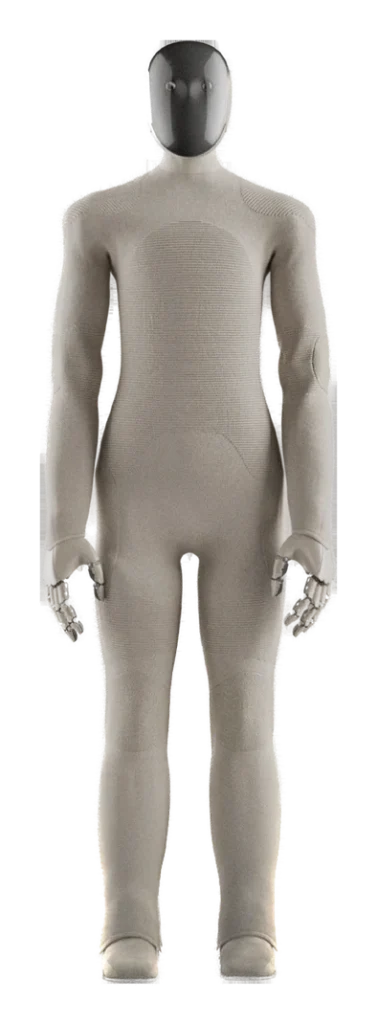
1X Technologies
1X NEO
- Autonomy
- IIAssisted
- Pre-release
- 63/100Plausible
- Readiness
- Known Issues
- Price
- $20,000list
1X Technologies
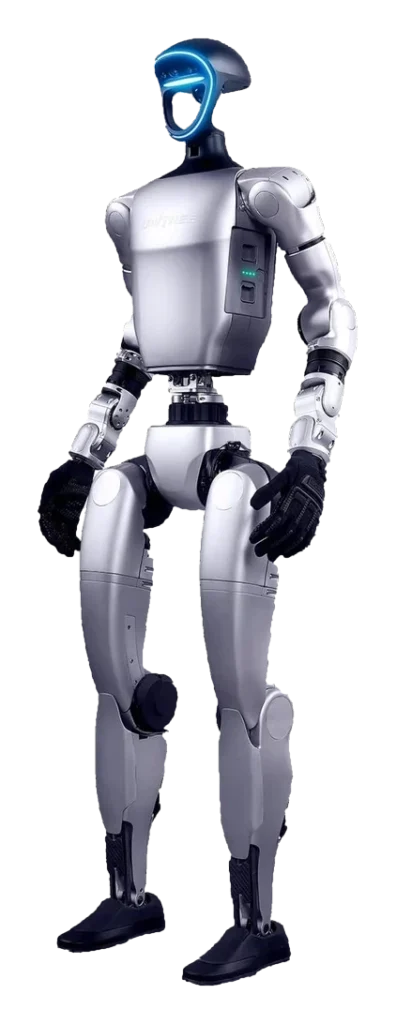
Unitree
Up to three
All humanoid robots. Every figure below is placed against the whole class, so a gap can be read against how much the class itself varies.
The conditions each robot was assessed against, side by side. Rows marked in gold are where these machines genuinely differ.
| Condition | 1X NEO | Unitree H2 |
|---|---|---|
| Where it operates | ||
| Home / residentialthey differ | GoodDesigned specifically for household environments; soft-body safety profile matches residential spaces well. | PoorPlatform targets industrial deployment only. No domestic autonomy capability disclosed. |
| Office / retail | DependsCommercial deployments underway with subscription support, but scale and reliability in diverse facilities still limited. | DependsH2 is in pilot-phase industrial deployment. Commercial availability as a product remains unannounced. |
| Warehouse / factorythey differ | PoorSoft actuators and residential design do not meet industrial durability or force requirements. | GoodH2 demonstrates scripted task autonomy in factory environments with on-site safety supervision assumed. |
| Primary tasks | ||
| Household choresthey differ | GoodLight cleaning, object retrieval, and maintenance routines are primary demonstrated use cases. | PoorNo domestic task autonomy has been demonstrated or claimed. |
| Social / carethey differ | DependsOperator control enables interaction but requires real-time human piloting; autonomous presence is limited. | PoorH2 is positioned for task execution, not human interaction or companionship. |
| Specialized jobthey differ | PoorSoft actuators lack force and precision for specialized tasks like assembly, repair, or delicate handling. | GoodDemonstrated in repetitive manufacturing tasks, picking, placement, line work. |
| Supervision needs | ||
| Fully autonomous | PoorContinuous operator oversight required; not suitable for unattended autonomous operation. | PoorIndustrial deployments assume on-site operators and safety staff monitoring. |
| With oversight | GoodOperator monitoring and intervention model aligns with supervision-level expectations. | GoodAutonomy is task-scripted; human oversight is integral to industrial pilot design. |
| Teleoperated | GoodExpert-pilot subscription tier explicitly designed for operator-controlled deployment and workflow integration. | GoodH2 is actively in pilot-phase factory deployments with structured handoff workflows. |
| Timeline | ||
| Ready todaythey differ | DependsAvailable now through commercial subscription but not retail-ready; early deployments show promise but limited scale. | PoorH2 is pre-release. No shipping date or consumer pricing has been announced. |
| Near-term (1–2 yrs)they differ | GoodEngineering roadmap signals incremental autonomy improvements; pathway to higher autonomy levels documented. | DependsIf H2 commercializes within 12 months, availability will depend on Unitree's distribution strategy. |
| Research phase | GoodPre-release platform suitable for research partnerships and feasibility pilots. | GoodH2 is currently a research and industrial pilot platform with demonstrated autonomy in controlled environments. |
A robot being poor for a condition is a fact about fit, not a fault. “Depends” means the record names a limit worth reading, not that the answer is unknown.
None of these has shipped, so they are assessed on track record, engineering plausibility and how the demonstrations match the claims.
Never averaged into it. These describe how much the maker has disclosed, not what the machine does.
| 1X NEO | Unitree H2 | |
|---|---|---|
| ReadinessShip-date specificity, pricing transparency, distribution and regulatory status. Published beside the number; never averaged in. | 90/100 | 25/100 |
| DisclosureHow much of the product is disclosed. Higher means fewer fundamental unknowns remain. Published beside the number; never averaged in. | 55/100 | 40/100 |
A number only means something next to the spread it sits in. Each track is the real range across every classified robot in the class, with the median marked.
Not compared, because fewer than two of these robots carry a published figure: Charge time, Noise.
Written on each record, and the only thing here every robot on the site carries.
What each design gives up to be good at what it is good at.
Tendon-driven compliance maximizes safety in shared spaces but leaves precision and contact-sensitive work unproven; with a published 154 lb lift and 18 lb per-arm payload, raw force is not what the design gives up.
Operator partnership ensures task flexibility and professional support but requires continuous human labor cost.
A $499 per month plan makes a home humanoid reachable without a $20,000 purchase, but keeps the robot on an ongoing subscription rather than owned outright.
Bipedal design demands precise balance control that manufacturing environments demand; humanoid hardware cost and complexity remain unpriced.
Stated by the record itself. A robot being wrong for a household is a fact about fit, not a fault.
The upkeep ownership hands back to you, whatever the autonomy level says.
Classifications rest on different depths of evidence. A pre-release assessment and a verified one are not the same kind of claim.
| Robot | Evidence status | Sources reviewed | Last assessed |
|---|---|---|---|
| 1X NEO | Pre-Release | 12 | Sep 2026 |
| Unitree H2 | Not Consumer-Ready | 4 | Sep 2026 |
Evidence status counts the sources behind a classification, not their kind. A high count can be maker documentation and price coverage, so read it as how much was reviewed rather than as independent testing. How we weigh evidence.
 The full record1X NEOSpecifications, evidence, the Fit Check in full, and every tracked change.
 The full recordUnitree H2Specifications, evidence, the Fit Check in full, and every tracked change.
Robovations classifies robots; it does not rank them. Nothing on this page is a recommendation, and no manufacturer influences a classification or its placement here.
Comparing across classes is allowed — the page will switch to per-class positioning and tell you it has.