Spirit AI says its robot ‘brain’ hits 90% on simple tasks in structured living rooms, with homes further off
A Chinese startup building humanoid robot software claims a 90 percent success rate on simple tasks and a ChatGPT-style leap by mid-2027. Its chief scientist says where homes fall.
Spirit AI’s robots succeed at simple tasks 90 percent of the time “in structured living-room environments,” Reuters reported on 18 September, after its reporter Laurie Chen visited the Chinese startup’s Beijing offices. The company builds the software that plans a humanoid robot’s movements. “The brain is indeed the weakest link in the complete robotics stack,” its co-founder and chief scientist, Gao Yang, told Reuters.
Gao is also an assistant professor of robotics at Tsinghua University. Reuters set his argument against hardware advances that have Chinese humanoids sprinting, dancing and doing backflips on command, and reported that robot firms are increasingly focused on the software that governs a robot’s intelligence, the field known as embodied AI.
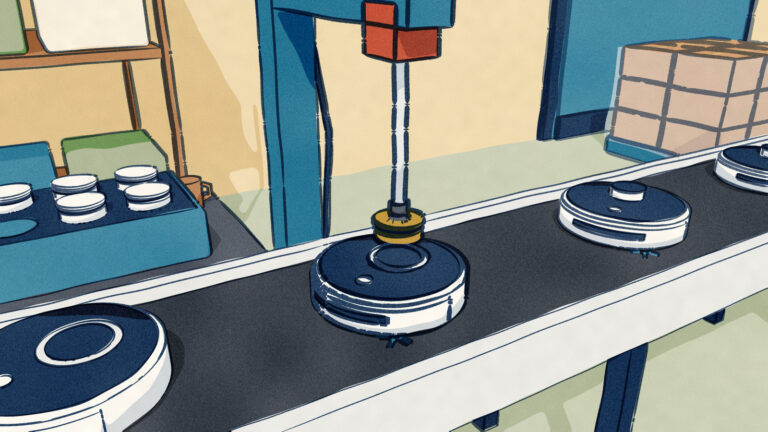
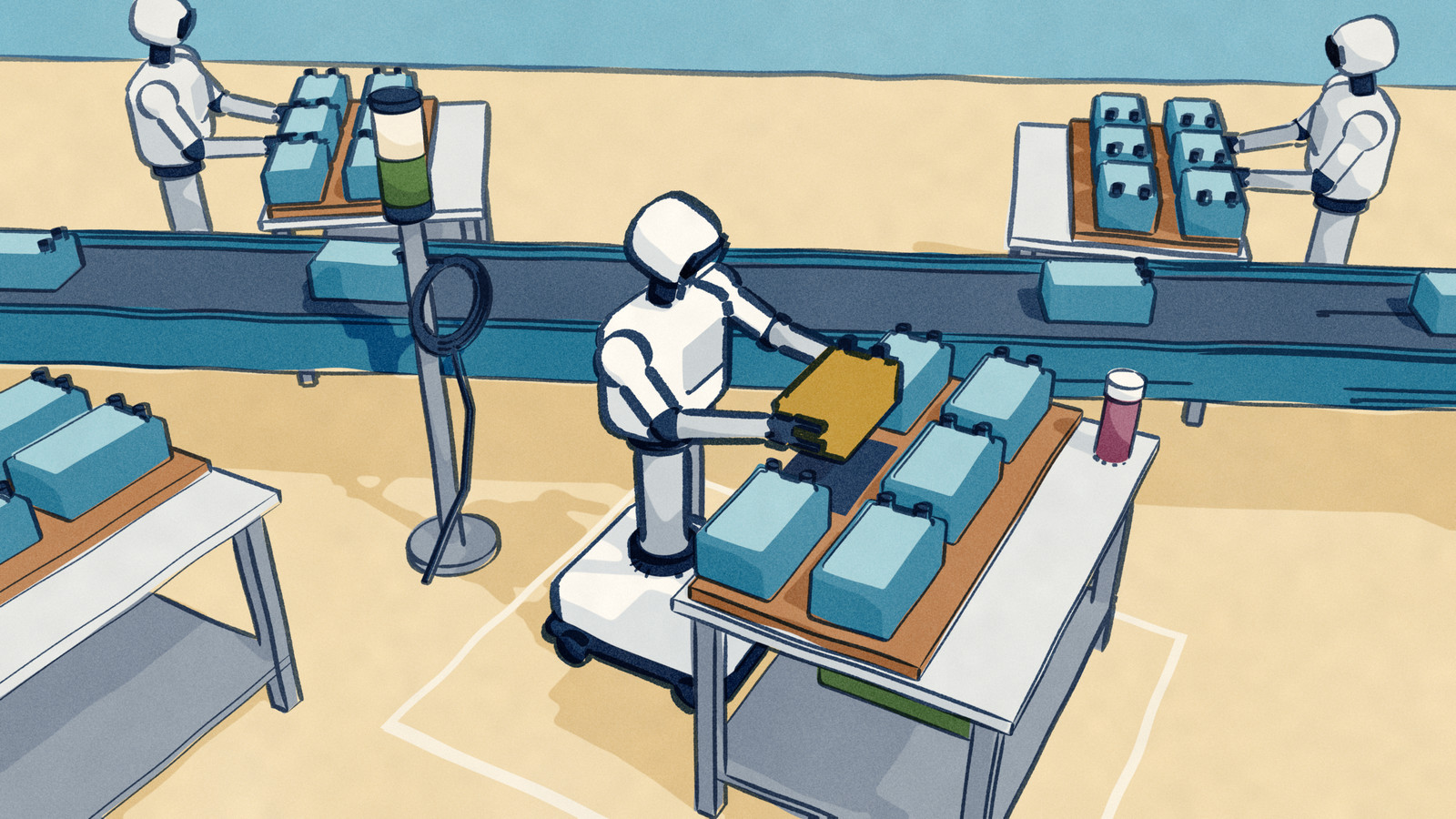
Tens of Spirit AI’s Moz1 robots, wheeled humanoids, work on production lines at battery maker CATL and at retailer JD.com, which is also an investor, according to Reuters. An AsiaTechDaily report from February described the Moz1 as force-sensitive with 26 degrees of freedom, and gave the JD.com robots a different job: customer interaction and product demonstration in retail environments.
The 300-person company has raised more than $670 million since it was founded in 2024 and is valued at 20 billion yuan, about $2.9 billion, Reuters reported. In February, after two funding rounds that raised nearly 2 billion yuan, AsiaTechDaily put the valuation above 10 billion yuan, so the reported figure has roughly doubled in seven months.
The cable problem

Spirit AI trains its robot brains overwhelmingly on real-world data. Many competitors lean on simulators to cut training costs, and Gao’s reason for avoiding them is the material the robots have to handle. “Simulators handle rigid bodies well, but flexible objects like deformable electric cables remain a problem,” he told Reuters. Some tasks, he said, can only be learned by studying interactions with physical objects.
So the company records people. It employs around 1,000 contractors across China who wear data-collection equipment at home or in factories. In a data training center at the Beijing office, Reuters found dozens of young people fitted with sensors repeating motions such as opening fridges, unlocking safes and cutting vegetables with knives. Gao said this “dirty data,” with its wider range of motions, made the models improve faster.
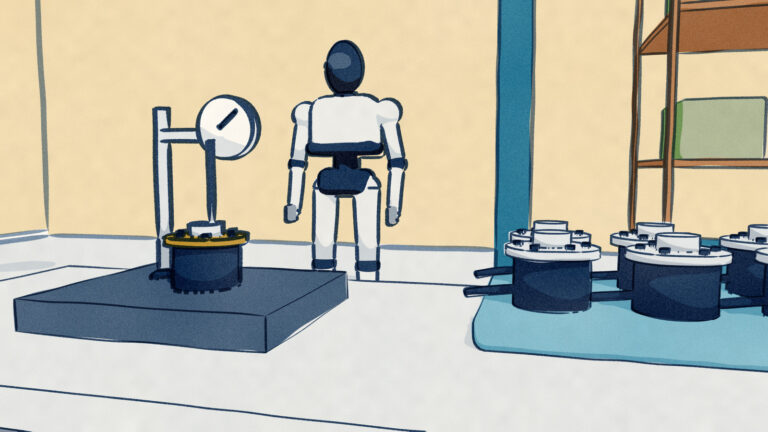
Cables are also where the company’s industrial claims sit. AsiaTechDaily reported in February that Moz robots were handling flexible wire harnesses on production lines at CATL’s Zhongzhou battery facility, and that the company put the system’s success rate there above 99 percent, “matching skilled human workers in precision and cycle time.” Gao told Reuters that fine-motor actions, such as unscrewing a bottle cap, remain difficult, as do tasks the robots have never seen.
“Progress is extremely fast,” he said. When Spirit AI was founded, “a robot could perform only one isolated task well, like pouring water or folding a piece of clothing.” Now, in his words, “robots operate across large spatial areas and execute continuous complex workflows.”
Where homes fall on the timeline
Gao expects robot brains to reach what he calls the GPT-3.0 milestone, a comparison with OpenAI’s landmark language model, by mid-2027. “You will be able to speak to a robot in natural language, and it will execute a series of reasonable physical actions to attempt the task,” he said. He also set out the order in which he expects robots to arrive in working settings.
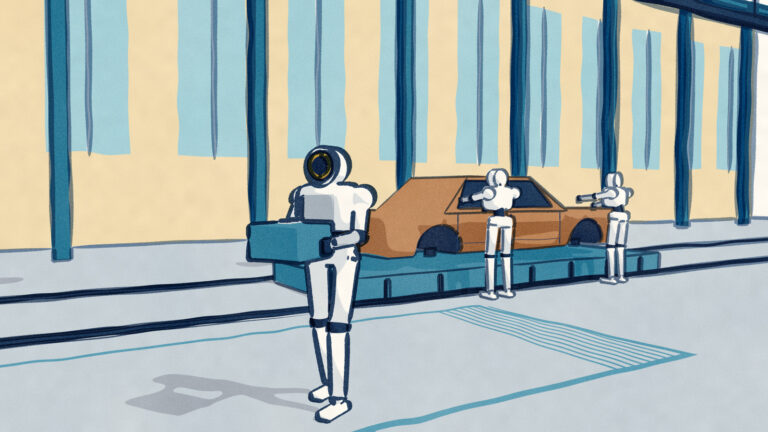
The next one to two years mark the initial window for industrial applications. Two years from now, we’ll see robots deployed in commercial service settings doing simpler tasks. Entering homes is far harder than both.
Gao Yang, co-founder and chief scientist, Spirit AI, to Reuters
The safety system Gao described responds to force. The robots use whole-body force control, he said, and emergency braking triggers automatically as a baseline safety policy “if the robot encounters excessive interaction force with the environment.”
The two success figures describe different work. The 99 percent was the company’s claim for one production task, as AsiaTechDaily reported it. Reuters did not name the tasks behind the 90 percent, the number of attempts or who scored the results, and neither report describes a test run by anyone outside Spirit AI.