Can you buy a home robot that does your chores in 2026?
Two startups are taking deposits on general-purpose robots for the home. What does the money reserve, and what still arrives driven by a person?

On this page3 sections
For a refundable $250, Weave Robotics will hold your place in line for a robot that folds laundry, makes beds and tidies rooms. Put down $200 instead and 1X Technologies will reserve a different one. Both companies opened these orders to the public over the past year.
What the deposit buys is a delivery window rather than a delivery. Weave begins California deliveries in fall 2026, it says, and reaches the rest of the United States in 2027. 1X puts its first home shipments later, also starting in the United States. Neither robot has arrived in anyone’s home yet.
So the question for anyone watching this market is a plain one. In 2026, can a household buy a general-purpose robot for the home, and if the answer is yes, what actually shows up? It turns on three things the announcements tend to blur together: the price, the software, and the date.
Figure
What a preorder deposit actually buys
- The depositWhat actually changes hands at preorder: a payment, and a position in a queue.
- No published endOperator overhead, integration and maintenance are costs every platform in the category has, and none of them has priced.
- Quotedhardware, the one figure verifiable at the point of sale
- Not quotedoperator overhead, integration and maintenance
What the deposit reserves
Weave’s Isaac 1 costs $7,999 up front, and the $250 deposit is fully refundable. It rolls on wheels instead of legs.
That choice is about cost. The actuators that let a robot balance and walk on two legs are among the most expensive parts inside one, and launch coverage described the wheels as what keeps Isaac 1 under eight thousand dollars.
The pricing model is itself new for a home machine. A robot vacuum is bought once; these home humanoids are sold the way cars and phones now are. Weave’s $449 a month is a lease-like path to the same robot, its $99 membership is a separate recurring charge, and 1X’s $499 a month ships on a subscription that never ends in ownership.
1X’s Neo sits at the other end of the price range. Early access runs $20,000 with a $200 deposit and priority delivery in 2026, or that $499 a month on a subscription shipped later. It walks on two legs, and at more than twice Isaac 1’s price it shows what legs still cost.
Three humanoids, three buyers
| Robot | Sold to | How it is sold | First deliveries |
|---|---|---|---|
| Weave Isaac 1 | Households | $7,999 or $449 a month, $250 deposit | California, fall 2026 |
| 1X Neo | Households | $20,000 or $499 a month, $200 deposit | United States, from 2026 |
| Agility Digit 5 | Warehouses | Multi-year purchase orders | Early access, first half of 2027 |
A person on the other end
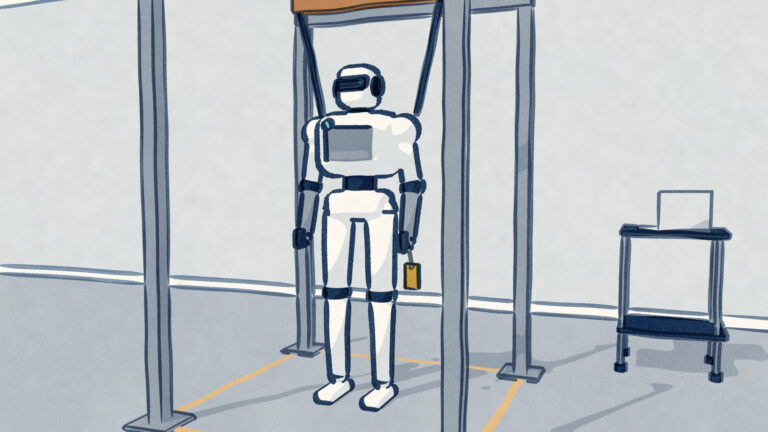
Buying one of these robots also means buying a service, and part of that service is a person. Weave says Isaac 1 runs on its own by default, but that “teleoperation assistance” steps in when its software cannot finish a job: a Weave employee can watch the robot’s live camera feed and take over.
1X offers the same arrangement by appointment. For a chore its Neo does not yet know, an owner can schedule a company teleoperator to guide the robot through it, which doubles as a way to train the software.
The arrangement is a different kind of purchase from an appliance. A dishwasher arrives without a subscription, a monthly membership or a stranger who can see into your laundry room. The home-humanoid model both companies chose looks less like buying a machine and more like signing up for one, with a remote operator standing in for the parts the robot cannot do on its own yet.
Term
TeleoperationA person operating a robot from a distance, seeing through its cameras and driving it over a network link when the robot’s own software cannot complete a task.What you can actually buy today
The robots a household can order in 2026 and use within the month are still appliances that do one job. In early September, iRobot showed its top-of-line Roomba for the year, the Max 875 Combo. Coverage of the launch put it at $1,199, shipping within about two weeks, with North American stores stocking it later that month.
It vacuums and mops, and iRobot lists its suction at 35,000 Pa, the highest figure the company has published for a Roomba. You buy it, it arrives, and it cleans the floor on its own. Nobody watches through its camera.
The humanoid money that is already real sits in the warehouse. When Agility Robotics unveiled its Digit 5 on September 15, it reported more than $300 million in multi-year orders. The machine lifts up to 50 pounds and is built to work more than 20 hours a day, aimed at depalletizing, machine tending and quality inspection in factories and logistics centers.
Agility also built Digit 5 to stand near people. A safety system is meant to let it work beside human staff without the cages that usually wall off industrial robots, and the company plans to carry the robot into the European Union and United Kingdom with a CE mark. The battery runs about 90 minutes and recharges in roughly nine, which is how it logs 20-hour days.
Even that backlog is a promise. Agility expects early access in the first half of 2027 and general availability by the end of it. So the committed humanoid dollars in 2026 are purchase orders from businesses, while the consumer side is refundable deposits from individuals. One is a contract; the other is a place in line.
For the household that has put money down, the picture is small and specific. The $250 comes back if they change their mind, and the delivery date is a season rather than a day. When the robot does arrive, the chores it cannot manage will sometimes be finished by someone at the company, watching through its eyes.