A Unitree robot overheated on Mount Tai and was carried down on a stretcher
Nearly 90 robot teams climbed Mount Tai's stone steps in a competition built to stress machines that mostly work indoors.

Close to 90 robot teams took on a stretch of Mount Tai’s stone steps on November 2, 2026, the first running of the CMG World Robot Mount Taishan Climbing Competition in Tai’an, Shandong province.
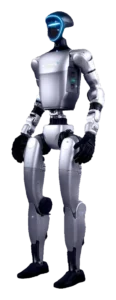
One competitor, a Unitree G1 humanoid, overheated partway up the course. Its operator pulled it from the run, and event staff carried the robot down the mountain strapped to a stretcher.
The same event produced finishers. A four-legged robot built by Beijing Lingyi Technology, a Unitree subsidiary, won its speed category. A humanoid from the Beijing team Zhishen Lingyue finished a shorter course in under half an hour.
Other machines on the course fared worse than those winners and no better than the G1. One humanoid in a bandana collapsed on the cobbled route, and another tumbled down a flight of stairs and landed beside a trash bin.
Mount Tai, three outcomes
| Robot | Category | Result |
|---|---|---|
| Beijing Lingyi Technology quadruped | Four-legged speed | Won category, finished in 43:41 |
| Zhishen Lingyue humanoid | Humanoid, shorter course | Finished in 27:26 |
| Unitree G1 (development unit) | Humanoid | Overheated, withdrawn, carried on a stretcher |
The course ran from Hongmen, Mount Tai’s Red Gate, up to Zhongtianmen, the Midway Gate to Heaven: more than 3,100 stone steps and roughly 600 meters of elevation gain on uneven, centuries-old stonework.
The G1’s overheating came from internal heat that outpaced its own cooling system, according to Chinese state media. Unitree said the failed unit was a development-configuration G1, the same type shown in a China Media Group Spring Festival Gala performance.
The robot may have entered the race without tuning specific to this course, the company added. No injuries to people were reported.
Unitree sells the G1 directly today, at $13,500 before tax and shipping, on its own site, where it is marketed to robotics developers and research teams.
Direct sale puts it among the few humanoids a buyer outside a lab can actually order and have shipped. A public failure like this reaches people who already own one or are deciding whether to order one.
A single un-tuned unit overheating on one unusually punishing staircase says little about how a properly tuned G1 behaves in ordinary use. Unitree’s own explanation points at missing course-specific tuning, not a disclosed hardware fault.
The same field of roughly 90 teams produced robots that stumbled, stalled and finished cleanly on the identical stairs. The winning quadruped, also a Unitree machine, crossed its finish line the same afternoon the company’s humanoid rode down the mountain on a stretcher.