What does “avoids obstacles” promise on a robot vacuum?
One robot vacuum’s obstacle claim comes with a footnote that sets a size floor. Another comes with a guarantee, and it covers one kind of mess.
On this page3 sections
The product page for the Roborock S8 MaxV Ultra advertises “73 Objects Recognizable,” followed by an asterisk. The footnote reads, in full: “Based on Roborock internal testing, S8 MaxV Ultra can see and bypass objects down to as small as 5cm wide and 3cm tall. Recognition accuracy may vary depending on environmental factors.”
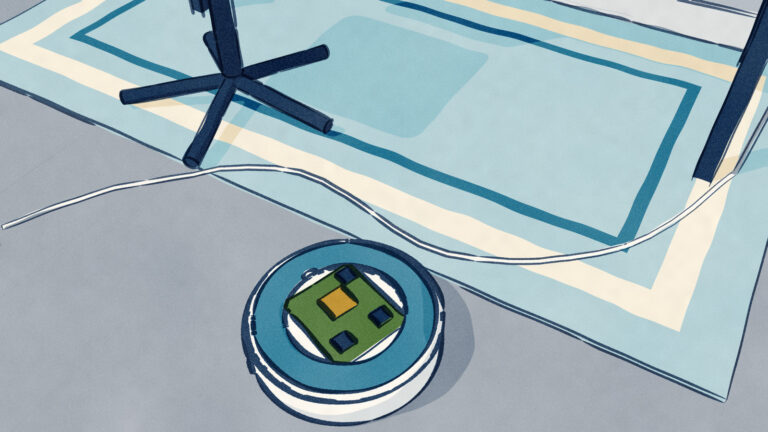
Three centimeters is a little over an inch. The phone charging cable lying flat across your bedroom floor stands a few millimeters high.
The iRobot Roomba j7+ promises more, and attaches no footnote. The robot, iRobot writes, uses “PrecisionVision Navigation to recognize and avoid common objects in its way, like cords, pet waste, socks and shoes.”
So what are you being promised? Both sentences pack several jobs into one feature: noticing that something is in the path, working out what it is, choosing a route around it, and coping when the robot guesses wrong. The makers describe those jobs in very different detail, and the job left vague is the one you end up doing by hand.
Detecting an object and naming it
Many robot vacuums build their map with a spinning LiDAR turret on the lid. Sitting several inches above the floor, it can miss low-profile objects, which is why robots that avoid clutter well carry extra sensors at the front.
Roborock described its front sensors in a 2022 explainer for the S7 MaxV. A 3D structured-light emitter “acts as a ruler,” measuring the distance to whatever sits in the robot’s path. Beside it, an RGB camera captures “detailed images of the obstacles, including texture and color.”
An onboard chip then runs “pre-set machine learning algorithms” on both feeds, and “shoes, socks, and cables” are among the things it is trained to recognize. The S8 MaxV Ultra carries the same system, Reactive AI 2.0, with the same two sensors. The structured light finds an object and sizes it; the camera and the trained model put a name to it.
A longer parts list settles little by itself. “Camera hardware alone does not guarantee excellent results,” one test lab cautions, and structured-light systems with no camera or IR laser “have been among the lower-scoring configurations” in its testing.
Steering around it
A label still leaves the robot deciding how close to go. By Roborock’s account, the S7 MaxV keeps a distance from each object set by how risky it judges that object to be, cleaning closer to the less risky ones. So a robot that can tell a shoe from a cable can clean tight against one and leave room around the other.
Even a correct label can go wrong from there. Every detour is a new stretch of path, and a wide berth around the cable under your desk can bring the machine up against a chair leg.
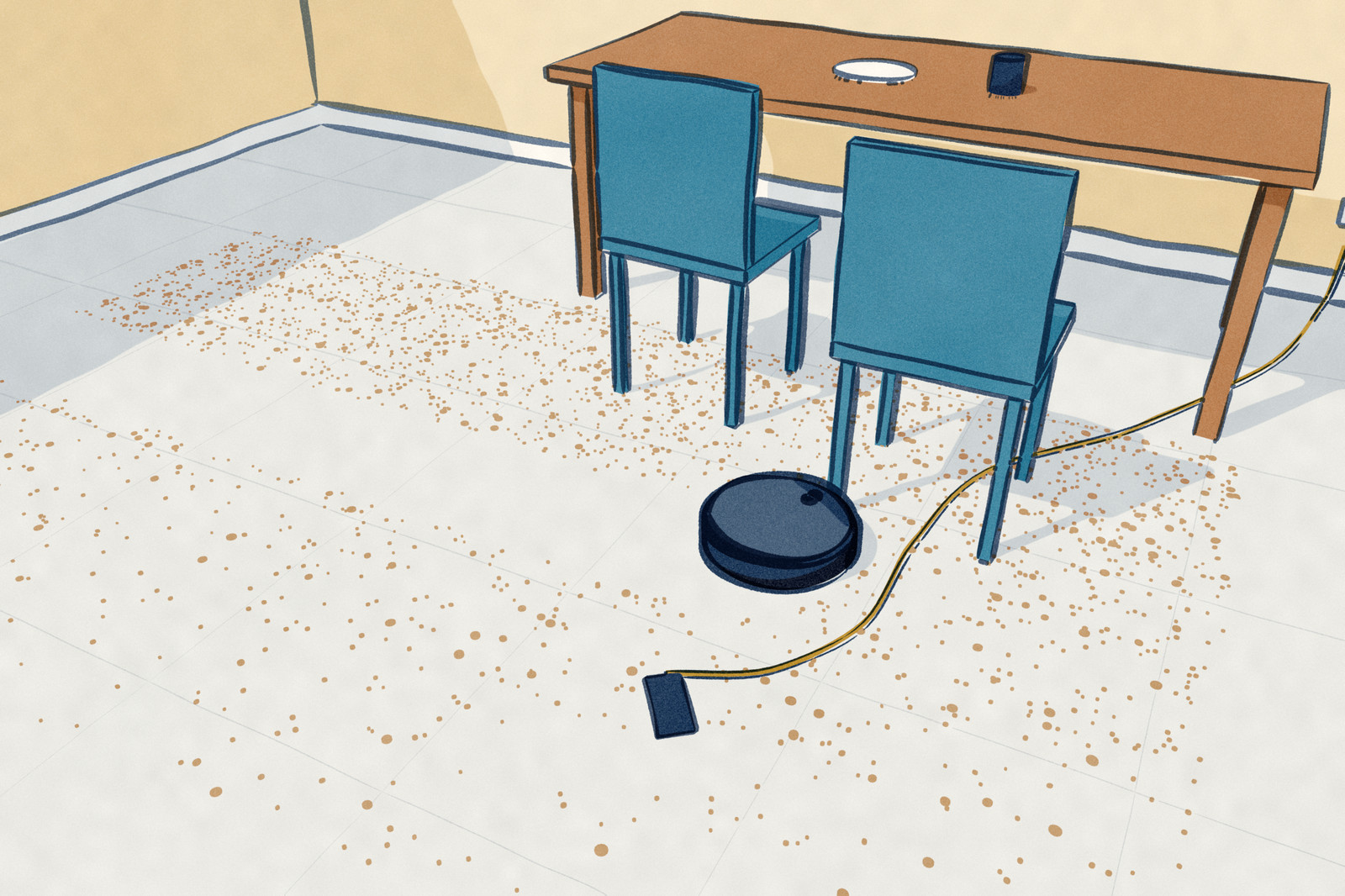
Obstacle-course testing probes this step with the clutter of a lived-in floor: cords, shoes, fabric, toys and simulated pet waste. Each robot is scored on how many objects it gets around without touching.
The hardest items on that course read like a child’s bedroom floor: “Charging cables, drawstrings, socks, lightweight fabric, and very small toys are often the most difficult obstacles.” Most of those lie within a centimeter or two of the floor, below the 3 cm minimum Roborock gives for the S8 MaxV Ultra.
When the robot guesses wrong
Say the robot misjudges your cable. Does it stop, back off, report an error, or keep pulling the cable into its brush? Neither maker says. Both describe a photograph instead.
On the S8 MaxV Ultra, the photos wait in the app: “you can view photos of identified objects on the map page.” The j7+ comes to you. When it first spots an object, “it will send you a photo so that you can tell it to avoid or clean around the obstacle in the future.” Either way, the review falls to you, after the run.
Only iRobot puts a remedy for failure in writing. Under its Pet Owner Official Promise, a j7+ that fails to avoid solid cat or dog waste within a year of purchase is replaced. The cords, socks and shoes it also promises to avoid carry no remedy.
Even our strongest performers should not be treated as a substitute for removing dangerous items or cleaning up pet accidents before a run.
Read together, the makers’ own words say a good deal about noticing an object and naming it, and a sentence about how wide to steer. For a wrong guess, they offer a photo in your app, and one remedy, for pet waste.
And the phone cable on your bedroom floor? It lies below Roborock’s 3 cm floor, and iRobot, which names cords among the j7+’s obstacles, puts no remedy behind them. Before a run, it is still yours to pick up.