A Humanoid Robot’s New Job: Picking Up Eggs Off a Barn Floor
North Carolina researchers are teaching a commercially sold humanoid to find and retrieve the eggs cage-free hens lay outside the nest box.

As many as 15,000 eggs a day can land on the barn floor of a 100,000-bird cage-free farm, instead of in a nest box, North Carolina State University researchers say. Floor eggs like these can run as high as 15 percent of a farm’s total output. The conveyor belts built for caged hens were never designed to catch them.
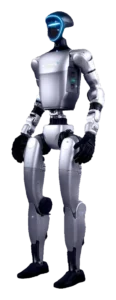
NC State’s Artificial Intelligence and Robotics Lab is training a robot to pick those eggs up by hand. The robot, named Howl, stands about four feet tall and runs on a Unitree G1, a humanoid chassis Unitree already sells. The lab is teaching it to spot an egg on the floor with computer vision, then lift it in a grip gentle enough not to crack the shell.
Howl has not picked up an egg inside a working barn yet. The lab is still training it in simulation and on recordings of a person’s own hand movements, a method called imitation learning, before any barn visit. Researchers are targeting early 2027 for the robot’s first on-site trial.
Ramesh Bist, the assistant professor who leads the AIR Lab, says the goal is a robot that works the floor beside the people who already do it. ‘Agriculture will always be deeply human-centered,’ he said. ‘But the farms of the future will see humanoid robots working alongside farmers.’
The chassis under Howl is not experimental. Unitree’s G1 was already selling to buyers before this project started: about 50 units in India alone, priced from roughly ₹20 lakh to ₹60 lakh depending on configuration, Indian technology coverage reported this month. What NC State adds is the software and the egg-picking task training on top.
The target is a poultry industry the university puts at about $40 billion a year in North Carolina, a state that produces roughly a tenth of the country’s poultry.
For now, Howl has not worked a real barn floor. The lab has published no success rate for finding eggs, no breakage rate for handling them, and no cost per bird. The early-2027 on-site trial is a target, and the robot has yet to meet a live hen.