Skip to content
Saved

Technology shift/Robot Window Cleaners/2 robots compared/Reviewed Sep 24, 2026

MOVA T1 Station vs Ecovacs Winbot Mini 2: cordless or corded?

Corded mains power against Battery-base cordless powerTwo architectures for the same job. Each is documented to work in conditions the other is documented to struggle in.
MOVA T1 StationView recordMOVAIIIT1 StationNavigation approachBattery-base cordless power
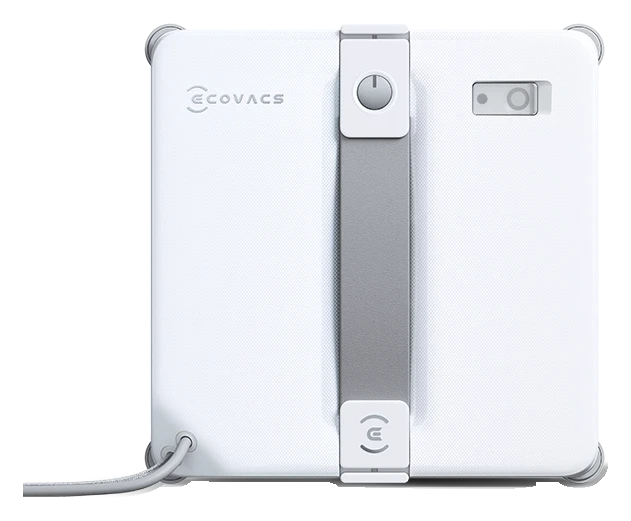
Ecovacs Winbot Mini 2View recordEcovacsIIIWinbot Mini 2Navigation approachCorded mains power
Full specifications9 measurements · 18 of 18 documented
Navigation
19-sensor edge, frame and obstacle detection with Z and N path planning
WIN-SLAM 4.0 path planning with frame and obstacle detection
Dimensions (W×D×H)
10.91 × 10.91 × 3.13 in
8.46 × 8.46 × 2.17 in
Weight
3.97 lbs
2.87 lbs
Readiness
New to Market
Ready Now
Released
Aug 2026
Mar 2026
Power type
Battery base (4,500 mAh) feeding the robot through a 5.5 m cable; can also run plugged in
Mains cable (4.7 m total), 3,000 mAh backup battery
Backup battery runtime
30 min
30 min
Min pane size
11.8 x 15.7 in (30 x 40 cm)
9.84 x 9.84 in
Water tank capacity
80 mL; up to 90 m² per fill, per MOVA
50 mL

The technological divide

Two architectures, two failure modes

The category has split into two architectural approaches. Each works well in some conditions and breaks down in others.

Approach A · Corded mains-cable power

Corded mains power

1

Ecovacs runs the Winbot Mini 2 on a 4.7 m mains cable for continuous power. A small 3,000 mAh battery keeps it attached to the glass for 30 minutes if power is lost, not for normal operation.

  • Unlimited runtime while plugged in
  • Lower purchase price, per specification sheets
  • No cord-free operation away from outlets
  • 30-minute backup battery holds position only
vs
Approach B · Battery-base cordless power

Battery-base cordless power

12

MOVA's base station carries a 4,500 mAh battery and feeds the robot through a 5.5 m cable, giving up to 80 minutes of active cord-free cleaning plus a further 30-minute power-off safety hold, per MOVA. The base can also run plugged into the wall.

  • Works away from a wall outlet
  • Also runs plugged into the wall
  • 8.2 kg base carried between windows
  • No independent test of runtime published

Where each robot sits

Does the architecture pay off?

Horizontal: where each robot sits between the two architectures. Vertical: its documented result on the headline test.
Handles itPartialStruggles
MOVA T1 StationCord-free, per MOVA
Ecovacs Winbot Mini 2Requires mains cable
ACorded mains powerBattery-base cordless powerB

Vertical axis: documented result on Cleaning away from a wall outlet

What each architecture can and can’t do

Capability tests

Each capability is documented from owner reports, manufacturer specifications, or third-party reviews. No in-person testing.

CapabilityMOVA T1 StationEcovacs Winbot Mini 2
Cleaning away from a wall outletNo nearby power pointCord-free, per MOVARequires mains cable
Runtime independent of a power cable110 min30 min hold, power-loss only
Weight carried between windowsOwner-borne, per move3.97 lbs2.87 lbs
Independent verification publishedNone published as of Sep 2026One 90-day owner review
Water tank capacity per fill80 mL; up to 90 m² per fill, per MOVA50 mL
Smallest supported pane size30 x 40 cm minimum25 x 25 cm minimum

What the architecture difference means

Different homes, different sensor stacks

Where each architecture fits, by condition.

Windows beyond a cord's reach

MOVA lists up to 80 minutes of active cord-free cleaning from the T1 Station's battery base, plus a further 30-minute power-off safety hold, useful where a mains cable cannot reach. No independent test has confirmed that runtime, and the 8.2 kg base must still be carried between windows.

Many small panes cleaned in one session

The Winbot Mini 2 weighs 1.3 kg against the T1 Station's 8.2 kg base, so moving between several small panes means routing a lighter cable rather than lifting a heavier base each time. Ecovacs lists no cord-free mode.

Buyers who want a published independent test

One owner's 90-day review documents the Winbot Mini 2 across more than 60 cycles, including app disconnects and a leaking spray bottle. No independent review of the T1 Station exists; MOVA's cord-free runtime and edge-cleaning figures remain unverified.

Common questions

What readers ask about this comparison.

Q.
What's the difference between the MOVA T1 Station and the Ecovacs Winbot Mini 2?
The T1 Station’s battery base feeds the robot through a 5.5 m cable and lists up to 80 minutes of active cord-free cleaning, plus a further 30-minute power-off safety hold, per MOVA. The Winbot Mini 2 runs on a 4.7 m mains cable, with a small backup battery only for a 30-minute hold if power is lost, per Ecovacs.
Q.
Does the MOVA T1 Station need to be plugged in?
Not while cleaning. MOVA lists up to 80 minutes of active cord-free cleaning from the base station’s 4,500 mAh battery, plus a further 30-minute power-off safety hold, and the base can also be run plugged into the wall.
Q.
Can the Ecovacs Winbot Mini 2 run without a power cord?
No. Ecovacs specifies continuous operation over a 4.7 m mains cable; the 3,000 mAh backup battery only holds the robot on the glass for 30 minutes after a power loss.
Q.
Which robot has an independent test published?
The Winbot Mini 2 has one owner’s 90-day review on Window Robot Lab, covering more than 60 cleaning cycles. No independent test of the T1 Station had been published as of September 2026; every performance figure for it traces back to MOVA.
Q.
Is a battery base a proven advantage over a mains cable for window robots?
Not yet independently confirmed. MOVA’s own specifications list 80 minutes of active cord-free runtime (plus a 30-minute power-off safety hold) and a 1 mm edge-cleaning tolerance for the T1 Station, but no third-party source has verified either figure.
Next up

Ecovacs Winbot W2S Pro Omni vs Kärcher RCW 2: what's each for?

Read the comparison
Comparison ID: RV–CMP–11338 · Last reviewed Sep 24, 2026 · Based on owner reports, manufacturer documentation, and firmware release notes