Skip to content
Saved
ROBOVATIONS/COMPARISON3 CONTENDERSREASSESSED 2026.06.23

Goal-based

Complete coverage or skipped strips: which window robot finishes the pane?

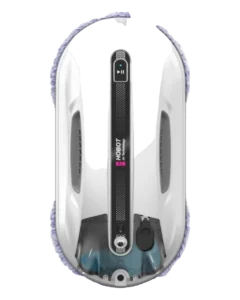
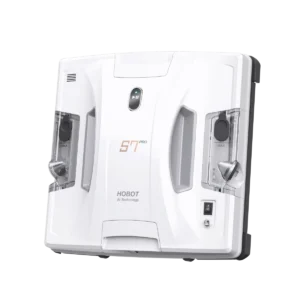
HOBOT's three-tier lineup shows how suction pressure and navigation architecture interact: the same brand produces a manual-repositioning Level II and a tether-guided auto-pathing Level III within a $160 price spread.
HOBOT 2S
HOBOT

HOBOT 2S

$299Level II
Hobot R3
Hobot

Hobot R3

$423Level II
HOBOT S7 Pro
HOBOT

HOBOT S7 Pro

$460Level III
Price range$299–$460
Autonomy spreadLevel II–III
Contenders3

Classification, not a ranking. Every mark below is documented evidence, not a purchase recommendation.

We may earn commission from qualifying purchases. This does not influence the comparison.

01/05

How does each robot decide where to move next?

Navigation architecture determines whether a robot produces systematic rows or reactive detours. The three robots here represent three distinct approaches within the same product family.
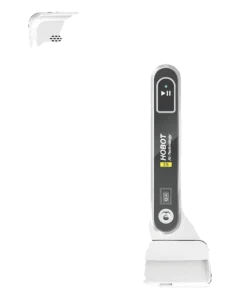
Where they differHOBOT S7 Pro — Navigation method: Edge detection with auto-pathing; systematic
EvidenceHOBOT 2SHobot R3HOBOT S7 Pro
Navigation methodInfrared edge detection; reactive onlyVacuum edge detection; reactive repositioningEdge detection with auto-pathing; systematicDiffers
Path planningNone; no planned sequenceNone; semi-autonomous reactiveManufacturer-documented auto-pathingDiffers
Autonomy classificationLevel II (Assisted Autonomy)Level II (Assisted Autonomy)Level III (Conditional Autonomy)Differs
Manual repositioning requiredPer window, every sessionPer window after pad rotationNot required on framed panes
Sources & evidence
HOBOT manufacturer documentation; Robovations classification 2026

HOBOT 2S product documentation describes infrared edge detection that halts motion at frame edges with no path sequence. Autonomy classification derived from Robovations assessment (ID 1074).

HOBOT S7 Pro Amazon product page; Robovations classification 2026

S7 Pro manufacturer specs document auto-pathing as a distinct feature differentiating it from prior-generation reactive models. Only the S7 Pro among these three carries a Level III classification.

02/05

Which robot reaches window corners most reliably?

Corner coverage is where path logic and pad geometry interact most visibly. A robot that halts at the frame and reverses leaves a strip; one with pad geometry designed for corners reduces but does not eliminate that strip.

Where they differHobot R3 — Pad configuration: Dual rotating pads
EvidenceHOBOT 2SHobot R3HOBOT S7 Pro
Pad configurationSingle static microfiber padDual rotating padsDiffersDual reciprocating mops
Corner coverage claimNot documented; edge halt reversalDocumented: rotation reaches cornersDiffersAuto-pathing targets systematic edge coverage
Owner corner dust reportsCorner accumulation reported by ownersFewer corner complaints vs. static-pad modelsField data limited; released May 2025
Suction pressure (Pa)2000 Pa3000 Pa4800 PaDiffers
Sources & evidence
Hobot R3 Robovations assessment (ID 3726); manufacturer feature documentation

Hobot R3 product and Robovations ACF documentation explicitly states dual rotating pads are designed to reach window corners better than static-pad competitors. This is the only model among the three with a rotating pad mechanism.

HOBOT 2S Robovations failure modes field (ID 1074); owner forum aggregation

HOBOT 2S owner forum reports describe visible corner dust within typical cleaning cycles, consistent with a reactive halt-and-reverse pattern that does not dwell at corner geometry.

03/05

Does tether or battery power affect coverage consistency?

Power supply determines whether suction pressure holds throughout a full pane. Battery-powered robots can lose adhesion as charge depletes; tethered robots maintain rated suction from start to finish.

Where they differHobot R3 — Documented runtime / session limit: 110 min continuous
EvidenceHOBOT 2SHobot R3HOBOT S7 Pro
Power sourceLi-ion battery (27 Wh)Corded 20 m cableCorded tether (rope-anchored)
Documented runtime / session limit20 min per charge110 min continuousDiffersNot documented; continuous tethered
Suction consistency across sessionDegrades as battery depletesConsistent; no batteryConsistent; corded design
Mobility constraintPortable; no outlet neededDiffersOutlet within 20 m requiredRope anchor + operator oversight
Sources & evidence
HOBOT 2S manufacturer specifications; Robovations reliability field (ID 1074)

HOBOT 2S 27 Wh battery and 20-minute runtime are manufacturer-documented (Robovations ACF ID 1074). Owner reports note suction loss late in session as the most common failure mechanism after 100-plus sessions.

Hobot R3 Robovations ACF specifications (ID 3726)

Hobot R3 110-minute runtime reflects corded continuous operation. Manufacturer documentation confirms wired design eliminates battery depletion as a suction variable.

04/05

What maintenance does each robot demand per cleaning session?

Pad type and mechanical complexity govern how much owner effort follows each session. Rotating bearings and dual pad holders introduce inspection points absent in simpler single-pad designs.

Where they differHobot R3 — Mechanical inspection points: Bearings; two pad holders; cable insulation
EvidenceHOBOT 2SHobot R3HOBOT S7 Pro
Post-session pad action requiredWring pads dry to prevent moldRinse both pads; test rotation manuallyWipe pads and sensors; store dry
Pad replacement intervalEvery 3-6 months (~$20-30/pair)Every 3-4 months (~$25-30/pair)Every 3-6 months (~$30-40/pair)
Mechanical inspection pointsVacuum intake; rubber seal; safety ropeBearings; two pad holders; cable insulationDiffersSuction filter; edge sensors; rope
Predicted wear pointVacuum motor (after 100+ sessions)Pad-rotation bearings (year 3)Edge sensors (water droplet fouling)
Sources & evidence
Hobot R3 Robovations maintenance burden field (ID 3726)

Hobot R3 dual rotating pad mechanism introduces bearing wear predicted by year 3 per Robovations assessment. Bearing replacement is documented at approximately $35-50, a cost absent from the other two models.

Hobot S7 Pro Robovations cons field (ID 6976)

HOBOT S7 Pro edge sensor fouling from water droplets is documented as a navigation glitch cause in the Robovations cons field. Sensor cleaning is an added maintenance step not present in the simpler 2S design.

05/05

How does architectural variation affect each robot's coverage risk?

Curved mullions, frameless glass, and irregular widths push reactive edge detection toward failure. Auto-pathing does not solve frameless glass; it reduces missed strips only on the framed geometry it was designed for.

Where they differHOBOT S7 Pro — Tinted or reflective glass: Tempered and low-e coatings documented as unaffected
EvidenceHOBOT 2SHobot R3HOBOT S7 Pro
Standard framed windowsOperates; manual repositioning requiredOperates; optical sensors cause issues on tinted glassAuto-pathing effective on framed panes
Frameless or curved glassSuction holds; edge detection failsEdge detection struggles; repositioning tediousOutside design scope; manufacturer documented
Tinted or reflective glassOwner reports: sensor false-positive on reflective glassOptical sensors fail on heavily tinted glassTempered and low-e coatings documented as unaffectedDiffers
Textured or frosted glassSuction seal breaks; not compatibleNot documented for textured surfacesNot in manufacturer scope documentation
Sources & evidence
HOBOT 2S Robovations failure modes and product FAQ (ID 1074)

HOBOT 2S failure modes field documents edge-sensor false positives on heavily reflective or outdoor-lit windows, causing premature stops. HOBOT product FAQ confirms textured and frosted glass break the suction seal entirely.

HOBOT S7 Pro Robovations product FAQ (ID 6976)

HOBOT S7 Pro FAQ documents that tempered and low-e coatings do not affect edge-sensor operation, making it the only model here with documented compatibility statements for coated glass types.

In closing

What the evidence shows

Patterns that emerged across the questions above.

01

Navigation architecture sets the coverage ceiling

The HOBOT 2S and R3 halt at frame edges and react; skipped strips depend on how many reversal cycles they complete. The S7 Pro's documented auto-pathing is the only approach here designed to eliminate those strips on framed glass systematically.

02

Mechanical complexity scales with coverage ambition

The R3's dual rotating pads add a genuine corner-coverage capability absent in the 2S, but introduce bearing wear and two weekly inspection points. The S7 Pro trades pad rotation for higher suction and auto-pathing, adding sensor fouling as its maintenance variable.

03

Frameless and specialty glass exceeds all three designs

All three robots reference frame geometry for edge detection. Curved mullions, frameless panels, and heavily tinted glass reduce coverage reliability across the entire lineup, regardless of autonomy level or pad mechanism.

Common questions

What readers ask about this comparison.

Q.
Does the S7 Pro's auto-pathing actually eliminate missed strips on standard windows?
Manufacturer documentation positions auto-pathing as a systematic coverage feature on framed windows, replacing the reactive halt-and-reverse pattern of the 2S and R3. Owner field data is limited given the May 2025 release. Edge-sensor fouling from water droplets is documented as a navigation glitch cause, so sensor cleanliness directly affects pathing reliability.
Q.
For corner coverage specifically, does the R3's rotating pad mechanism outperform the 2S?
Robovations documentation for the R3 states rotating pads reach corners better than static-pad competitors, and owner reports describe fewer corner complaints than single-pad models. The R3’s corner claim is a documented structural difference, not a general marketing assertion.
Q.
Is the 20-minute runtime of the HOBOT 2S a practical problem for multi-window sessions?
For homes with three to five windows, owner reports indicate the 2S runtime is adequate per window. Multi-window sessions require battery recharge between windows or sequential pane-by-pane scheduling. Manual repositioning and the runtime constraint compound: the 2S is not a fire-and-forget solution for larger window counts.
Q.
Which robot is most portable for users without outdoor power access?
The HOBOT 2S is the only battery-powered model among the three. The R3 requires an outlet within 20 meters; the S7 Pro requires a rope anchor and tethered power. For locations without exterior power access, the 2S is the only viable option, with its 20-minute runtime as the corresponding constraint.
Q.
Do any of these robots work on frameless glass facades?
All three robots rely on edge detection that references physical frame geometry. The S7 Pro’s documentation explicitly places frameless glass outside its design scope. The 2S and R3 face the same edge-detection failure mode. No robot in this lineup is documented as compatible with frameless or structural glass installations.
Next up

Window-robot upkeep: what each one costs you in pads, solution, and attention

Read the comparison

Comparison ID: RV–CMP–7511 · Last reviewed Jun 23, 2026 · Based on owner reports, manufacturer documentation, and firmware release notes