
Approaches compared
RTK vs EPOS robot mower positioning: which is more accurate?
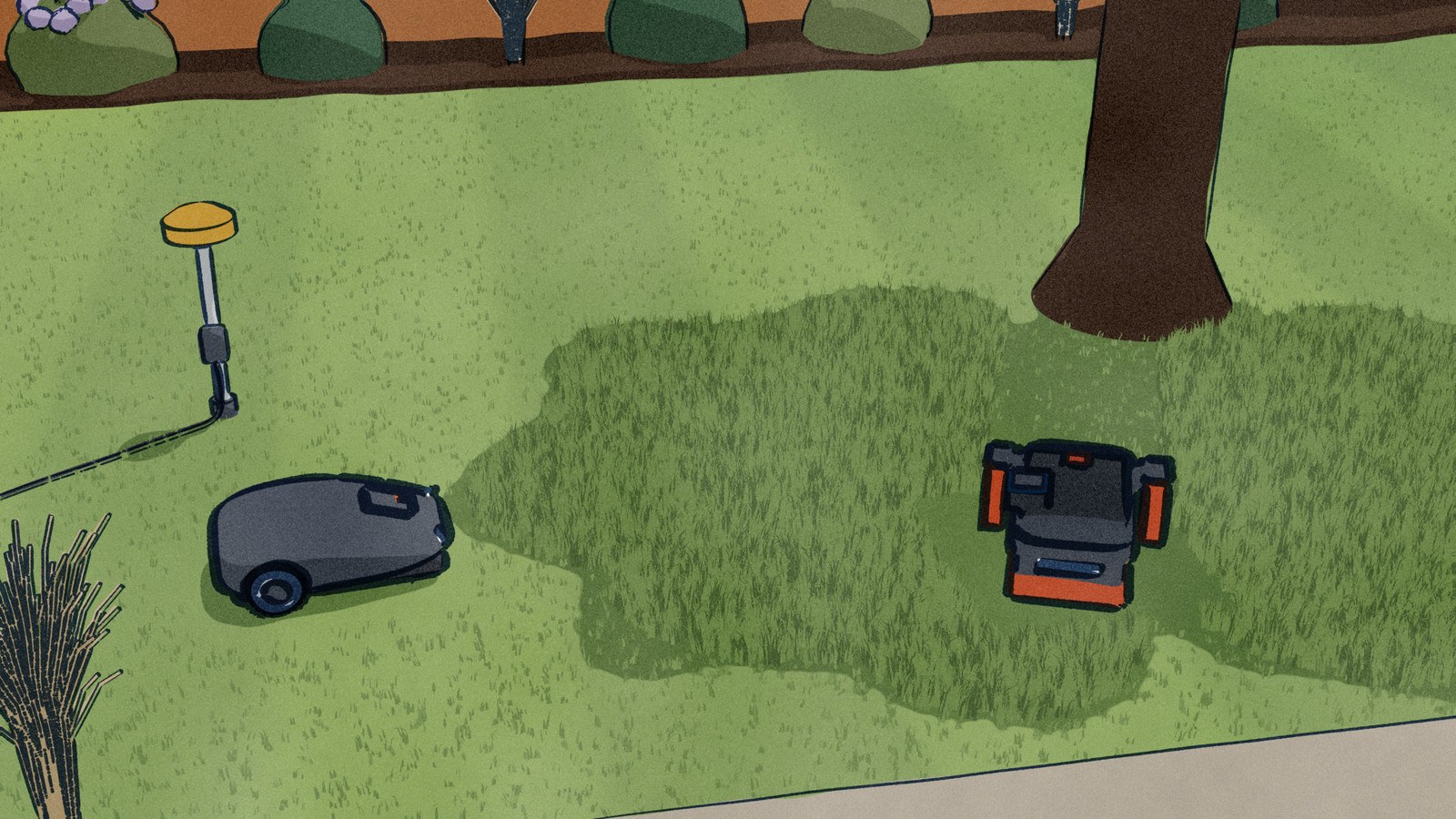
EPOS is Husqvarna’s name for RTK satellite positioning. All three correct their satellite fix against a fixed reference. They differ in where that correction comes from and in what each does when the fix slips.
This page checks
- Where corrections come fromA station in your yard, or the internet
- The maker’s accuracy figureAs each maker states it
- When the fix weakensUnder trees and near walls
- Going wire-freeWhat is in the box and what costs more

Segway
Where to buy
Full specifications20 figures on record · 19 differ
Some links earn Robovations a commission. Nothing on this page is ranked by it.
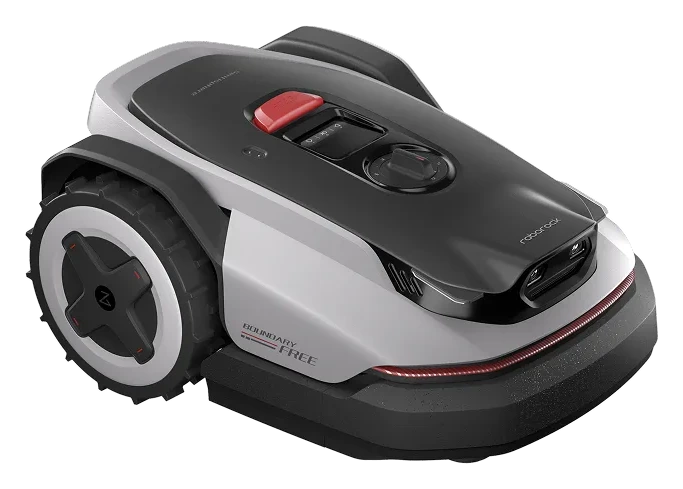
 RockNeo Q110H
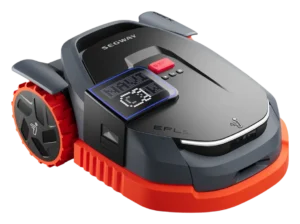 Navimow X330
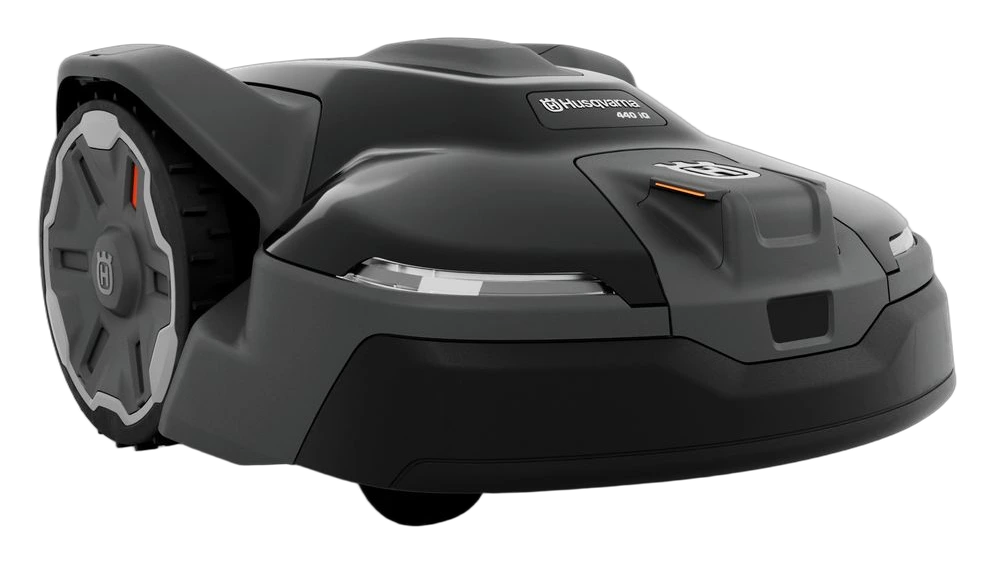
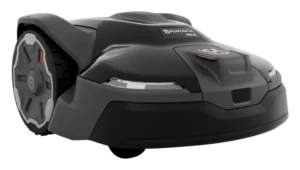 Automower 440 iQ
Accuracy, maker by maker
What each one claims, and what happens when the fix slips
Husqvarna's 440 iQ quotes under 2 in over its cloud and about 1 in with its own station. Roborock and Segway print only "centimeter-level". No independent measurement of any of the three was found. Under cover, the Husqvarna can stop under wide canopies, Segway's cameras assist, and Roborock says it holds its course.
Own station or network RTK
Its own reference station is in the box. Network RTK is an app option, and it uses one mode at a time.
Maker product page- Antenna in your yard, included
- Network RTK where covered, free
Where Segway’s network RTK covers your ZIP code, no antenna is needed. Cellular data for it is included.
Navimow product pageHusqvarna Cloud or included station
Cloud is available in select locations. The included reference station sends corrections by radio within about 328 ft.
Maker product pageCentimeter-level, no figure
Printed as centimeter-accurate, with no figure. A support page says this holds only in open areas.
Maker operator's manualNo figure found
Segway says centimeter-level. Searched the product page, the X3 series manual and the network RTK page.
Navimow product page and X3 manualUnder 2 in (Cloud); about 1 in (station)
Printed as better than 2 in (5 cm) over the cloud and about 1 in (2 to 3 cm) with the station. A claim.
Maker product page, AustraliaOpen areas; drift near cover
The maker says it holds its course under dense trees. Its support page says RTK is accurate only in open areas.
Maker product pageFuses camera mapping and motion sensing with RTK. It passes narrow channels by camera when GPS is poor. No distance limit stated.
Navimow X3 series manual, Feb 2025Wide tree canopies can stop it
Canopies over 13 ft across can cause temporary stops. The manual says to fence them off with stay-out zones.
Maker operator's manualRTK reference station on a pole
A reference station on poles, 6.6 ft or more from walls, plus the charging station on open ground.
Maker operator's manualAntenna in the box. A second antenna ($249.99) widens coverage over split lawns.
Navimow product page and X3 manualCharging station and reference station
The reference station is in the box. Keep it within 328 ft of the mower, with a clear 135 degree sky view.
Maker operator's manual45%
Printed as 45% (24 degrees) on the spec table. No lower limit near edges was found.
Maker product page50%
25% at the boundary.
Navimow product page45%
Rated in the work area, about 24 degrees. Virtual boundaries go in slopes of 15% or less.
Maker operator's manualSame on all three: each takes its position from satellites corrected by RTK, and each needs open sky over the lawn to hold that fix.
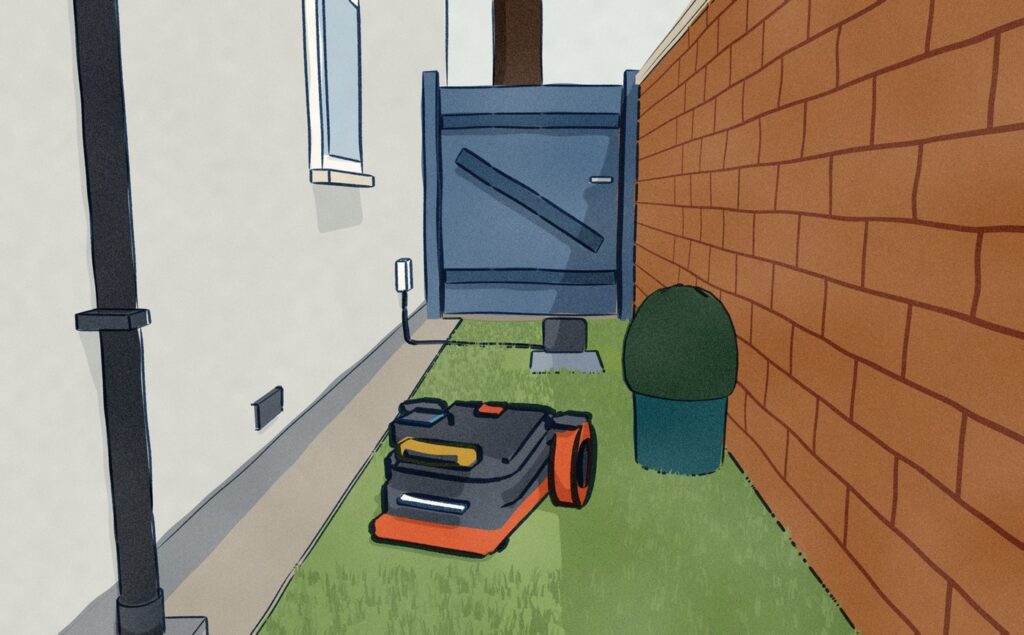
Your home
How each one fits a home like yours
Set the conditions that describe your home. Each robot answers from its own Fit Check; nothing is scored until you choose.
Fit check
Describe your home
Pick what applies. Each robot answers from its own record.
Everything else
Where they land among 133 robot lawn mowers
Only the measures on which these three differ. The bar is the whole category; the block is the typical middle half; the tick is the median.
Sources
Where every figure comes from
- RockNeo Q110H · Maker product page and operator's manual
- Navimow X330 · navimow.com X330 product page and network RTK page; Navimow X3 series user manual (Feb 2025); TechRadar hands-on review of the X350 (Aug 2025)
- Automower 440 iQ · Maker product page, Australia product page and operator's manual
Accuracy figures and signal-loss behavior are quoted from each maker's own pages and manuals. No independent measurement of positioning accuracy was found for any of the three.
Questions
What readers ask
Is EPOS a different technology from RTK?
No. Husqvarna describes EPOS as satellite RTK positioning. Its corrections come over the internet from Husqvarna Cloud, or from a reference station you install. Segway and Roborock offer the same two routes on some models.
Has anyone measured how accurate these mowers are?
No independent measurement was found. A hands-on review of the Navimow X350, which shares the X330’s positioning system, reported accurate navigation under large trees with the antenna at ground level.
Can I buy these three in the US?
Segway sells the X330 at $2,299. The Husqvarna 440 iQ lists at $4,299.99 and the Roborock RockNeo Q110H at $1,299.
Common questions