
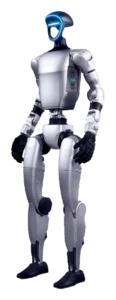
- Changes
- 2
- Tracking since
- Oct 2025
- Latest
- Feb 13, 2026
- Net movement
- Classification stable
- 2026
-
Toborlife AI opens North American pre-orders for the Unitree H2
Toborlife AI, an authorized Unitree distributor, opened North American pre-orders for the H2 commercial and EDU variants in February 2026, requiring a $2,500 deposit against list prices of $40,900 and $68,900.
Full assessment3 claims · 3 technical notes · 2 sources
Where it standsAutonomy LadderIIIIIIIVVLevel IIAssisted AutonomyHuman ReadinessReady NowNew to MarketWaitKnown IssuesNot ratedPre-Consumer Assessment03050717675PromisingWhat happenedThis gave US and Canadian buyers a formal ordering channel that did not previously exist.
WatchingWhether the announced April 2026 delivery window holds once phased shipments begin.
Bottom lineThe February 2026 announcement opened a real purchase channel for US and Canadian buyers, but at well above the domestic Chinese list price and with delivery deferred roughly two months out.
ImpactOn autonomy
- No new autonomy capability disclosed with this pre-order launch.
- Toborlife's listing does not describe hardware or software changes from prior H2 units.
On readiness
- North American buyers gained a formal pre-order channel absent since the October 2025 unveiling.
- Deposit-based ordering opened, though unit delivery remained pending as of the announcement.
Claim check3 maker claims checked against the record. Open one to read the finding.
Unitree H2 is priced from $29,900
Documented findingToborlife AI's North American pricing lists the commercial H2 from $40,900 and the EDU variant from $68,900, per its February 2026 press releasePre-order the H2 today
Documented findingToborlife AI requires a $2,500 deposit and describes deliveries as phased, with an April 2026 start date rather than immediate shipmentH2 available in North America
Documented findingOrders route exclusively through Toborlife AI as the authorized regional partner, not through a general consumer retail channelEvidence2 sources · 1 linked
- 1National Law Review13 Feb 2026
- 2Wisconsin State Farmer13 Feb 2026named, not linked
Technical notes3 sectionsDistribution Channel
Toborlife AI, described in its press materials as an authorized Unitree Robotics partner, opened North American pre-orders for the H2 through its own website rather than Unitree’s direct storefront. A $2,500 deposit secures a place in the order queue for either the H2 commercial variant or the H2 EDU variant.
Pricing
Toborlife listed the commercial H2 from $40,900 and the H2 EDU from $68,900. Both figures sit well above the $29,900 domestic China list price Unitree publishes on its own store, reflecting import costs and regional distributor margin rather than a hardware difference.
Delivery Timeline
The February 2026 announcement projected phased North American deliveries beginning in April 2026, aligning with the H2’s broader shipping start documented elsewhere. Toborlife published sales contact channels for buyers to finalize configuration ahead of deposit, but did not commit to a delivery date for individual pre-orders placed at launch.
- 2025
-
Unitree H2 positioned for industrial pilot programs; consumer path absent
Technology and robotics trade press reporting through the latter half of 2025 confirmed H2's commercial trajectory as an industrial pilot platform, consistent with Unitree's prior positioning.
Full assessment4 claims · 4 technical notes · 2 sources
Where it standsAutonomy LadderIIIIIIIVVLevel IIAssisted AutonomyHuman ReadinessReady NowNew to MarketWaitKnown IssuesNot ratedPre-Consumer Assessment03050717675PromisingWhat happenedNo consumer variant announcement, pricing tier, or domestic deployment timeline was published. The commercial strategy represents a deliberate choice to target structured industrial environments rather than the consumer segment.
Bottom lineThe commercial strategy is coherent for an industrial-first platform; the absence of consumer pricing or timeline is a deliberate positioning choice, not an omission.
ImpactOn autonomy
- No new autonomy capability demonstrated since May 2025 factory-floor footage
- Industrial deployment scope narrows documented autonomous task range
- Level II classification remains appropriate; no evidence of scope expansion
On readiness
- Consumer deployment path explicitly absent from commercial strategy
- Industrial pilot framing limits addressable market to B2B channels
- No pricing, no domestic variant, no consumer support infrastructure announced
Claim check4 maker claims checked against the record. Open one to read the finding.
H2 is deployment-ready for industrial customers
Documented findingIndustrial pilot framing is consistent with manufacturer communications; no disclosed customer deployments, production volumes, or service agreements have been published as of late 2025Humanoid form factor gives H2 access to existing infrastructure
Documented findingBipedal design does enable use of human-scale workstations; cost and support infrastructure for maintaining 70 kg bipedal platforms at scale in production environments has not been addressed publiclyUnitree's track record guarantees delivery
Documented findingUnitree has shipped H1 units to research customers, supporting engineering follow-through claims; H2 commercial volume and support commitments are distinct from research shipments and remain unconfirmedCompetitive positioning against other humanoid platforms
Documented findingH2 occupies a real position in the industrial humanoid field; direct capability comparisons with Boston Dynamics Spot or Figure 02 have not been published by independent parties as of this entryEvidence2 sources · 1 linked
1215 Oct 202520 Oct 2025filed 20 Oct 2025- 1IEEE Spectrum15 Oct 2025
- 2TechCrunch18 Oct 2025named, not linked
Technical notes4 sections
Commercial Strategy Context
Trade press reporting through late 2025 characterized Unitree’s H2 commercial approach as a research and industrial pilot program model. This mirrors the H1’s distribution pattern, where units were sold to university labs, research institutions, and manufacturing evaluators rather than retail channels.
No Consumer Variant Announced
No consumer-grade H2 variant, reduced-cost edition, or domestic-use configuration was announced through October 2025. Unitree’s public materials remained focused on industrial manipulation and bipedal locomotion for structured environments.
Competitive Landscape Note
During this same period, several competing humanoid platforms (including units from manufacturers outside China) disclosed consumer or near-consumer timelines. H2’s industrial-only trajectory means Robovations’ classification of the platform as not consumer-accessible remains accurate and unchanged.
Classification Hold
No new technical data sufficient to revise the Level II autonomy classification or the readiness assessment was published in this period. The PRA open questions (pricing, sensor architecture, autonomous runtime, domestic use case) remain unanswered.