Review: Roborock Saros Z70
Evaluating: Roborock Saros Z70

 Autonomy grade based on our classification methodology.
Structured review — not a purchase recommendation.
The Roborock Saros Z70 offers strong cleaning capabilities and introduces novel automation features. However, the mechanical arm's inconsistent performance means it may not fully eliminate the need for manual intervention. Prospective buyers should consider whether the innovative features align with their expectations and cleaning needs. Key strength: High suction power (22,000 Pa) effectively cleans various floor types. Key concern: Mechanical arm's performance is inconsistent, leading to potential cleaning interruptions. Scored 76/100, tracked at Autonomy Level 3 (Conditional Autonomy) by Robovations.
Review Summary
Based on published evidence and our classification methodology.
- High suction power (22,000 Pa) effectively cleans various floor types
- Advanced navigation system ensures accurate mapping and obstacle avoidance
- Self-cleaning mop system reduces manual maintenance
- Mechanical arm’s performance is inconsistent, leading to potential cleaning interruptions
- Regular maintenance required to maintain optimal performance
- High price point may not justify the benefits for all users
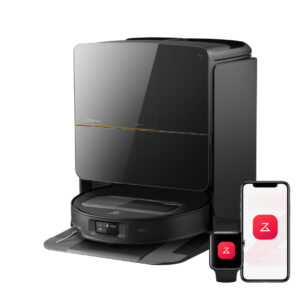
The Roborock Saros Z70 is a high-end robot vacuum and mop combination that stands out with its innovative OmniGrip mechanical arm, designed to pick up small obstacles like socks or toys to facilitate uninterrupted cleaning. Our evaluation reveals that while the Z70 excels in core cleaning functions, the mechanical arm’s performance is inconsistent, often struggling with object recognition and manipulation.
In terms of cleaning performance, the Z70 delivers impressive results. Its 22,000 Pa suction power effectively handles debris on both hard floors and carpets. The mopping function, enhanced by spinning mop pads and a self-cleaning dock, ensures thorough cleaning with minimal user intervention. Navigation is another strong point; the StarSight Autonomous System, powered by advanced sensors, allows the robot to map environments accurately and avoid most obstacles. However, the OmniGrip arm, intended to remove small items from the cleaning path, frequently fails to grasp or properly relocate objects, leading to potential disruptions in the cleaning process.
For users seeking a robot vacuum with strong cleaning capabilities and advanced automation features, the Saros Z70 is a compelling option. However, those expecting a fully autonomous solution that eliminates the need to clear floors before cleaning may find the mechanical arm’s limitations frustrating. Prospective buyers should weigh the innovative features against the practical performance of the arm to determine if this model aligns with their expectations.
Autonomy Ladder™ Classification
Assigned using the Autonomy Ladder based on observed performance.
Conditional AutonomyJustification
We classify the Roborock Saros Z70 at Level 3 (Conditional Autonomy). It autonomously vacuums and mops, navigates complex environments, and can schedule cleanings. However, the mechanical arm’s inconsistent performance necessitates periodic human intervention to clear obstacles it fails to handle.
Observed Limitations
- Cannot reliably pick up and relocate small objects, leading to potential cleaning interruptions
- Requires manual intervention to clear certain obstacles the arm cannot handle
- Needs regular maintenance of brushes and filters to maintain optimal performance
Human Readiness Criteria
How ready this robot is for everyday home use — based on reliability, safety, and ease of ownership.
Promising Progress
Real advancement, but not yet ready for consumer purchase.
Our Assessment
The Roborock Saros Z70 showcases innovative features like the OmniGrip mechanical arm, aiming to enhance autonomous cleaning. While its core vacuuming and mopping functions are robust, the mechanical arm’s inconsistent performance indicates that the technology is still maturing. Users should be prepared for occasional manual interventions, particularly in cluttered environments.
Ideal For
- Tech enthusiasts interested in cutting-edge home automation
- Homeowners with predominantly hard flooring seeking efficient vacuuming and mopping
- Users willing to perform regular maintenance to ensure optimal performance
Not Recommended For
- Individuals expecting a fully autonomous cleaning solution without manual intervention
- Homes with high levels of clutter that may impede the robot’s navigation and cleaning efficiency
- Users unwilling to perform regular maintenance tasks
Best For
- Maintaining cleanliness in homes with minimal floor clutter
- Efficient cleaning of hard floors and low-pile carpets
- Users seeking advanced features and automation in a robot vacuum
Robovations Score
An overall reliability and capability score based on our published methodology. Not a recommendation.
Score Breakdown
-
Autonomy (30%)75
-
Reliability (25%)80
-
Maintenance (15%)70
-
Value (15%)65
-
Privacy (15%)85
Reliability & Maintenance
Long-term stability and the effort required to maintain it.
Reliability Over Time
Long-term user reports indicate that the Roborock Saros Z70 maintains consistent cleaning performance with regular maintenance. However, the mechanical arm’s reliability does not improve over time, and users may continue to experience inconsistencies in its operation.
Maintenance Burden
| Every Run |
|
| Weekly |
|
| Monthly |
|
| Seasonally |
|
| Yearly |
|
Failure Modes & Recovery
Where the robot struggles — and how it recovers.
- Mechanical Arm Malfunction: The OmniGrip arm may fail to grasp or properly relocate objects, causing cleaning interruptions
- Navigation Errors: In complex environments, the robot may misinterpret obstacles, leading to missed areas or repeated cleaning of the same spot
- Brush Tangles: Hair and debris can entangle the main brush, reducing cleaning efficiency and requiring manual removal
- Docking Issues: If the docking station is obstructed or misaligned, the robot may fail to dock properly, affecting charging and maintenance functions
- Obstacle Encounter: When the robot encounters an unmovable obstacle, it attempts to navigate around it; if unsuccessful, it sends an alert via the app
- Low Battery: The robot returns to the docking station to recharge and resumes cleaning once sufficiently charged
- Brush Tangle Detected: The robot pauses cleaning and notifies the user through the app to manually clear the obstruction
Safety & Misuse Risk
Safety observations and potential misuse risks identified during testing.
- Ensure the mechanical arm is clear of obstructions to prevent damage or malfunction
- Keep the docking station area free from clutter to allow proper docking and maintenance functions
- Regularly inspect and clean sensors to maintain accurate navigation and obstacle detection
- Use the child lock feature to prevent unintended operation by children
- Operating the robot in cluttered environments may lead to frequent errors and incomplete cleaning cycles
- Neglecting regular maintenance can result in decreased cleaning efficiency and potential damage to components
- Improper setup of no-go zones may cause the robot to enter restricted areas, leading to possible damage or safety hazards
Sidebar
Reviewed Product
Evidence Chain
All content connected to this record.
- Roborock Saros Z70 Feb 22, 2026