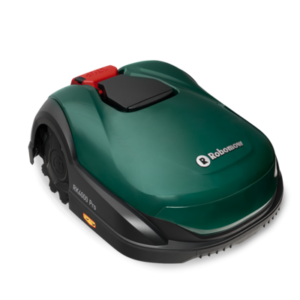
Review: Robomow RK4000
Evaluating: Robomow RK4000

 Autonomy grade based on our classification methodology.
Structured review — not a purchase recommendation.
The Robomow RK4000 provides a comprehensive automated mowing solution for lawns up to 1 acre, with strong performance on varied terrains and user-friendly programming. However, potential long-term reliability issues and maintenance costs may impact its overall value proposition. Key strength: Handles slopes up to 45% effectively, suitable for uneven terrains. Key concern: Reported reliability issues after two to three years of use. Scored 62/100, tracked at Autonomy Level 3 (Conditional Autonomy) by Robovations.
Review Summary
Based on published evidence and our classification methodology.
- Handles slopes up to 45% effectively, suitable for uneven terrains
- 16.5-inch cutting width allows efficient mowing of large areas
- User-friendly 4.3-inch HD color touchscreen for easy programming
- Edge-cutting capability minimizes the need for additional trimming
- Reported reliability issues after two to three years of use
- Potentially high maintenance and repair costs over time
- Requires manual setup of boundary wires, which can be time-consuming
- Limited to managing up to four sub-zones, which may not suit complex lawns
The Robomow RK4000 is designed to autonomously maintain lawns up to 1 acre, featuring a 16.5-inch cutting width and a maximum cutting height of 4 inches. Its brushless DC motors and pendulum-suspended cutting deck allow it to handle uneven terrain and slopes up to 45% (24 degrees) effectively. The 4.3-inch HD color touchscreen simplifies programming, and the mower can manage up to four sub-zones and two separate zones, providing flexibility for complex yard layouts.
In our evaluation, the RK4000 demonstrated strong performance on various terrains, maintaining consistent cutting quality even on slopes and uneven surfaces. The edge-cutting capability ensures minimal trimming is needed along borders. However, some users have reported significant reliability issues after two to three years of use, including motor failures and costly repairs. For instance, one user experienced a malfunction after two seasons, requiring the replacement of the main board and both drive motors, with repair costs nearing 24,000 CZK (approximately $1,000). Another user reported similar issues after three seasons, leading to substantial repair expenses.
Given these factors, the RK4000 is well-suited for homeowners with medium to large lawns who desire an automated mowing solution capable of handling complex terrains. Prospective buyers should be aware of potential long-term reliability concerns and the associated maintenance costs.
Autonomy Ladder™ Classification
Assigned using the Autonomy Ladder based on observed performance.
Conditional AutonomyJustification
The RK4000 operates autonomously within predefined zones and schedules, handling routine mowing tasks effectively. However, it requires periodic human intervention for maintenance tasks such as blade replacement, cleaning, and addressing error states, classifying it as Level 3 (Conditional Autonomy).
Observed Limitations
- Cannot self-repair or diagnose complex mechanical issues
- Requires manual setup of boundary wires and zones
- Needs human intervention for blade replacement and cleaning
- Cannot operate without a functioning perimeter wire
Human Readiness Criteria
How ready this robot is for everyday home use — based on reliability, safety, and ease of ownership.
Promising Progress
Real advancement, but not yet ready for consumer purchase.
Our Assessment
The Robomow RK4000 offers advanced features suitable for medium to large lawns, including effective terrain handling and user-friendly controls. However, reported reliability issues after extended use and the associated maintenance costs suggest that while the mower shows promise, potential buyers should weigh these factors carefully. Ongoing improvements in durability and support could enhance its readiness for widespread adoption.
Ideal For
- Homeowners with medium to large lawns seeking automated mowing solutions
- Users with lawns featuring slopes up to 45% and uneven terrain
- Individuals comfortable with periodic maintenance and potential repair costs
- Tech-savvy users who appreciate app integration and programmable zones
Not Recommended For
- Users unwilling to perform regular maintenance tasks
- Homeowners with lawns exceeding 1 acre
- Individuals seeking a maintenance-free mowing solution
- Users with complex lawn layouts requiring more than four sub-zones
Best For
- Maintaining medium to large lawns with varied terrain
- Automating lawn care to reduce manual mowing efforts
- Users who value customizable mowing schedules and zones
Robovations Score
An overall reliability and capability score based on our published methodology. Not a recommendation.
Score Breakdown
-
Autonomy (30%)75
-
Reliability (25%)50
-
Maintenance (15%)40
-
Value (15%)60
-
Privacy (15%)80
Reliability & Maintenance
Long-term stability and the effort required to maintain it.
Reliability Over Time
Long-term user reports indicate that while the RK4000 performs well initially, reliability may decline after two to three years. Common issues include drive motor failures and main board malfunctions, leading to significant repair costs. These concerns suggest potential longevity issues that prospective buyers should consider.
Maintenance Burden
| Every Run |
|
| Weekly |
|
| Monthly |
|
| Seasonally |
|
| Yearly |
|
| As Needed |
|
Failure Modes & Recovery
Where the robot struggles — and how it recovers.
- Boundary Wire Breaks: If the perimeter wire is damaged, the mower cannot operate correctly and may stop functioning.
- Motor Failures: Users have reported drive motor failures after extended use, leading to costly repairs.
- Docking Issues: Difficulty in docking correctly can result in incomplete charging cycles and interrupted mowing schedules.
- Software Glitches: Some users have experienced software-related issues affecting the mower’s performance and requiring resets.
- Obstacle Detection: The mower stops and reroutes upon detecting an obstacle to avoid collisions.
- Low Battery Return: Automatically returns to the charging station when the battery is low to recharge before resuming mowing.
- Error Notifications: Displays error codes on the touchscreen to inform users of issues requiring attention.
- Rain Detection: If equipped with a rain sensor, the mower returns to the docking station during rain to prevent damage.
Safety & Misuse Risk
Safety observations and potential misuse risks identified during testing.
- Equipped with a 360° obstacle sensor to detect and avoid obstacles
- Features an anti-theft system with standard security measures
- Operates at a low noise level, reducing disturbance
- Designed to handle slopes up to 45% safely
- Improper installation of boundary wires may lead to the mower operating outside designated areas
- Failure to regularly clean the mower can result in decreased performance and potential malfunctions
- Allowing children or pets near the operating mower poses safety risks
- Using the mower on slopes exceeding 45% can cause instability and potential accidents