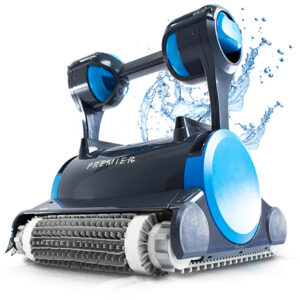
Evaluation: Dolphin Premier
Evaluating: Dolphin Premier

 Autonomy grade based on our testing.
Structured review — not a purchase recommendation.
The Dolphin Premier offers robust cleaning performance with its dual scrubbing brushes and versatile filter options, effectively handling a range of debris types. However, its heavier weight and bottom-loading filter design may present challenges for some users. Prospective buyers should weigh these factors against their specific needs and preferences. Key strength: Dual scrubbing brushes effectively clean pool surfaces, including walls and waterline. Key concern: Heavier weight may make handling and removal from the pool challenging. Scored 76/100, tracked at Autonomy Level 2 (Assisted Autonomy) by Robovations.
Review Summary
Based on real-world use and repeatable testing criteria.
- Dual scrubbing brushes effectively clean pool surfaces, including walls and waterline
- Multiple filter options allow customization for different debris types
- Proven reliability with consistent performance over time
- Heavier weight may make handling and removal from the pool challenging
- Bottom-loading filter design requires flipping the unit for access
- Lacks modern features such as smartphone connectivity or remote control
The Dolphin Premier is a high-end robotic pool cleaner designed for inground pools up to 50 feet in length. Equipped with dual scrubbing brushes and multiple filter options—including fine and ultrafine cartridges, as well as an oversized debris bag—it aims to tackle a wide range of debris, from fine dirt to larger leaves. Our evaluation indicates that while the Premier excels in cleaning performance, certain design aspects may affect user experience.
In terms of cleaning efficacy, the Premier’s dual scrubbing brushes effectively remove dirt and algae from pool surfaces, including walls and the waterline. The inclusion of multiple filter options allows users to customize the cleaning process based on the type of debris present. However, the unit’s weight, approximately 22 pounds, can make handling and removal from the pool challenging for some users. Additionally, the bottom-loading filter design requires the unit to be flipped over for filter access, which may be inconvenient compared to top-loading designs found in other models.
Owner reports highlight the Premier’s thorough cleaning capabilities, with many noting significant improvements in pool cleanliness. Some users, however, have mentioned difficulties with the unit getting stuck on pool drains or struggling with certain pool shapes. Maintenance tasks, such as cleaning the filter bag, can be time-consuming, and the lack of a quick clean mode means users must run full cleaning cycles even for minor touch-ups.
Overall, the Dolphin Premier is well-suited for pool owners seeking a comprehensive cleaning solution and who are prepared to manage its maintenance requirements. Prospective buyers should consider the unit’s weight and design features in relation to their specific pool configurations and personal handling capabilities.
Autonomy Ladder™ Classification
Assigned using the Autonomy Ladder based on observed performance.
Assisted AutonomyJustification
The Dolphin Premier operates independently during cleaning cycles, navigating pool surfaces and handling various debris types. However, it requires manual intervention for setup, removal from the pool, and maintenance tasks such as filter cleaning and storage.
Observed Limitations
- Cannot self-deploy or remove itself from the pool
- Requires manual filter cleaning and maintenance
- Does not have a quick clean mode for spot cleaning
- May struggle with certain pool shapes or features, requiring user intervention
Human Readiness Criteria
How ready this robot is for everyday home use — based on reliability, safety, and ease of ownership.
Ready Now
Proven autonomous performance, reliable, and available for purchase.
Our Assessment
The Dolphin Premier is currently available and has been on the market for several years, demonstrating proven performance in various pool environments. Its comprehensive cleaning capabilities and multiple filter options make it suitable for immediate use by pool owners seeking an effective cleaning solution. While it lacks some modern features like smartphone connectivity, its reliability and thorough cleaning performance make it a viable option for those prioritizing functionality over advanced connectivity.
Ideal For
- Pool owners with inground pools up to 50 feet in length seeking thorough cleaning performance
- Individuals comfortable with handling a heavier unit and performing regular maintenance tasks
- Users who prioritize cleaning efficacy over advanced connectivity features
- Owners of pools with various debris types, from fine dirt to larger leaves
Not Recommended For
- Individuals who may have difficulty lifting or handling heavier equipment
- Pool owners seeking a cleaner with top-loading filters for easier access
- Users desiring smartphone connectivity or remote control features
- Owners of pools with complex shapes or features that may impede navigation
Best For
- Inground pools up to 50 feet in length with standard shapes
- Pools that accumulate a variety of debris types, including fine dirt and larger leaves
- Owners willing to perform regular maintenance to ensure optimal performance
Robovations Score
An overall reliability and capability score based on our testing. Not a recommendation.
Score Breakdown
-
Autonomy (30%)70
-
Reliability (25%)85
-
Maintenance (15%)60
-
Value (15%)75
-
Privacy (15%)90
Reliability & Maintenance
Long-term stability and the effort required to maintain it.
Reliability Over Time
Long-term owner reports indicate that the Dolphin Premier maintains consistent cleaning performance over several years. However, components such as scrubbing brushes and filters may require periodic replacement due to wear. Some users have reported issues with the power supply unit over time, suggesting that regular inspection and maintenance are essential for sustained reliability.
Maintenance Burden
| Every Run |
|
| Weekly |
|
| Monthly |
|
| Seasonally |
|
| Yearly |
|
| As Needed |
|
Failure Modes & Recovery
Where the robot struggles — and how it recovers.
- Stuck on pool drains: The unit may become immobilized when positioned directly over pool drains, requiring manual repositioning
- Difficulty with certain pool shapes: Pools with complex shapes or features may impede the cleaner’s navigation, leading to incomplete cleaning
- Filter clogging: Accumulation of large debris can clog filters, reducing cleaning efficiency until manually cleaned
- Wear on scrubbing brushes: Over time, brushes may wear down, diminishing cleaning performance and necessitating replacement
- Power cable wear: Frequent use can lead to wear on the power cable, potentially causing electrical issues if not addressed
- Stuck on pool drains: The unit may attempt to free itself but often requires manual intervention
- Navigation issues: If the cleaner struggles with certain areas, repositioning or adjusting the cable length may help
- Filter full indicator: The unit alerts users when the filter is full, prompting manual cleaning
- Power interruptions: In case of power loss, the cleaner will stop and require a manual restart
Safety & Misuse Risk
Safety observations and potential misuse risks identified during testing.
- Ensure the power supply is connected to a GFCI outlet to prevent electrical hazards
- Do not operate the cleaner when swimmers are in the pool
- Handle the unit carefully when removing from the pool to avoid injury due to its weight
- Regularly inspect the power cable for signs of wear or damage to prevent electrical issues
- Operating the cleaner without proper electrical safety measures can lead to electrical hazards
- Leaving the unit in the pool for extended periods without use may cause wear or damage
- Improper handling during removal can result in personal injury or damage to the unit
- Using the cleaner in pools with incompatible surfaces may lead to ineffective cleaning or damage